Defying Time: The Remarkable Story of Brazilian Twins Elis and Eloá
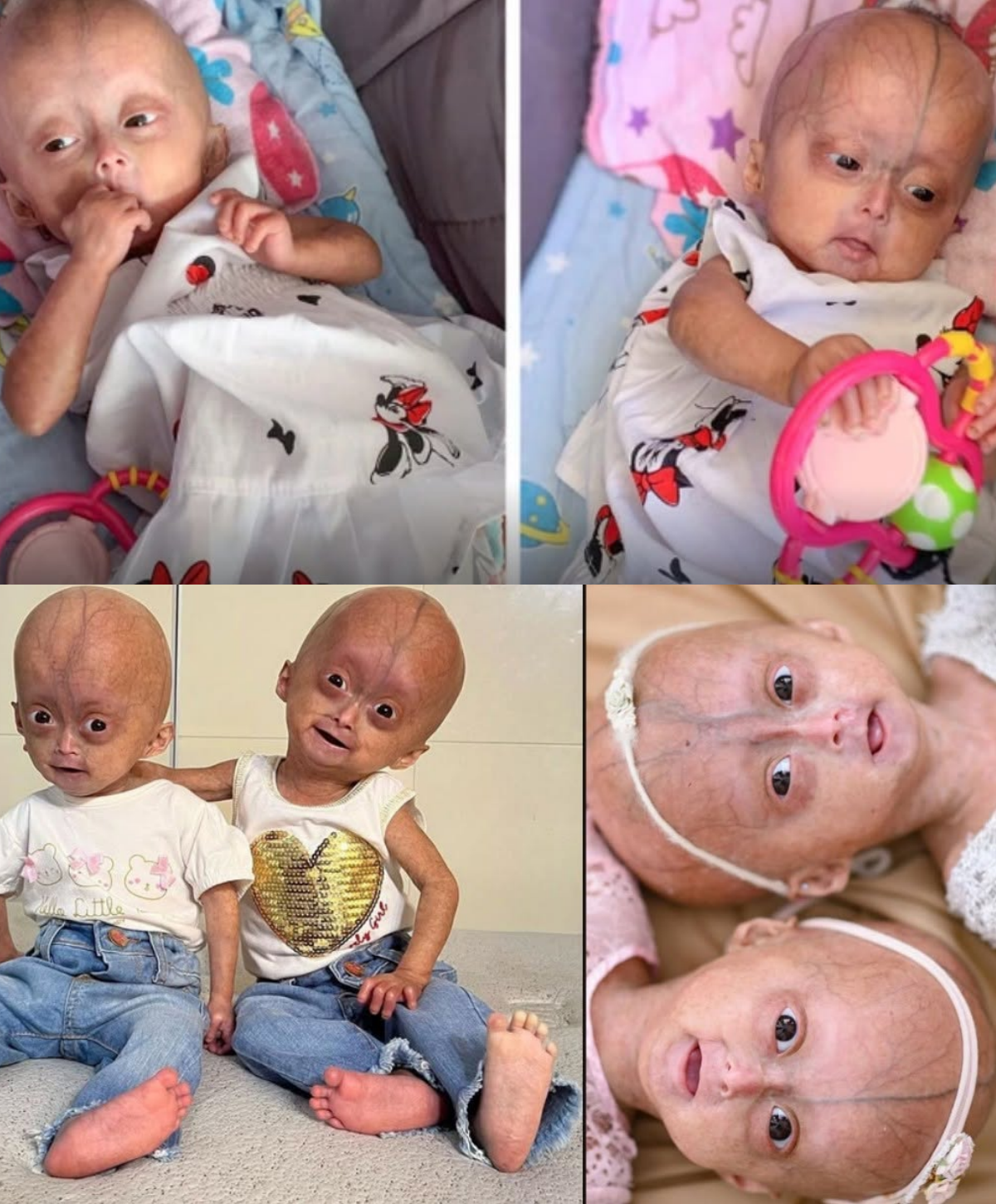
For Elis and Eloá Lima Carneiro, childhood has unfolded under the shadow of an extraordinarily rare genetic condition. Born in Boa Vista, Roraima, Brazil, the identical twins were diagnosed with Hutchinson-Gilford progeria syndrome, commonly known as progeria, a condition associated with accelerated biological aging.
Their story first attracted attention when their family noticed unusual changes during their first months of life. At around four months old, the girls began experiencing hair loss and changes in the appearance of their skin. They also had difficulty gaining weight, prompting their family to seek medical advice and undergo a series of examinations.
A Rare Diagnosis
After months of uncertainty, doctors suspected that the twins could have progeria. Their family eventually contacted the Progeria Research Foundation (PRF) in the United States, an organization dedicated to researching the condition and developing treatments.
The diagnosis was confirmed in 2023. According to reports citing the foundation, Elis and Eloá were the only known pair of twins in the world living with Hutchinson-Gilford progeria at the time. Their case therefore attracted considerable interest among researchers studying the extremely rare disorder.
Progeria is generally caused by a mutation affecting the LMNA gene, which leads to the production of an abnormal protein called progerin. The condition can cause characteristic changes such as loss of subcutaneous fat, slowed growth, hair loss and changes in the skin and skeletal system. Importantly, the syndrome does not simply mean that a child’s entire body literally ages at a fixed number of times the normal rate; rather, it is a progressive genetic disorder associated with accelerated cellular and systemic aging.
From Uncertainty to Treatment
For the Lima Carneiro family, receiving a definitive diagnosis brought both difficult news and a clearer path forward.
Initially, the family had very little information about the condition. Their older brother, Guilherme, took the initiative to contact specialists and the Progeria Research Foundation in search of medical guidance and potential treatment options. Genetic material from the girls was also provided for evaluation by specialists.
By 2024, reports indicated that Elis and Eloá were receiving lonafarnib, a medication used to help slow some of the effects of progeria. Their mother said at the time that the girls were tolerating the treatment and continuing to make progress.
Their care also involves supportive therapies. Earlier reports described nutritional support, physiotherapy, speech therapy and occupational therapy as important parts of their routine, helping address difficulties associated with growth and development.
Growing Up in the Public Eye
While their medical journey is extraordinary, Elis and Eloá are also simply two young children growing up together.
Their family began sharing photographs and videos of their everyday lives online, allowing people to follow their development. The account quickly attracted a large international audience. By late 2023, reports said the girls had around 1.5 million followers, while later reports in 2025 placed the audience at more than one million.
The support has extended beyond messages and social-media attention. Their mother, Elismar, said that the generosity of followers meant the family received so many diapers during 2023 that she did not need to purchase them herself for an entire year.
For a family dealing with the financial and emotional demands of a rare disease, that support became an important part of their daily lives.
Celebrating Every Milestone
In May 2025, Elis and Eloá reached their fourth birthday. Their family described the milestone as particularly meaningful because the girls had continued making developmental progress.
Their older brother Pedro Guilherme Iago said that Elis had become more communicative and curious, while Eloá had become increasingly independent and confident. He also emphasized that although the sisters share the same condition and environment, they have distinct personalities and preferences.
Those everyday differences are important because they remind people that behind the medical diagnosis are two individual children—with their own personalities, interests, discoveries and childhood experiences.
Their family also continues to face uncertainty because progeria is a progressive condition that can affect multiple body systems, particularly the cardiovascular system. Rather than focusing exclusively on long-term predictions, the family has emphasized celebrating the girls’ development and the experiences they are able to share today.
Elis and Eloá’s story has therefore grown beyond a story about a rare disease. Their lives have connected a family in northern Brazil with doctors, researchers and a huge online community around the world.
Every new word, new movement, birthday and ordinary childhood moment carries special meaning for their family—not because their lives are defined solely by progeria, but because each milestone represents another day of childhood lived, discovered and shared together.
Sources: UOL VivaBem; UOL; O TEMPO; Terra; Diário de Pernambuco; IstoÉ; Prefeitura de Boa Vista; Folha BV; Progeria Research Foundation; Crescer.