From a 10 Percent Chance to the Gym Floor: Harmonie-Rose Allen’s Fight After Meningococcal Sepsis
In September 2014, ten-month-old Harmonie-Rose Allen of Bath, England, had just taken her first steps. Days later she became floppy, developed a rapidly spreading rash, and was rushed from Royal United Hospital in Bath to Bristol Royal Hospital for Children. Doctors diagnosed meningococcal septicaemia type B. Consultants called it one of the worst rashes they had seen and gave her a 10 percent chance of survival. Her kidneys failed. She spent weeks in paediatric intensive care. The infection turned her limbs black with tissue death.
To save her life, surgeons amputated both arms and both legs and the tip of her nose, just before her first birthday. She underwent more than ten operations. Quality of life was discussed. A brain scan suggested possible effects on sight, hearing and motor skills. She woke from the coma as the same determined child her parents knew.
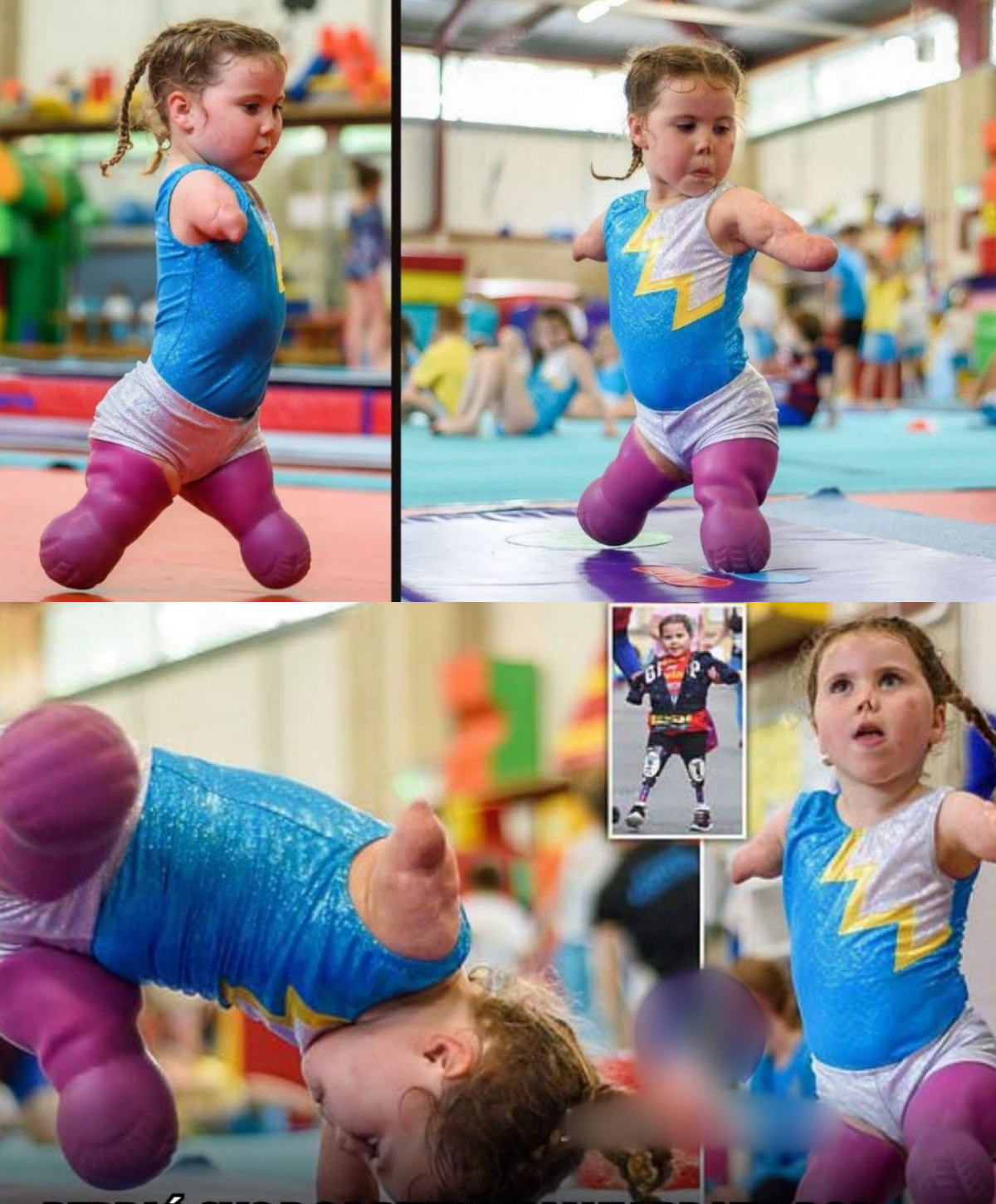
Rehabilitation began early: standing frames, proprioceptive work, hydrotherapy and successive prosthetic fittings as she grew. By three she was walking on artificial legs. By five she was asking to join gymnastics after watching her aunt train. Coaches at Baskervilles Gymnastics in Bath adapted apparatus and spotting. Harmonie often trained on the floor without full prostheses, using residual limbs in bright covers, trunk control and her remaining upper-limb strength to find her own versions of cartwheels, backward rolls, beam work and trampoline jumps.
In 2019 she completed the Bath Half Marathon, walking the last metres after being pushed most of the course by family and teachers. During lockdown she took on the 2.6 Challenge: 26 repetitions of six things doctors had once said she might never do — running, singing, drawing, swimming, gymnastics and jumping — and raised tens of thousands of pounds for Meningitis Now. She became the charity’s first junior ambassador. In 2020 she won gold in the International Paralympic Committee Inclusive Sports Challenge with a routine that included a forward roll her family had not been sure she could master. In 2021 she received a Pride of Britain Child of Courage award. By nine she had helped raise more than £100,000 for meningitis charities and accessible play.
The MenB vaccine that might have prevented her illness was licensed in the United Kingdom around the time she fell ill but was not yet on the national infant schedule. Her family has used her story to press for awareness of the rash, fever and rapid deterioration that mark meningococcal disease.
Harmonie-Rose writes, draws, swims, dances and still wants more from the gym. Coaches help with spotting; she invents the rest. The photographs of a small gymnast in a lightning-bolt leotard, balanced on residual limbs, are not a miracle of equipment so much as of early rehabilitation, family insistence and a child who treats “can’t” as a word that does not apply.
Sources
BBC News reports on Harmonie-Rose Allen’s illness, amputations, half-marathon and Meningitis Now ambassadorship
Meningitis Now and Spencer Dayman Meningitis Research family accounts
Somerset Live, Mirror, People and The Sun coverage of her gymnastics at Baskervilles Gymnastics, Bath
ITV West Country on the Pride of Britain Child of Courage award
International Paralympic Committee feature on her Inclusive Sports Challenge gold
Bath Echo and ITV reports on British Citizen Youth Award and fundraising totals
Bristol Live / Bristol Post interviews with parents Freya Hall and Ross Allen