A Mother, a Dragon, and a Village That Could Not Look Away: How The Mother’s Monster Became a Global Short-Film Event
In mid-September 2026, a 28-minute dark fantasy film appeared on YouTube under a title that sounded more like a dare than a logline: She Gave Birth to a Dragon | The Mothers Monster | Full Fantasy Movie 4K. Within days it was no longer just another AI upload. It was a story people sent to relatives, argued about in comment sections, and watched through tears they did not expect from synthetic images.
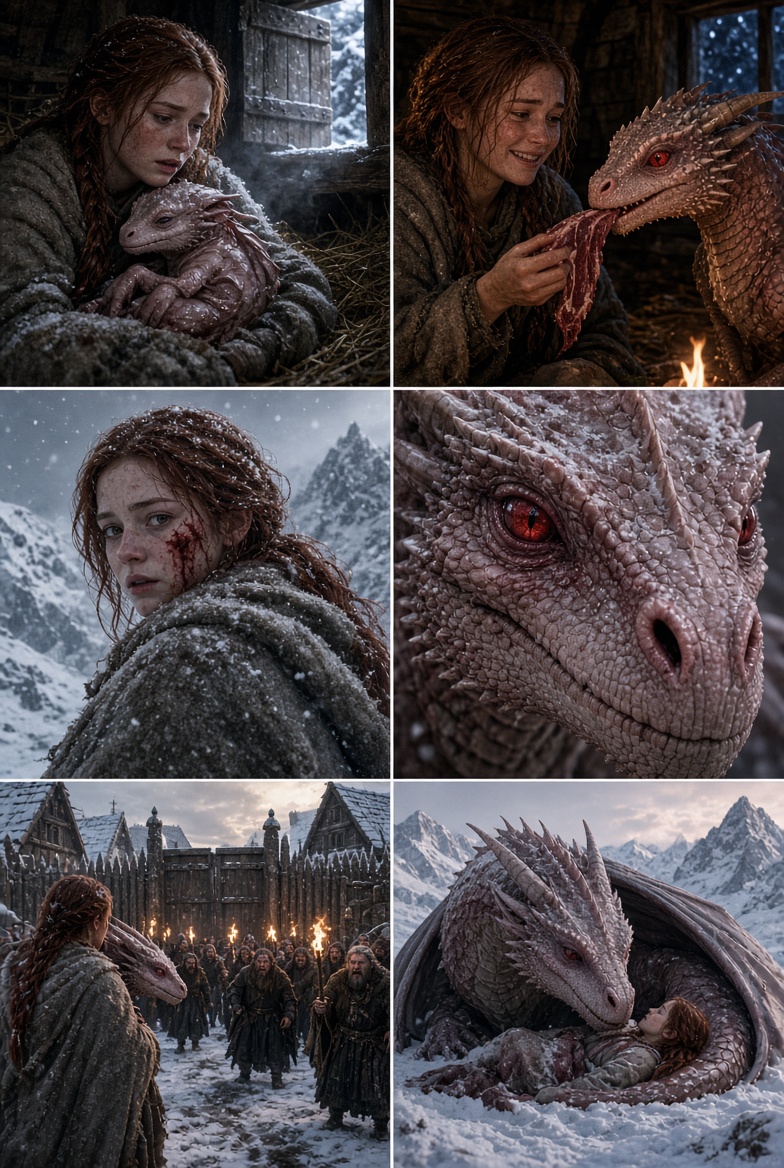
The film comes from MYTHRA, the channel of Pakistani filmmaker Zahid Iqbal and his studio ZETOMATE. Iqbal has described the project as an original story written from imagination rather than adapted from a novel or legend. The official description is blunt. A young woman in a frozen mountain village gives birth to a dragon. The village calls it a monster. She calls it her son. They come at dawn with stones and torches. They do not kill her on the spot. They drive her into the mountains and bolt the gates, certain the cold will finish what they started. The cold does not.
That premise is simple enough to travel. It is also specific enough to feel like a myth someone forgot to write down. Viewers meet Elara, also called Alora in some subtitles, as she labors alone, then lies about the child’s death so she can hide a hatchling she names Ember. She buys meat until neighbors notice. A villager named Marda sees something on the roof. A sheep is found torn apart. By the time the mob reaches her door, the creature is no longer a secret. Elara begs Ember not to hurt anyone. The dragon is forced to fly. The village labels her a witch and refuses her a grave in consecrated ground.
The numbers around the film moved faster than traditional reviews. Copies, recuts, and “full movie” compilations multiplied across channels. A pinned comment from the original account claimed the story had crossed a billion views across the internet. On YouTube itself, the MYTHRA upload climbed into the tens of millions. Within 72 hours of release, the channel was reported trending in the Philippines, ranking in Film & Animation with a single title. For a one-person pipeline of writing, direction, generation, and edit, that is an unusual kind of opening weekend.
Part of the spread is packaging. The thumbnail is almost a poster by itself: a wounded young woman in a snow-dusted cloak, and behind her a pale rose-grey dragon with burning red eyes. The title does the rest. “She gave birth to a dragon” is the kind of sentence that stops a scrolling thumb. Once people click, the film does not waste time. It is short, emotionally direct, and built around images that look expensive even when the performances still carry the slightly dreamlike stiffness of current AI cinema.
The audience reaction has been less about visual novelty than about the mother. Comments in English, Arabic, Urdu, Spanish, and Vietnamese keep returning to the same point. The dragon eats. The dragon grows too fast. The dragon may be dangerous. The mother still stands in front of it. Viewers who say they “never cry at AI movies” admit they cried when Ember is told to fly, and again when the creature returns to the snow.
The film is also a case study in how quickly an internet story leaves its author. Fan parts, unofficial sequels, Hindi and Arabic recaps, and hour-long “complete editions” appeared within a week. Some credit MYTHRA. Some do not. Iqbal has said a second part is coming. Until it does, the original 28 minutes remain the version that started the argument the description invites: Was the village wrong to be afraid?
Watch the full film below.