The Winter I Didn’t Count* (Full)
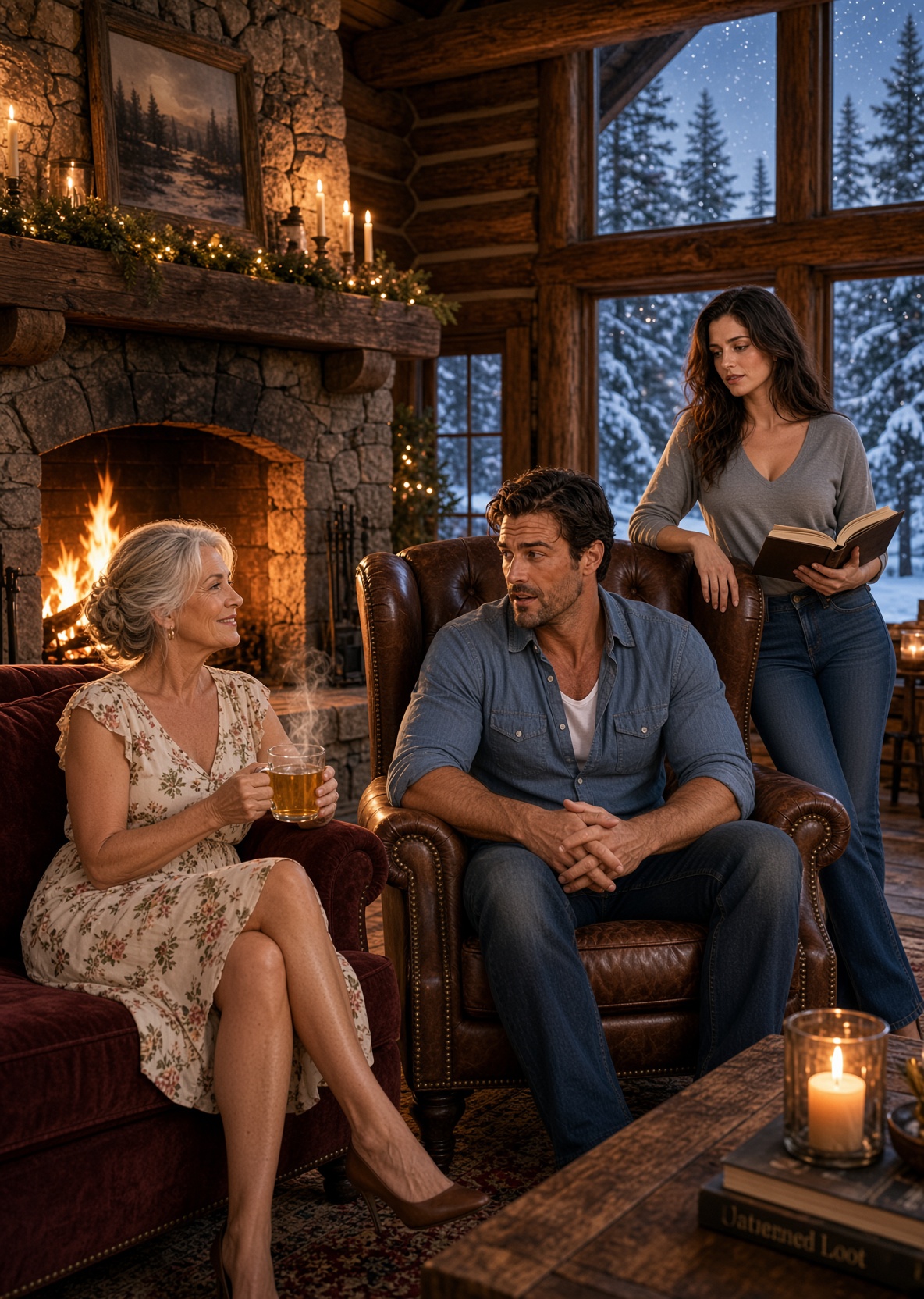
**The Winter I Didn’t Count**
I was standing waist-deep in Grand Lake at seven in the morning when my best friend’s mother told me I was the reason her daughter would not date anyone.
The water was cold enough to make my legs ache. I had a wrench in one hand and a rusted bolt in the other. Eleven dock sections had to come apart before Monday, and I was still fighting number four.
Then I heard footsteps.
Loretta Lewis came down the dock with two cups of coffee and set one on the plank beside my elbow.
“You’re going to catch a cold out there.”
“Probably.”
She did not leave. That should have warned me.
Loretta was sixty-something, practical to the bone, and not a woman who stood around talking when a house had to be emptied. She looked across the water. Then at me. And she smiled.
“So you’re why she won’t date anyone.”
I stopped turning the wrench. For reasons I still cannot explain, I put the bolt between my teeth. Apparently that was easier than answering.
My name is Marcus Thompson. I was thirty-six. I took trees down for a living, and I had been showing up at the Lewis lake house for nine years without anybody ever officially inviting me.
“Ma’am,” I said around the bolt.
“You heard me.”
“I heard the words.”
“Good. That’s a start.” She glanced at the half-dismantled dock. “The buyer wants that out before his walk-through.” Then she walked back uphill in house shoes as if she had not just set nine years of careful silence on its feet.
I stayed in the lake with a bolt in my mouth, looking like a man holding a nail while somebody else swung the hammer.
The Lewis place sat on a point along the east side of Grand Lake, ten minutes outside Grove. Gravel lane. Cattle guard. Daryl’s father built it in 1968: block foundation, cedar siding, a screened porch facing the water, and a boathouse whose tin roof made the best sound I had ever heard in rain.
By Monday at ten, none of it would belong to them. A family from Arkansas had bought it. We had one weekend to take out what was still theirs.
There were four of us. There was nobody else left to come. Daryl’s knees had been bad since the plant. Loretta packed the kitchen with a marker between her teeth. Jenna had kept the place standing for years. And then there was me. Not family. Technically. I arrived the way weather arrives. Eventually people stopped asking why.
Jenna and I met because of a dog.
I was clearing storm damage south of town when I heard something under a brush pile. Shepherd mix. One back leg wrong. I carried him to the clinic off the highway ten minutes before closing. The girl in back already had her jacket on. She looked at the dog, took the jacket off, hung it up, and stayed until nearly nine.
That girl was Jenna Lewis.
She charged me for two things and waved the rest. When I asked what I owed her for staying late, she looked at the dog and said, “He’s yours now.”
“That’s my bill?”
“That’s your bill.”
I kept the dog. And somehow I kept Jenna. Not the way people usually mean. Friends. Then close friends. Then the kind of arrangement where one of you has a key to the other person’s family lake house and nobody explains it.
She gave me that key the first summer. It hung from a float shaped like a fish.
“If you ever need somewhere to sit and be quiet,” she said, “there’s an entire lake out here with almost nobody on it.”
I used it more times than I ever admitted at her parents’ table. Bad days. Long jobs. Dates on the calendar I did not want to look at. Sometimes she was there. Sometimes she wasn’t. Nobody asked me to leave.
Saturday a little after eight, Jenna came down the hill in the gray sweatshirt she wore every fall, left cuff chewed open from years of pulling it over her hand. Packing tape looped around her wrist. An empty box against her hip. She set it on the boathouse step and wrote in block letters:
KITCHEN
THE GOOD PAN
That was Jenna. Nobody should have to open six boxes for a frying pan.
She frowned at me. “You’re blue.”
“I’m fine.”
“Your lips are blue, Marcus.”
“That has nothing to do with being fine.”
She saw the stacked dock sections, the ones still floating, the coffee.
“Did my mother bring you that?”
“She did.”
“My mother has never carried coffee to another living person. What did she want?”
I could have told her. Your mother thinks I’m why you don’t date.
I looked at the water instead.
“She wanted this thing gone.”
Jenna watched me too long. She knew that was not the whole conversation. She did not press. She took the heavier side of the next stack without thinking, the way she always did, and went back uphill.
I did something unflattering with Loretta’s sentence. I decided she wanted me gone. That made more sense than the other thing. Thirty-six. Single. Always around. Never moving. Never leaving. Maybe she had added up Jenna’s life and found me sitting in the middle of a space that should belong to a man who would give her a house and a future instead of nine safe years.
So I worked too hard. Head under the dock. Bolts. Dragging sections onto the bank. Every piece felt like agreeing to disappear.
By ten I had seven sections out and could barely close my hands. I climbed out. Jeans poured lake water onto the grass. I went inside to run hot water over my fingers while the house still had hot water.
The kitchen was almost empty. Open cabinets. Boxes along the walls. The table staying until Monday. Loretta sat there folding a dish towel, unfolding it, folding it again.
In nine years I had never seen Loretta Lewis stall.
“Sit down,” she said.
“I’m soaked through.”
“I’m selling the chairs with the house. Sit down.”
Water dripped off me onto the floor. The faucet ran behind me.
“If you want me to back off, I will,” I said. “You can say it straight.”
She laughed. Not cruelly. The laugh you give a man who has misunderstood something sitting in plain sight.
“Is that what you heard out there?”
“It’s what a mother says.”
“It’s what a mother says in a movie.” She leaned back. “I wasn’t accusing you, Marcus. I was answering a question you’ve never had the nerve to ask.”
“What question?”
She ignored that.
“Three years ago there was a man. A good man. Real job. House paid for. Respectful. He asked her the right way, which already put him ahead of most. He wanted her to move to Tulsa by Christmas.”
Something unpleasant tightened under my ribs.
“She said no. She was kind about it. He cried in my driveway.” Loretta flattened the towel. “I didn’t understand it. There wasn’t anything wrong with him. Stable. He cared. He wanted a future.”
“So you asked her.”
“I took her down to the end of that dock in October.” The same dock I had spent the morning taking apart. “She told me.”
“Told you what?”
Loretta looked at me the way you look at a door someone has been walking past for years.
“She said she couldn’t promise a life in Tulsa when the life she already wanted kept showing up here in work boots and never asking for anything. She said if she said yes to him, she would spend the rest of her life waiting for a man who had decided friendship was safer than being wrong.”
The faucet kept running.
And that was when the winter came back.
Not a dramatic winter. Not a night I had filed under love. A night I had filed under weather.
Four years earlier. January. The pipes in the boathouse froze. Jenna called after midnight because Daryl’s knees wouldn’t take the hill and she didn’t want her mother on the ice. I drove out. The fish key. The tin roof ticking with cold. We knelt on the boards with a space heater and two flashlights, taking turns holding the heat against the coupling until the water moved again.
When it did, she sat back against the wall and laughed once, tired.
“You always come,” she said.
“You called.”
“That’s not what I meant.”
I was packing the heater cord. I said, “Somebody ought to.”
She was quiet long enough that I should have looked up. I didn’t.
Then she said, very evenly, “If you ever decide you’re staying, Marcus, say it before I get tired of not asking.”
I thought she meant the weekend. The house. The dog asleep in my truck. I said, “I’m not going anywhere tonight.”
She smiled the small smile she used when a patient hadn’t heard the important part of the instructions.
“I know,” she said. “That’s the problem.”
I had carried that night as a frozen pipe and a late drive home.
Loretta watched my face change.
“There it is,” she said.
I shut the faucet off. My hands were still useless.
“Where is she?”
“Porch. Trying to decide if the good pan goes in the box or stays until the last meal.”
I went out in wet jeans and work boots that squelched on every step.
Jenna was sitting on the porch floor with the frying pan in her lap, tape still around her wrist. She looked at my mouth.
“Still blue.”
“Jenna.”
She waited.
“Your mother told me about Tulsa.”
Color moved through her face and left. “She wasn’t supposed to do that.”
“She did it because I spent nine years being careful with the wrong thing.”
Jenna set the pan down like it might break.
“I remembered January,” I said. “The boathouse. You told me to say it before you got tired of not asking. I thought you meant the night.”
“I know what you thought.”
“I was wrong.”
Wind came off the lake and moved the empty swing.
“I’m thirty-six,” I said. “I take trees down. I don’t have a house paid for in Tulsa. I have a dog you gave me and a key shaped like a fish and nine years of showing up because I didn’t know how to ask if I was allowed to stay for the reason that actually mattered.”
Jenna’s eyes were wet and angry and relieved in the same look.
“You were allowed,” she said. “You were the only one who didn’t notice.”
“I notice now.”
She stood. The chewed cuff hid her hand until she pulled it down and put her palm against my chest, over the wet shirt, as if to check I was actually there and not another thing they were boxing.
“The house is sold,” she said.
“I don’t want the house.”
“Good. Because I already packed the good pan.”
“Leave it out,” I said. “We’ll need it.”
She laughed once, the real one, the one from the clinic when the dog decided to live.
“Is that you asking?”
“That’s me asking.”
Loretta opened the screen door, saw us, and closed it again without a word. From inside came the sound of a dish towel being folded one last time and put away.
Monday the Arkansas family walked the point. The dock was gone. The kitchen was empty except for one pan on the stove and two coffee cups in the sink, because some things do not belong in a box labeled for somebody else’s life.
We didn’t get the lake house.
We got the road into Grove, and the dog in the truck, and Jenna’s hand on the console with the chewed cuff finally still.
That night it rained. Somewhere a tin roof I no longer had a key to was making the old sound without us.
It was all right.
We were not on the dock anymore.
We were not waiting for a sentence a mother had to carry down in house shoes.
I had said it while I still could.
She had already said it years ago, in a frozen boathouse, to a man who thought a working pipe was the whole story.
It wasn’t.
It was only the night I finally learned how to count.