There is an $80 million dollar Islamic compound in Texas and it’s expanding.
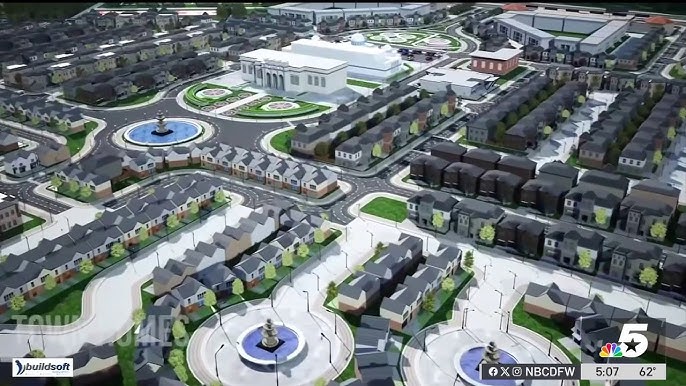
Katy, Texas – A large-scale Islamic development known as the Al-Huda Islamic Center is rapidly expanding on a 30-acre site in Katy, Texas, transforming former farmland into a comprehensive Muslim community campus.
The project, which began as a smaller initiative around 2020 and saw its grand opening in early 2024, now envisions a full 30-acre Islamic campus designed to serve the growing Muslim community in the Houston suburbs. Community leaders describe it as a center for faith, education, and social activities open to both Muslims and non-Muslims.
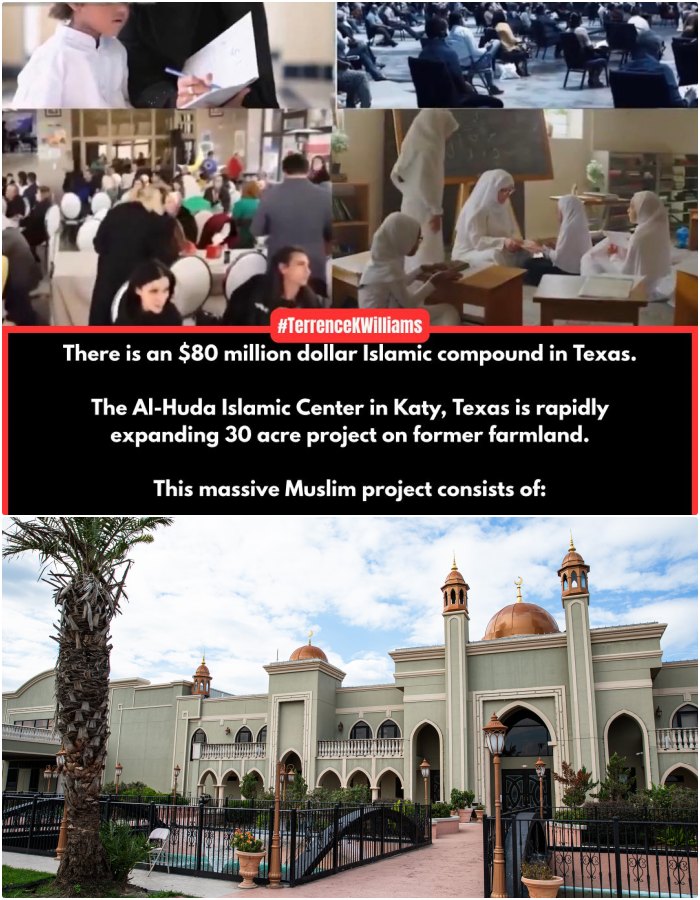
According to the center’s own plans and public discussions, the Al-Huda Islamic Center currently includes or is developing:
A main mosque (masjid)
Weekend and Sunday Islamic school programs
A Muslim preschool
Ties to Islamic higher education (university and college-level initiatives)
Sports fields and a multipurpose hall
Future plans for three new apartment buildings, each with 24 residential units
A new health clinic
An indoor swimming pool
A shopping strip mall
The ambitious development has drawn attention online, with some social media posts estimating the overall investment at around $80 million as the campus continues to grow.
Located at 6703 Pitts Road, the center has been actively fundraising and sharing progress updates on its official website. Phase one construction has been completed, and further expansions are underway or in planning, including educational facilities and residential components aimed at creating a more self-contained community environment.
Supporters view the project as a positive step for community building, faith practice, and family-oriented services in northwest Katy. Critics, however, have raised questions about the scale of the development and its long-term implications for the surrounding area, especially amid broader discussions about similar large Islamic projects in Texas, such as the controversial EPIC City proposal northeast of Dallas.
The Al-Huda Islamic Center maintains that its mission is to provide religious, educational, and social services while fostering unity. Construction and fundraising efforts remain ongoing, with the community encouraged to contribute through donations, volunteering, or participation in programs.
Local officials have not issued major public statements on the project, and development appears to be proceeding in line with standard zoning and permitting processes for the area. As the campus expands, it is expected to become one of the more prominent Islamic facilities serving the Houston metropolitan region.