Kaci-Rose Cratchley: The Micro-Preemie Given a 1% Chance Who Defied the Odds
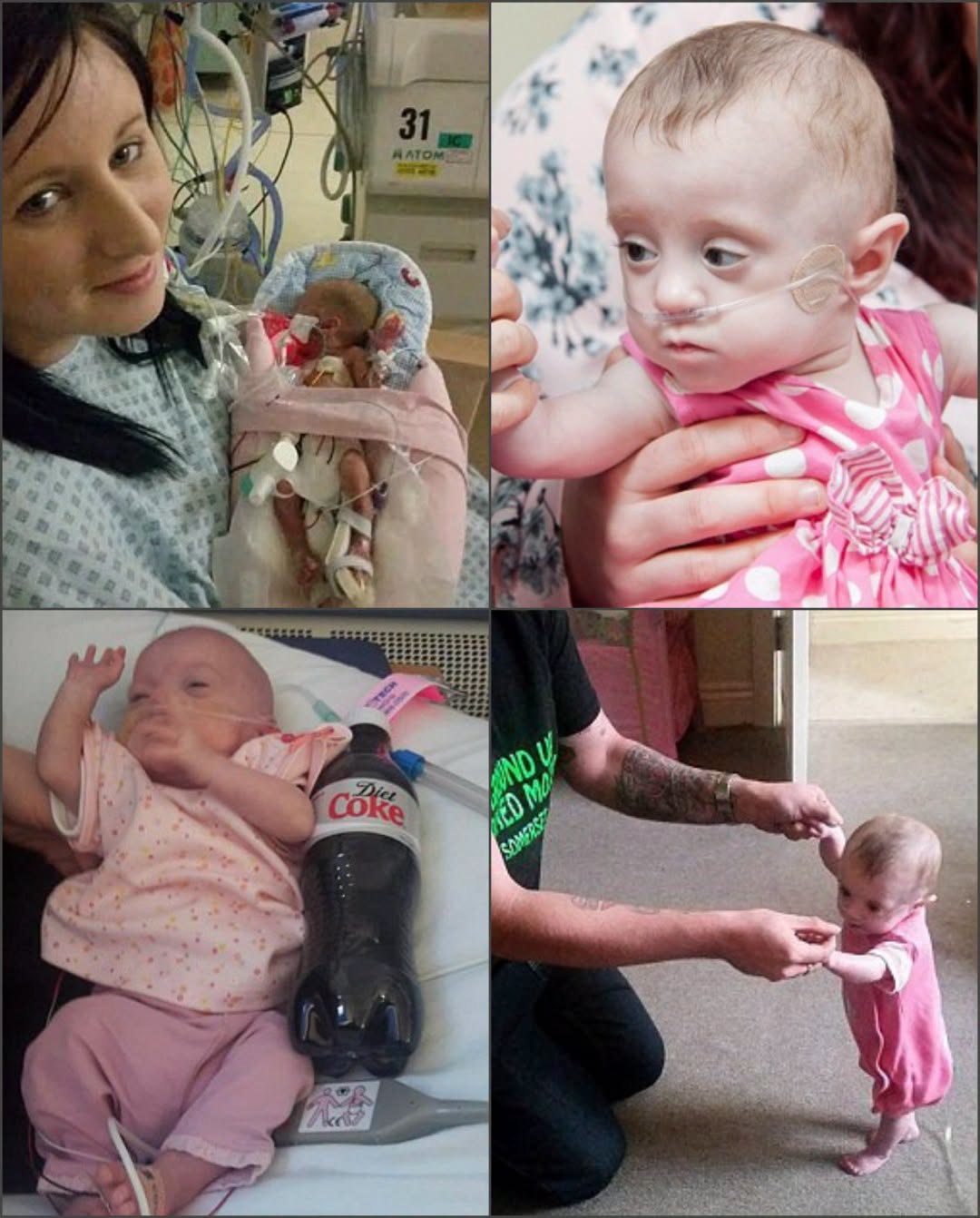
“She was literally the size of my hand when she was born.”
With just a one per cent chance of surviving labour, specialists told the mother-to-be to prepare for the worst and even suggested “letting her go.” Born at just 23 weeks and weighing only 1 lb 2 oz (approximately 510 grams), tiny Kaci-Rose Cratchley was given almost no chance of making it.
Her mother, Sadie Cratchley (then 20), went into unexpected labour in January 2015 while around 23 weeks pregnant. By the time she reached Musgrove Park Hospital in Taunton, Somerset, she was already dilated. Doctors explained that if she had arrived even one day earlier, they would likely have considered it a miscarriage and not attempted resuscitation. They asked Sadie and her partner Marc whether they wanted the medical team to try to save the baby, emphasising that survival was highly unlikely.
The couple chose to fight. Kaci-Rose was delivered weighing 1 lb 2 oz and measuring about 10.8 inches (27.5 cm). Her skin was translucent, bright red, and so thin that her veins were clearly visible. She was immediately transferred to a neonatal intensive care unit, where she spent months on breathing support (including 11 weeks on a ventilator), received medication for underdeveloped kidneys, and later underwent laser eye treatment because the blood vessels in her eyes had not formed properly.
Despite the extreme prematurity and multiple medical challenges, Kaci-Rose gradually stabilised. By the time she was around six to eight months old (corrected age still that of a much younger infant), she had reached a weight comparable to a full-term newborn and was able to go home. At that stage she still required oxygen support and close monitoring, and doctors had cautioned about possible long-term issues such as cerebral palsy, but her parents noted that she was already proving many of the bleakest predictions wrong.
Kaci-Rose’s survival highlighted both the fragility and the resilience of babies born at the edge of viability, as well as the difficult decisions families and medical teams face when labour begins far before the usual limits of neonatal care.
Sources:
- Contemporary reporting from The Mirror, LifeSiteNews, National Right to Life, and other outlets (September 2015) covering the birth of Kaci-Rose Cratchley at 23 weeks, her 1% survival outlook, neonatal care, and progress in the months that followed.