Didier Montalvo: The “Turtle Boy” Who Overcame a Rare Skin Condition
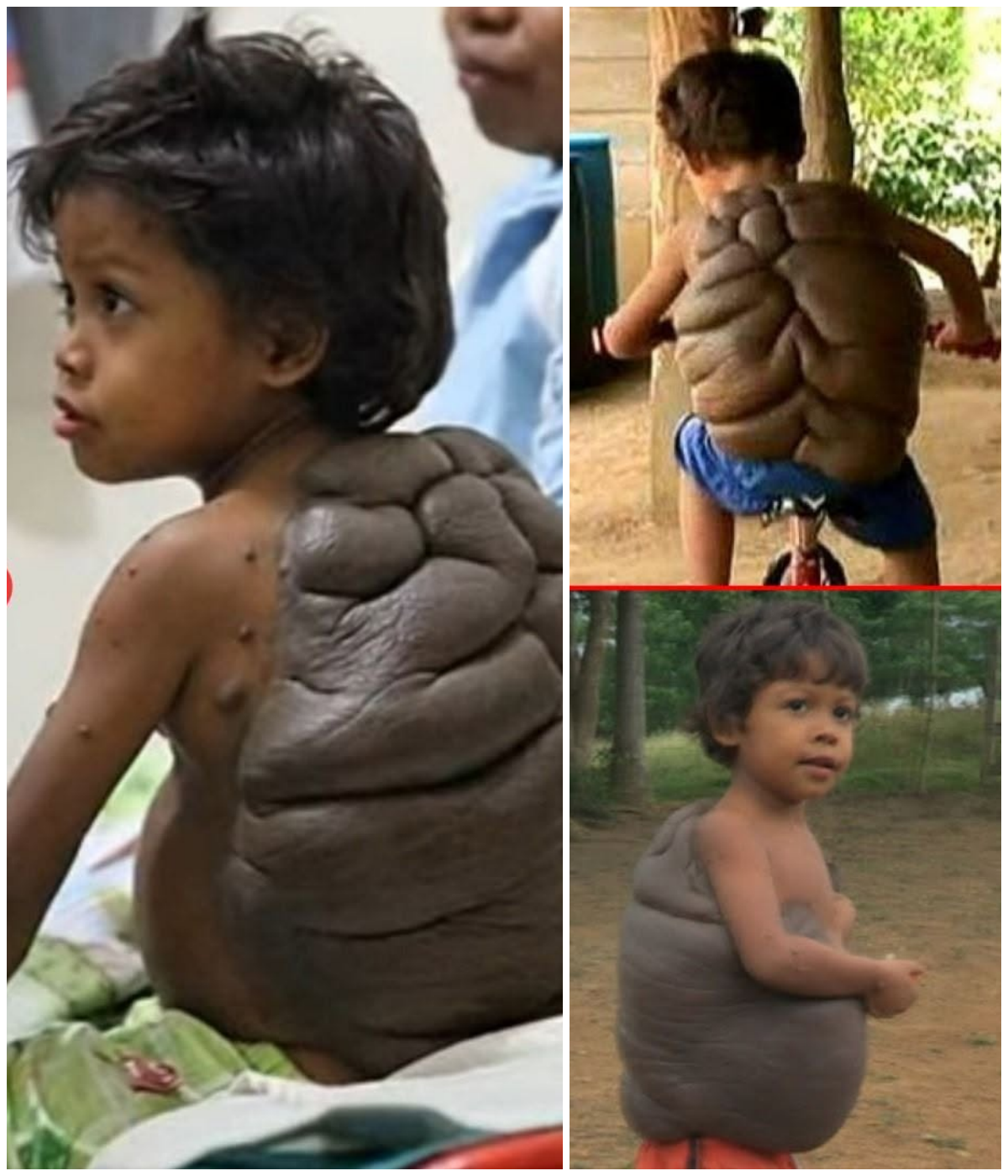
As a young boy growing up in rural Colombia, Didier Montalvo faced a medical condition so unusual that people in his community began calling him the “Turtle Boy.” Born with a severe form of giant congenital melanocytic nevus (GCMN), Didier had an enormous dark lesion covering much of his back and extending toward his chest and abdomen. Its thick, deeply furrowed surface resembled the shell of a turtle. A medical case report published in Cirugía Plástica Ibero-Latinoamericana described the lesion as measuring approximately 50 by 40 centimeters.
Giant congenital melanocytic nevus is a rare condition in which a large number of pigment-producing melanocytes develop in the skin before birth. The lesions can range from relatively flat and pigmented areas to thick, nodular or heavily textured growths. Although congenital nevi are often benign, giant lesions can be associated with significant medical concerns, including an increased risk of melanoma and, in some patients, neurological complications.
For Didier, the problem was not simply his appearance. As the lesion grew, it became extremely heavy and interfered with his movement and daily life. Reports about his case said that the mass eventually weighed several kilograms and covered a substantial portion of his body. The condition also had a profound social impact. Didier’s mother, Luz, struggled financially and could not afford the complex surgery he needed. The family also faced social isolation and misconceptions about the cause of his condition.
By the time Didier was six years old, he had not been able to experience childhood in the same way as many other children. His mother feared that attending school would expose him to ridicule and unwanted attention. According to the British Association of Plastic, Reconstructive and Aesthetic Surgeons, the family lived in a small Colombian community where superstition surrounding Didier’s condition contributed to their isolation. His mother simply wanted him to be able to attend school and grow up like any other child.
His circumstances changed when his story reached international audiences. British plastic surgeon Neil Bulstrode, a specialist from Great Ormond Street Hospital, became involved after learning about Didier’s condition. In 2012, Great Ormond Street Hospital confirmed that Bulstrode had traveled to Colombia to work with a local medical team. The goal was to remove the enormous birthmark and reconstruct the affected areas using a series of skin grafts.
The surgery was highly complex because the lesion was so extensive. Rather than being a single simple procedure, treatment involved removing the abnormal tissue and carrying out reconstruction in several stages. Doctors had to carefully plan how to replace the large areas of skin that were removed while preserving enough healthy tissue for successful healing. Great Ormond Street Hospital described the operation as complex surgery involving complete removal of the birthmark followed by a complicated series of skin grafts.
The transformation was significant. After the procedures, Didier was able to return home to his village and begin life without the enormous mass that had previously restricted him. Great Ormond Street Hospital reported that he was doing well after the treatment.
The story is particularly striking because earlier medical documentation had considered Didier’s condition extremely difficult to treat. A 2009 case report described a two-year-old Colombian boy with a giant congenital melanocytic nevus and concluded that, at that stage, the condition was considered inoperable because of associated cardiovascular, liver and spleen problems and the unfavorable prognosis. Later treatment, however, demonstrated that specialist reconstructive surgery could offer Didier a very different outcome.
His case eventually became the subject of the Channel 4 documentary “Turtle Boy,” which followed his condition and treatment. The documentary helped bring international attention to the challenges faced by children with rare visible medical conditions and to the possibilities of modern reconstructive surgery.
Didier’s story is therefore more than a dramatic medical transformation. It illustrates how a rare congenital condition can affect nearly every aspect of a child’s life—from mobility and physical comfort to education, social relationships and family circumstances. It also shows the importance of access to specialized medical care. What once appeared to be an overwhelming burden could eventually be treated through careful planning, multiple operations and international medical collaboration.
Perhaps the most meaningful part of Didier’s journey was the opportunity to reclaim an ordinary childhood. Instead of being defined by the huge lesion on his back or by the nickname given to him by others, he could return to his community with a chance to attend school, interact with other children and look toward the future with greater confidence.
His experience remains a powerful reminder that behind every extraordinary medical photograph is a real person—a child with hopes, fears and the simple desire to live without being judged by his appearance.
Sources
- Great Ormond Street Hospital — “Great Ormond Street Hospital surgeon operates on huge birthmark in Colombia.” Details Didier’s treatment, the involvement of surgeon Neil Bulstrode, the extent of his congenital melanocytic nevus and the staged reconstructive surgery.
- British Association of Plastic, Reconstructive and Aesthetic Surgeons — “Bodyshock: Channel 4 documentary ‘Turtle Boy’.” Provides background on Didier’s childhood, family circumstances, social isolation and the documentary about his treatment.
- Cirugía Plástica Ibero-Latinoamericana / SciELO — “Giant congenital melanocytic nevus. ‘Turtle boy’: Case report.” A medical case report documenting the size, appearance and medical complications associated with Didier’s condition.
- University of Bogotá Jorge Tadeo Lozano — “El niño tortuga.” Archived Colombian coverage describing Didier’s condition, family circumstances and subsequent surgery.
- Apple TV — “Turtle Boy.” Documentary description confirming the story of six-year-old Didier and his giant congenital melanocytic nevus.