Lakshmi Tatma: From Being Revered as a Goddess to Taking Her First Steps
- NguyenMien
- August 28, 2026
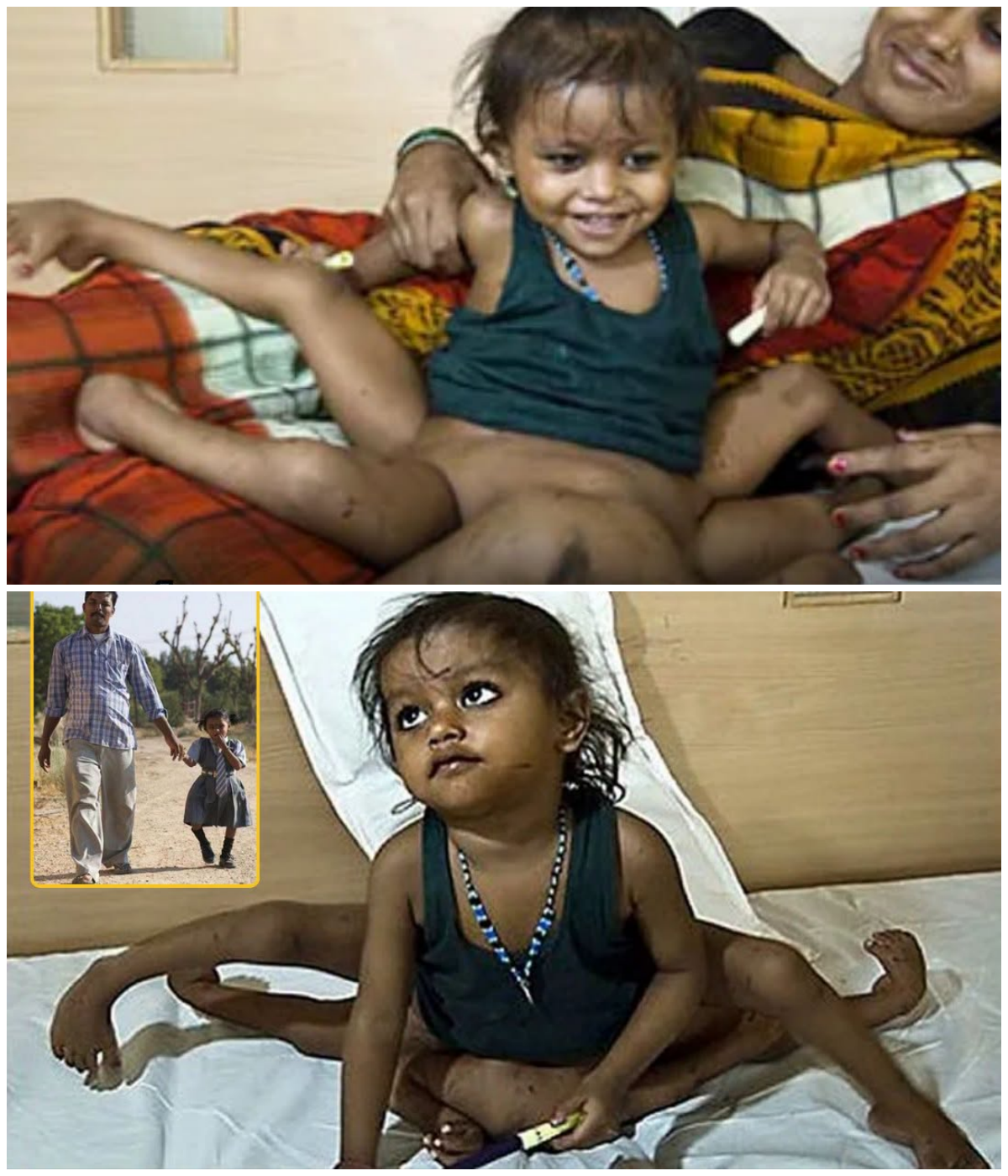
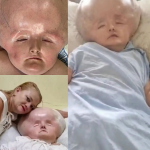
In 2005, in a remote village in Bihar, India, a baby girl named Lakshmi Tatma was born with an extraordinarily rare congenital condition. She appeared to have four arms and four legs in addition to her normal limbs, giving her a total of eight visible limbs.
The unusual appearance was caused by a parasitic twin—an incompletely developed twin that had become physically attached to Lakshmi during fetal development. The two bodies were joined around the pelvis, with the undeveloped twin lacking a head and functioning independently only through its connection to Lakshmi.
Lakshmi’s condition quickly attracted enormous attention in her rural community. Some villagers viewed her as an incarnation of the Hindu goddess Lakshmi, who is traditionally depicted with multiple arms. Her family received visitors who came to see the child, while others treated her condition as something mysterious and extraordinary.
But for doctors, the situation was far more serious.
Lakshmi had difficulty moving and could not walk normally. Doctors believed that leaving her body in that condition could lead to severe complications as she grew. The anatomy of the two twins was extraordinarily complex: their pelvises and spinal structures were connected, while some internal organs and blood vessels were also involved.
Help eventually came from a medical team in Bangalore.
In November 2007, surgeons at Sparsh Hospital undertook one of the most challenging operations of its kind. More than 30 doctors and specialists worked together to separate Lakshmi from her parasitic twin. The operation began on November 6 and lasted approximately 27 hours.
The procedure was extraordinarily complicated. Doctors had to separate the fused pelvic structures, deal with shared blood vessels and organs, and reconstruct Lakshmi’s pelvis. In one part of the operation, bone from the parasitic twin was used to help reconstruct her pelvis. The team also had to address complications involving the kidneys, urinary system, spine and other structures.
Against the odds, the operation was successful.
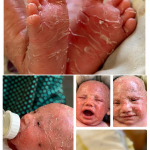
After surgery, Lakshmi spent weeks recovering. At first, even small improvements were significant. She was eventually able to sit independently and began attempting to crawl. Doctors and therapists then focused on rehabilitation, helping her develop strength and learn movements that had previously been impossible.
Several months later, Lakshmi began taking her first assisted steps with a walker.
Her mother, Poonam, described how Lakshmi would push herself backward in the walker and then laugh with happiness. For a child who had previously been unable to stand or walk normally, those small movements represented an extraordinary transformation.
Her recovery continued beyond the initial operation. In 2008, reports showed Lakshmi learning to walk and undergoing further rehabilitation. She still faced additional medical challenges and was expected to need further procedures, but her progress was remarkable.
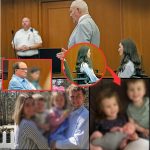
By 2010, reports described Lakshmi as an energetic young girl who had begun attending school. She enjoyed playing cricket with her brother and interacting with other children. Her mother reflected on how dramatically her daughter’s life had changed: before the operation, Lakshmi could not even walk; afterward, she was able to move around and participate in activities like other children.
Lakshmi’s story is remarkable not because she was once viewed as something supernatural, but because it demonstrates what can happen when complex medicine, rehabilitation and human determination come together.
Her birth initially appeared to place extraordinary limitations on her future. Yet a team of surgeons was willing to attempt an operation that many considered almost impossible, while her family continued to believe that she deserved the opportunity to live an ordinary childhood.
The transformation was not instantaneous. It required a dangerous operation, months of recovery and years of rehabilitation. But eventually, the little girl who had once struggled simply to move was able to stand, walk and go to school.
Lakshmi Tatma’s journey became a powerful reminder that a rare physical condition does not have to determine the limits of a person’s future.
What began as a story of extraordinary biology ultimately became a story of medicine, courage, family and a child taking her first steps toward an independent life.
Sources
- ABC News — reporting on Lakshmi’s 27-hour surgery and her first steps.
- CBS News — coverage of Lakshmi’s successful separation surgery and recovery.
- Times of India — reports on the surgical procedure and her post-operative rehabilitation.
- AFP — reporting on Lakshmi’s rehabilitation and progress after surgery.
- Rediff — 2008 report documenting Lakshmi learning to walk.
- Dân Trí — 2010 report on Lakshmi’s life and schooling after the operation.