CHARLOTTE GARSIDE: THE EXTRAORDINARY STORY OF A LITTLE GIRL WHO DEFIED THE ODDS
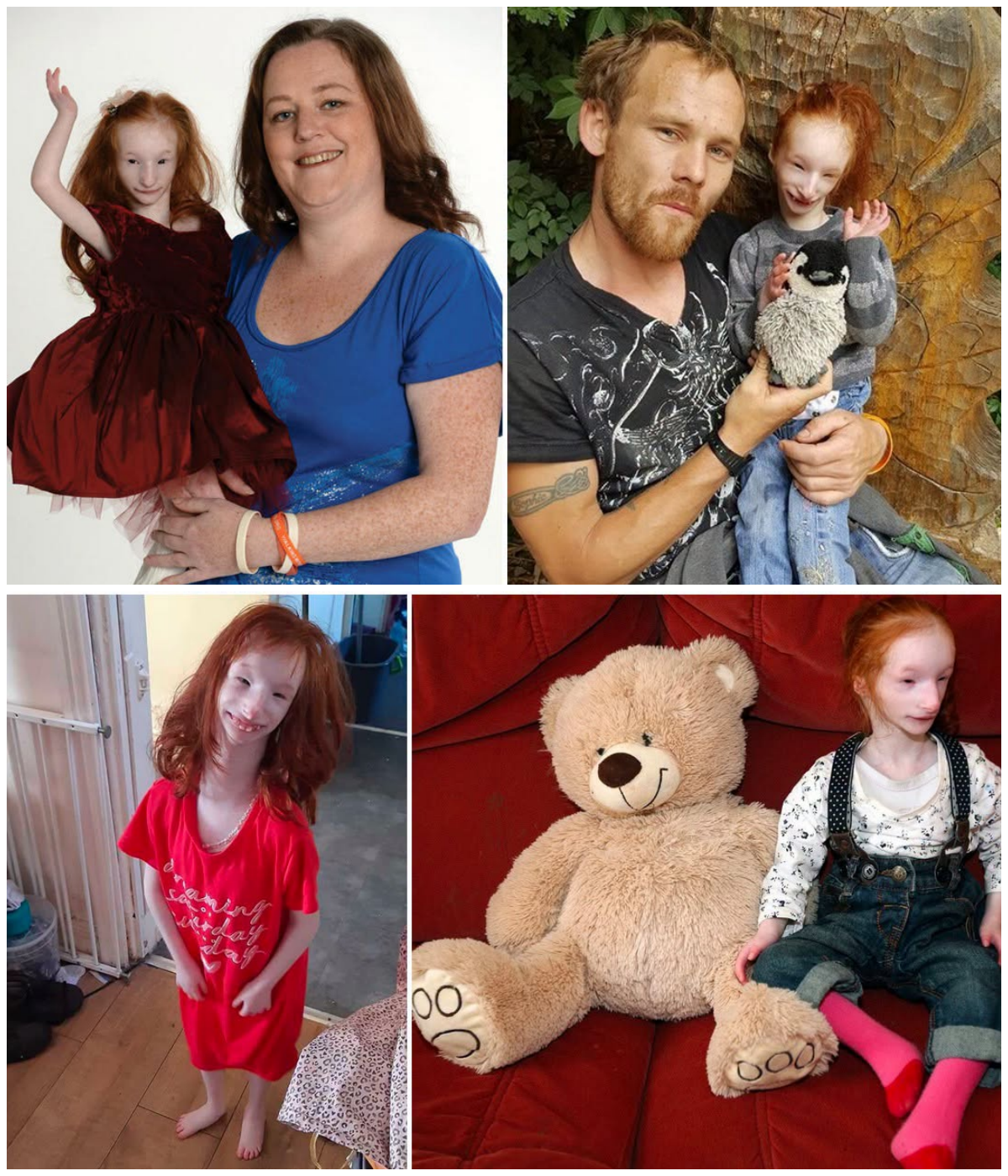
Charlotte Garside was born in England with an extraordinarily rare form of primordial dwarfism, a condition that severely affected her growth and development from the very beginning of her life.
At birth, Charlotte weighed less than one kilogram. She was so tiny that even clothing designed for premature babies was too large for her, and her family reportedly had to use doll-sized clothes. Doctors faced enormous uncertainty about her future and warned her parents that she might not survive beyond her first year.
But Charlotte continued to surprise everyone.
As she grew older, her remarkable size attracted international media attention, and she was often described by newspapers as the “world’s smallest girl.” Yet her mother, Emma Newman, made it clear that Charlotte was far more than a headline or a comparison to a doll.
She was a child with her own personality, determination, curiosity, and dreams.
By the age of five, Charlotte was approximately 68 centimeters tall and weighed around 4 kilograms. Despite the health and developmental challenges associated with her condition, she reached a milestone that her family had once feared might never happen: she started primary school.
Charlotte required additional support. Reports described her as having a weakened immune system and developmental delays, while her school provided assistance to help her participate in education. But those challenges did not erase her enthusiasm for childhood or her desire to experience the world alongside other children.
Her mother famously described her as having a “massive personality.”
That description may be the most important part of Charlotte’s story.
For years, people focused on how small she was. They compared her appearance to dolls, babies, and toys. But physical appearance could never fully explain who Charlotte was. Behind the extraordinary medical condition was a curious and determined little girl whose family chose not to build her life around frightening predictions.
Instead, they focused on giving her opportunities.
They celebrated birthdays, encouraged her education, supported her development, and allowed her to experience the ordinary moments of childhood that had once seemed uncertain.
Charlotte Garside’s story remains a powerful reminder that a person’s body, appearance, or medical diagnosis does not define the limits of their personality or human potential.
Doctors could not offer her family certainty about the future.
But Charlotte continued to reach milestones.
And perhaps that is what made her journey so inspiring: she was never simply the “smallest girl in the world.”
She was Charlotte—a child with her own identity, her own determination, and a personality much bigger than the assumptions people made when they first saw her.
Sources: Contemporary reports from Now To Love, Medical Daily, and Mumbai Mirror, based on reporting about Charlotte Garside and her family.