Tessa Evans: Born Without a Nose, First in the UK to Receive a Staged 3D Nasal Implant
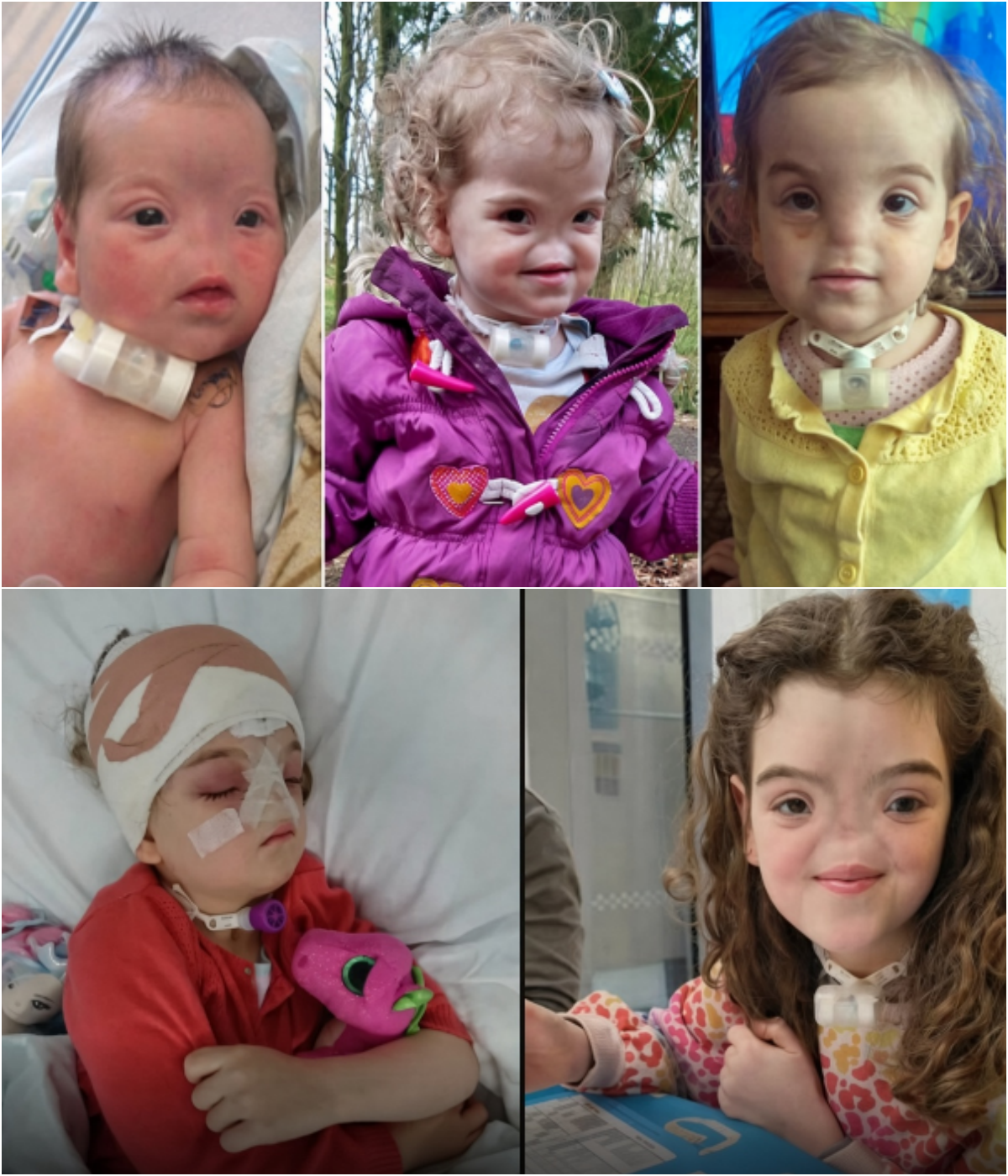
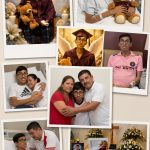
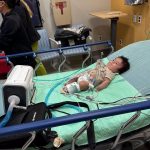
Tessa Evans was born on Valentine’s Day 2013 in Maghera, County Londonderry, Northern Ireland, with complete congenital arhinia — no external nose, no nasal cavities and no olfactory apparatus. A 20-week scan had shown an unusually flat profile; at birth the absence of a nose still shocked the delivery team. Newborns breathe through the nose. Tessa needed a tracheostomy so she could eat and sleep safely. She has no sense of smell. She can still cough, sneeze and catch a cold. The condition is linked to BAM syndrome and is reported in only a few dozen cases in the medical literature. Midface and eye development can also be affected.
Traditional reconstruction would have waited until the teenage years and used bone and skin grafts — major surgery with facial scars. Craniofacial plastic surgeon Jonathan Britto at Great Ormond Street Hospital offered another path. A CT scan of Tessa’s skull was printed in three dimensions. Clay was modelled on that replica to design a custom implant. The first PEEK implant was placed in 2015, when she was two, through an incision behind the hairline so the face itself was not cut. The aim was not a finished adult nose. It was a small dorsal bump that stretched the skin and could be exchanged for larger implants as she grew, roughly every two years, until a final shape and medical tattooing of nostrils and shadow in adolescence. Her mother, Grainne, and father, Nathan, called the decision a “no-brainer”: a little more Tessa, still recognisably Tessa.
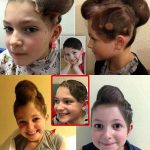
The first operations changed her profile. Later stages were harder. Infection tied to blind-ending tear ducts forced implants to be removed at times; further surgery at GOSH addressed the lacrimal system so a new implant might stay clean. By her early teens she was still on that long protocol, not a single “historic implant” that ended the story. The scientific paper on her case describes serial, patient-specific implants — 3D printing plus on-table scanning — as a way to shape soft tissue when there is no nose to rebuild from.
Arhinia is an airway emergency first and a facial difference second. The 3D implant did not give Tessa a working nose or a sense of smell. It gave her a midface that can grow with her, without grafting her own bones too early. That is the real achievement: staged engineering in a condition so rare that almost no one had a manual.
Sources
BBC News, 11 June 2015: “Tessa Evans: Transformative surgery for County Derry baby born without a nose.”
Express / Metro / Belfast Telegraph, June 2015: first UK 3D-planned nasal implant at Great Ormond Street.
JPRAS Open (2019): “Design and manufacturing of a patient-specific nasal implant for congenital arhinia.”