Gabriel Esdras of Bayeux: One Video, a Year-Old Boy, and a Country That Looked Back
Rita de Cássia, 30, lives in Bayeux, in Greater João Pessoa, Paraíba. Her son Gabriel Esdras was not a planned pregnancy. At 22 weeks a morphology scan, booked to learn the sex, showed multiple malformations: central-nervous-system anomalies, a craniofacial difference, turricephaly — a tall, tower-shaped skull — and dysmorphic hands and feet. She left her job to care for him. The family was borrowing money for milk. Then they posted an ordinary clip of a one-year-old being himself. In less than a month an almost-dormant profile passed 140,000 followers. Strangers sent help. Rita has said the larger change was not the cash. It was discovering that the country would look at her son without the rejection she had feared.
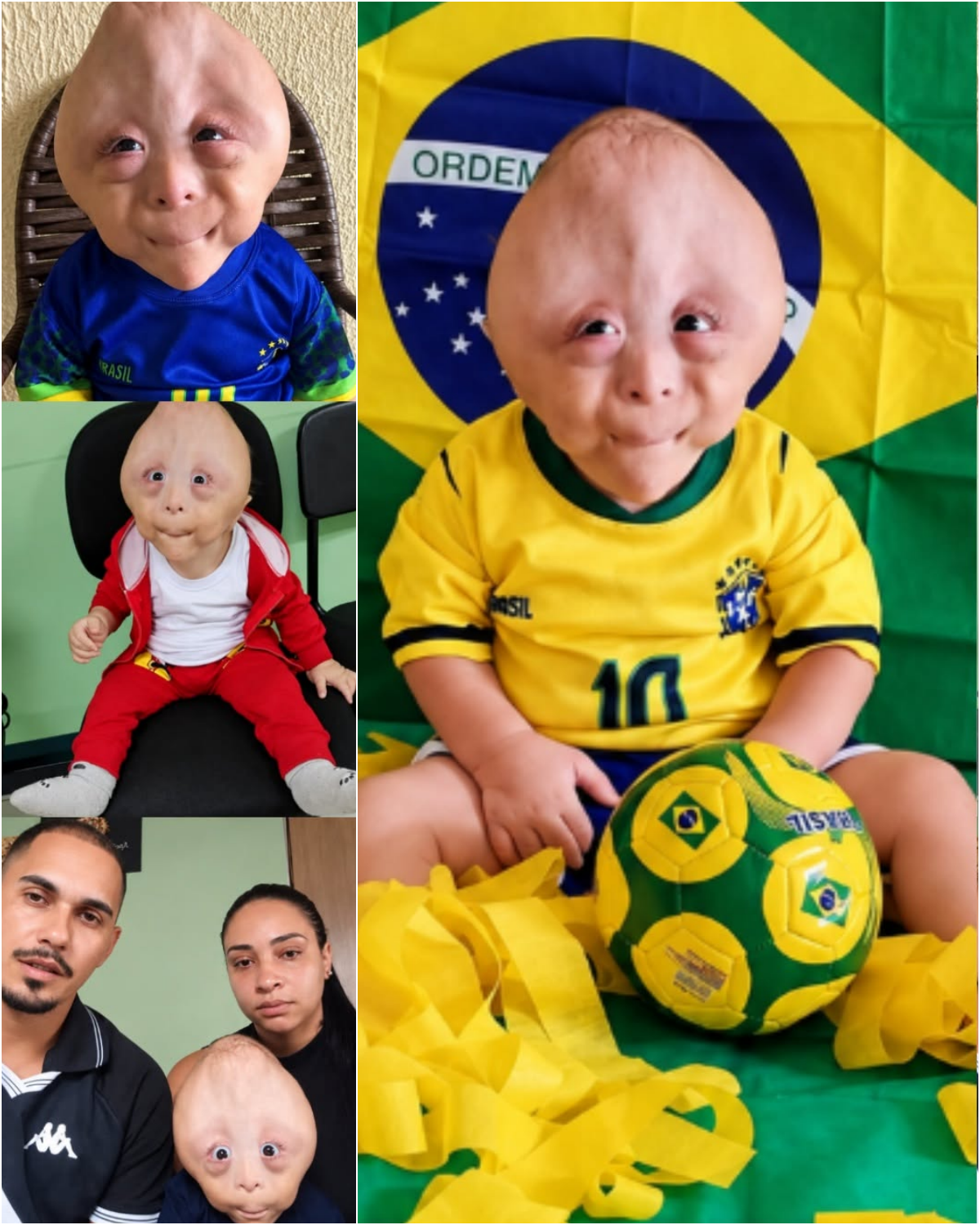
The photographs — the Brazil No. 10 shirt, the flag, the ball, the parents seated close — are the visual language of that week: a child claimed as Brazilian first. Medicine has a colder list. Turricephaly is premature fusion of cranial sutures that forces the skull upward. Combined with other malformations it usually means a genetic syndrome still being pieced together, a life of surgeries, therapy and uncertainty about how much the brain can do. G1 did not publish a single named diagnosis beyond “multiple genetic malformations.” That honesty is useful. Viral kindness does not rewrite a karyotype. It buys formula, a chair, a month in which a mother is not alone in a room.
What the clip did was simpler than a miracle. It showed a boy in a yellow shirt. People answered. For a family that had already chosen him at 22 weeks, that answer was the first evidence that the street might choose him too.
Sources: G1 Paraíba, 15 August 2026, “Família da Paraíba viraliza ao mostrar rotina e desafios de filho que nasceu com múltiplas malformações,” reporting Rita de Cássia and Gabriel Esdras of Bayeux.