A Voice Without a Jaw: How Isaiah Acosta Turned Silence Into Rap and Advocacy
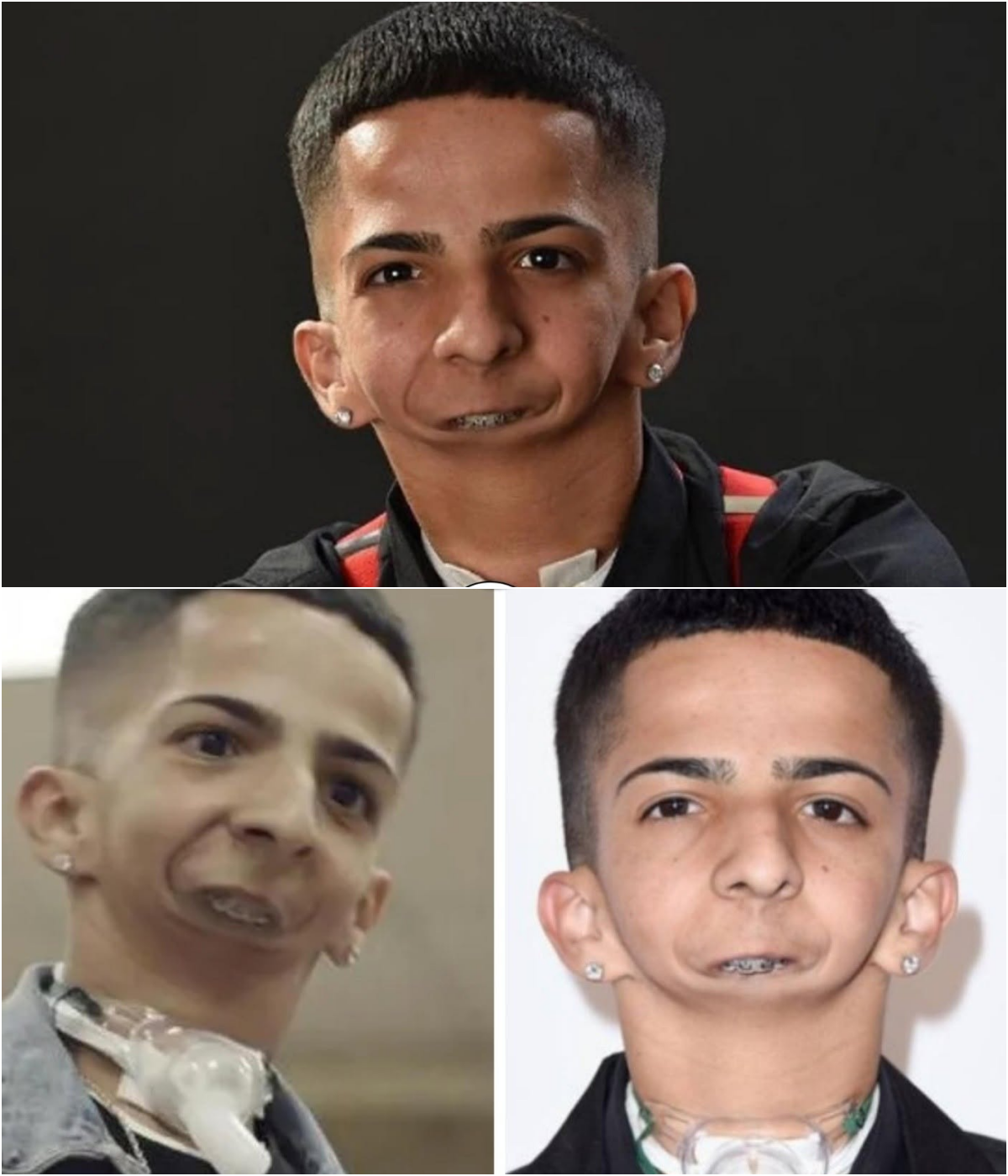
Doctors told Tarah Acosta that her newborn son might not live more than a few minutes. Isaiah Acosta was born in Arizona without a lower jaw—agnathia—and without a natural airway. He also had situs inversus: his major organs sat in a mirror-image arrangement. He spent the first quarter-hour of life without oxygen. If he survived, they said, he would likely be bed-bound, unable to walk, and without meaningful quality of life.
He survived. He walked. He never spoke a word in the conventional sense. A tracheostomy and a feeding tube became permanent parts of his life. He has never tasted food. He communicates by text, gesture, sign, and later a speech-generating device. When offered reconstructive surgery that would give him a cosmetic jaw but would not restore speech, he declined. He liked how he was made.
What he wanted was a voice of another kind. Isaiah loved hip-hop. He filled notebooks with lyrics about survival, family, and the refusal to accept other people’s limits. In 2016, as a Children’s Miracle Network Hospitals ambassador for Phoenix Children’s Hospital, he told organizers he wanted to be a rapper. Producer Topher Horman connected him with Phoenix artist Tikey “Trap House” Patterson.
Patterson became the voice on Isaiah’s first single, “Oxygen to Fly.” Isaiah wrote the words, chose the beat, and shaped the production. The track and its video, released in March 2017 with a short documentary, spread quickly. Lyrics such as “Jaw gone but I love myself / like a lion to my family” and “Could’ve died but I’m still here” turned a medical history into a public statement. Proceeds supported children’s hospitals. The pair performed, including an opening slot for Tech N9ne on Isaiah’s eighteenth birthday. They appeared at South by Southwest.
The attention was not only kind. Online bullying followed the viral wave. Isaiah answered by speaking—through his device and his writing—in schools about difference and resilience. He attended the Billboard Music Awards, sat as a guest of Senator Martha McSally at a State of the Union address, and delivered a TEDx talk titled “The Power of a Label: Unmute Yourself.”
Trap House died of pancreatic cancer in January 2019. Isaiah called him a big brother. The collaboration had already done its work: a mute teenager from Glendale had shown that the absence of a jaw and a larynx did not equal the absence of something to say.
Isaiah graduated from Apollo High School. He continued writing and advocating. His condition remains medically complex; survival itself was never guaranteed. What he built on top of that survival was a body of work and a public presence that treat limitation as material, not as a verdict.
A physical constraint can close one channel of expression. It does not have to close the rest.
Sources
- The Arizona Republic / azcentral.com, “A Phoenix teen, mute and born without a jaw, dreamed of rapping,” March 2017; follow-up coverage through 2019
- PEOPLE, “Phoenix Teen Who Was Born Without a Jaw and Has Never Spoken Finds His Voice,” May 2017
- Children’s Miracle Network Hospitals documentary and “Oxygen to Fly” music video (2017)
- BBC Outlook / BBC Mundo profiles, 2017
- NPR StoryCorps, conversation with Tarah Acosta
- TEDxColoradoSprings, “The power of a label: unmute yourself,” 2019
- Phoenix New Times, FOX 10 Phoenix, and 12 News local reporting, 2017–2019