The Brain That Would Not Stay Outside: Bentley Yoder and a 3-D Rehearsal
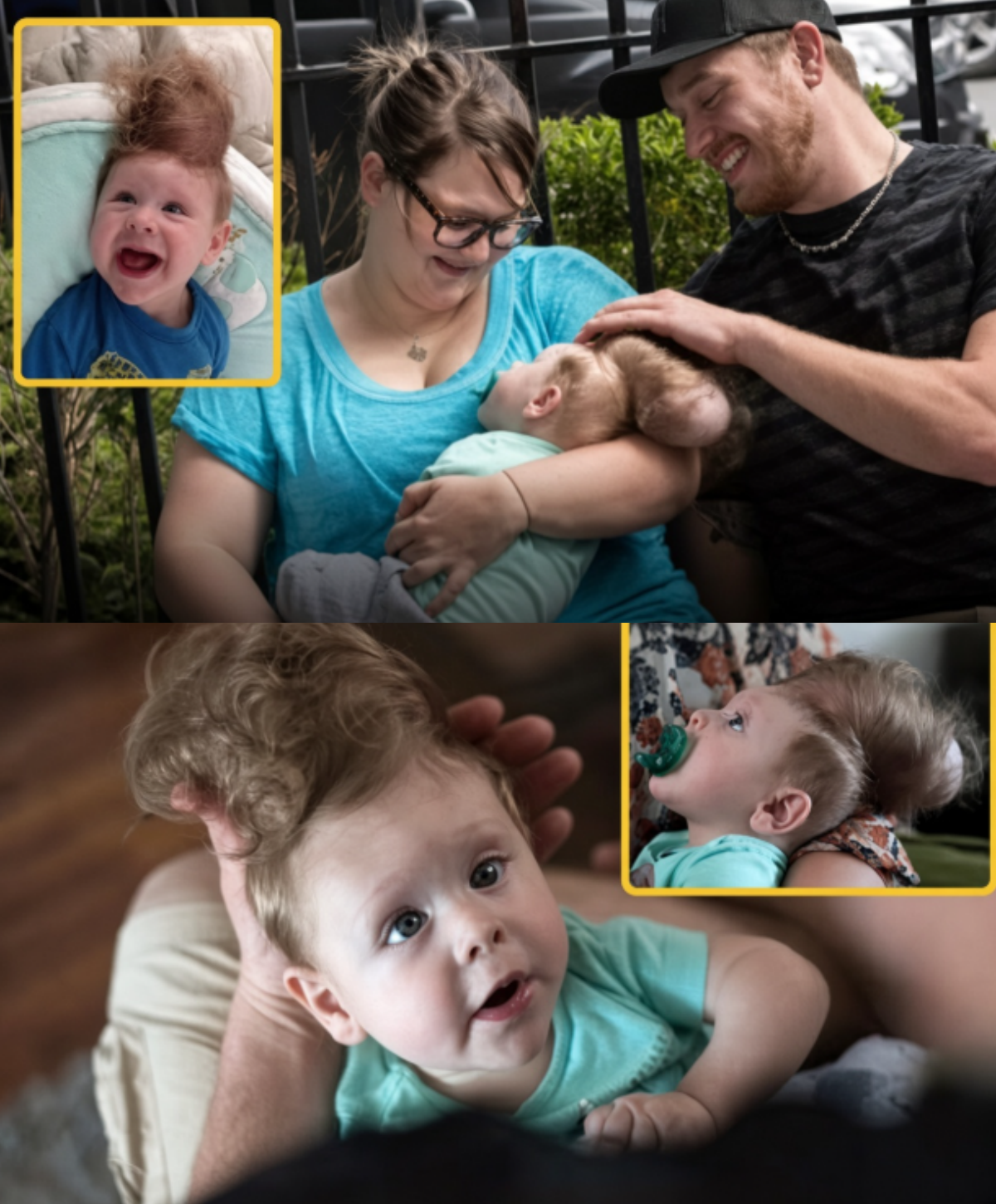
At a 20-week ultrasound in Ohio, Sierra and Dustin Yoder learned more than their baby’s sex. A large part of his brain was growing outside the skull — a vertex encephalocele. Doctors called him incompatible with life. The couple bought one onesie and expected to bury him in it.
Bentley was born on Halloween 2015 screaming. The sac on the crown of his head filled with cerebrospinal fluid and grew. He could not hold his head up. Local surgeons wanted to cut the sac off, assuming the tissue was dead. His parents thought he was using it. Cleveland Clinic neurosurgeon Violette Recinos agreed and pointed them to Boston Children’s Hospital.
Plastic surgeon Dr. John Meara and neurosurgeon Dr. Mark Proctor saw something rare even for them: about 100 cubic centimeters of living brain — motor, vision and problem-solving cortex — outside a microcephalic skull. They could not resect it. They had to expand the skull and slide the brain back in.
Boston Children’s Simulator Program printed 3-D models of skull, dura and brain from his CT scans. The surgeons practiced cutting the calvarium in vertical strips so it would open like a flower, holding the gap with dissolving plates, draining fluid, and easing tissue inside. They waited until Bentley was nearly seven months old — bone strong enough to hold plates, sac not yet ruptured.
On 24 May 2016 they operated. Operating time was a few hours, not a day-long siege. A small, clearly non-functional bridge of tissue was left out. Two later procedures added a shunt for hydrocephalus. Two weeks later he went home to Sugarcreek, Ohio, able to lift a head that no longer carried a water balloon of brain.
Encephalocele is usually treated by removing gliotic tissue and closing the hole. Bentley’s case flipped the rule: preserve the extracranial brain, make the box bigger. 3-D rehearsal made an “inoperable” geometry into a practiced sequence. No one could promise how much of that relocated cortex would work. His mother said meeting any milestone was already a blessing. The surgery did not invent a typical childhood. It gave him a skull that could hold the brain he was already using.
Sources
- Boston Children’s Hospital “Bentley’s Second Chance” series and craniofacial program notes (Drs. John Meara and Mark Proctor).
- STAT, “Daring brain surgery gives baby with a birth defect a chance,” Karen Weintraub, 15 June 2016.
- Washington Post / Boston.com coverage, June 2016.
- Ganske et al., Plastic and Reconstructive Surgery Global Open, 2018 (simulation-based planning of case B.Y.).