Nearly 20 Years Later, Police May Have New Answers — So Why Is Madeleine McCann Still Missing?
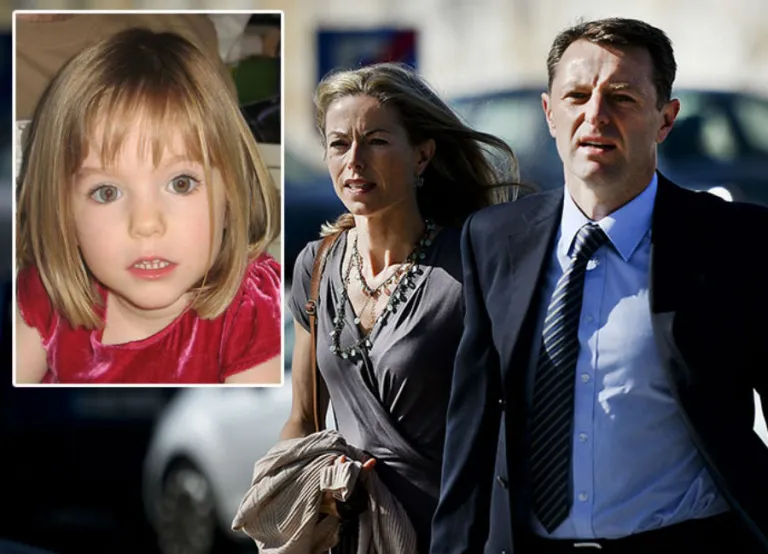
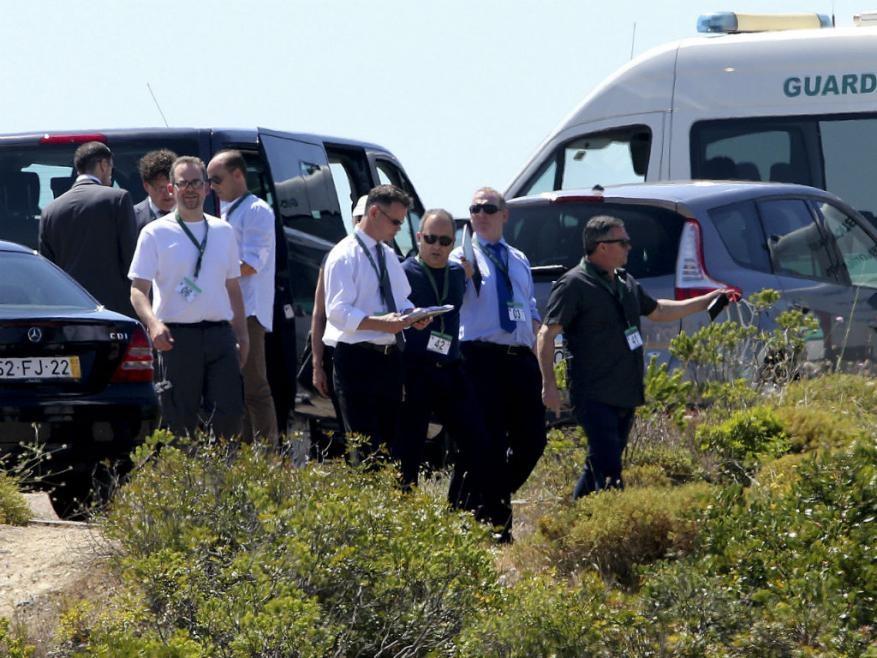 Nearly two decades have passed since three-year-old Madeleine McCann disappeared from a holiday apartment in Praia da Luz, Portugal. Nearly two decades of searches, investigations, international cooperation, public appeals and unanswered questions have followed.
And yet, Madeleine is still missing.
Now, as the case approaches its twentieth anniversary, a new development has once again placed the investigation under an intense international spotlight. Reports in 2026 said British investigators received a dossier from German authorities containing material considered potentially important to the investigation. The reported files are connected to Christian Brückner, the German suspect who has remained at the center of the case since German prosecutors identified him publicly in 2020.
But one question immediately follows:
If investigators really have important new material, why is there still no charge?
That question lies at the heart of the Madeleine McCann mystery.
The Metropolitan Police says Operation Grange remains an ongoing investigation. British detectives continue working with law-enforcement authorities in Portugal and Germany, and the Home Office continues to fund the operation.
That means the case is not closed.
It also means that many of the dramatic claims circulating online should be treated cautiously.
The reported dossier has generated headlines describing it as “crucial” or potentially significant. But the public has not been shown its complete contents, and British police have not announced that it proves what happened to Madeleine. The distinction is enormous.
A dossier can contain leads.
A lead can generate a search.
A search can produce evidence.
But evidence still has to be tested.
And evidence strong enough to justify suspicion is not necessarily evidence strong enough to support a criminal prosecution.
That is the uncomfortable reality surrounding Brückner.
German authorities have identified him as their main suspect and have said they believe Madeleine is dead. Portuguese authorities also formally treated him as a suspect. But Brückner has never been charged in connection with Madeleine’s disappearance, and he denies involvement.
For people following the case, that can be deeply frustrating.
After years of investigation, why has no prosecutor been able to put the case before a court?
The answer may lie in the difference between suspicion and proof.
Investigators may believe they know who is responsible.
They may believe they know what happened.
They may even possess evidence that appears highly suspicious.
But prosecutors must be able to demonstrate a legally sustainable chain of evidence.
That means establishing not merely that Brückner was in Portugal, or that he had a criminal history, but that evidence specifically connects him to Madeleine’s disappearance.
That is a much higher standard.
And it is exactly why the new dossier could matter.
If the files contain genuinely new information, investigators could use them to revisit old witnesses, reconstruct timelines, examine digital evidence or identify locations that had previously seemed irrelevant.
Perhaps a photograph contains information that investigators did not previously recognize.
Perhaps a digital record helps establish a timeline.
Perhaps a witness account takes on a different significance when combined with evidence uncovered years later.
Or perhaps the material ultimately leads nowhere.
Nobody outside the investigation can know yet.
That uncertainty is what makes the current situation so fascinating—and so frustrating.
The Madeleine investigation has already experienced multiple moments when public expectations surged.
There have been searches.
There have been reported sightings.
There have been suspects.
There have been alleged confessions.
There have been forensic claims.
And there have been countless theories.
But Madeleine has never been found.
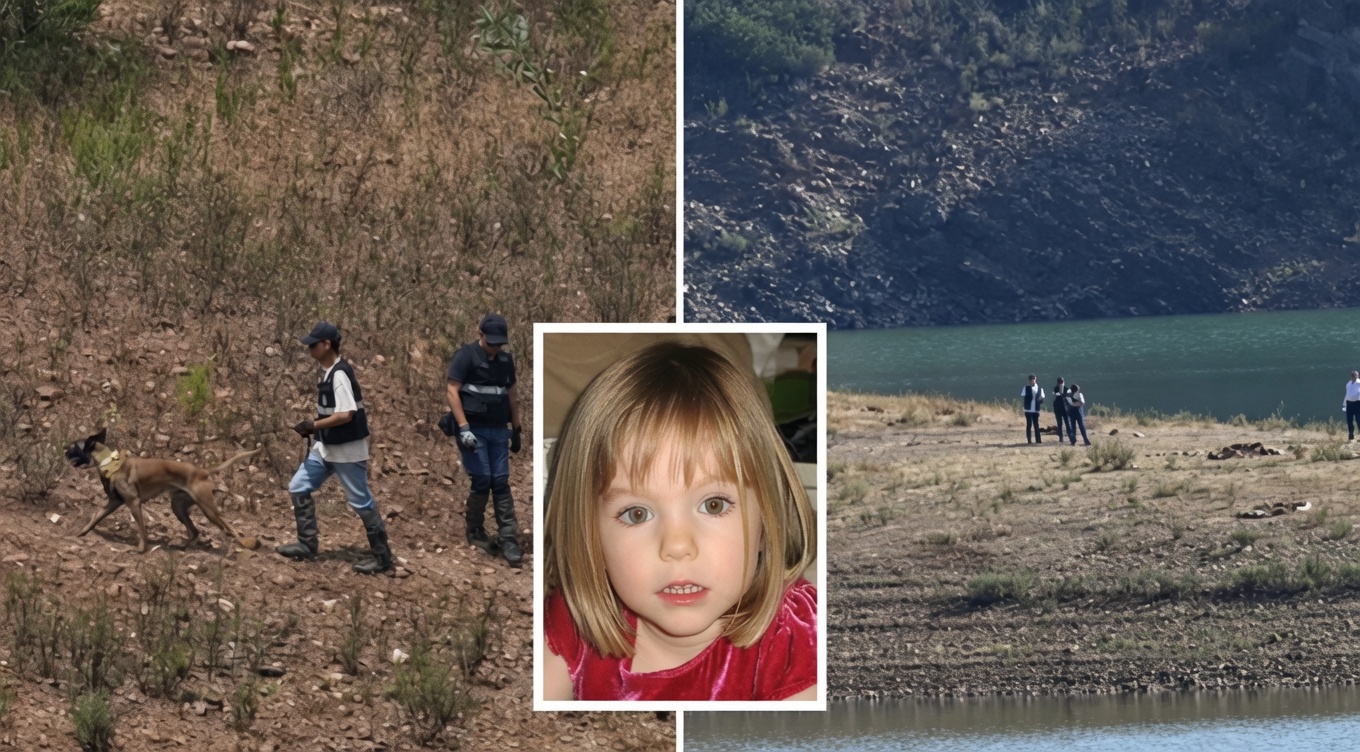
The June 2025 searches in Portugal, requested by German authorities, demonstrated that investigators were still prepared to physically search locations connected to the investigation. Previous searches, including the 2023 Arade Dam operation, produced material that authorities examined but did not publicly establish as belonging to Madeleine.
That history explains why investigators must be careful.
Every new claim creates hope.
But every unconfirmed claim can also create disappointment.
For Madeleine’s family, that cycle has lasted almost twenty years.
And now another potentially significant chapter has emerged.
The reported dossier also comes at a legally complicated time for Brückner.
Germany’s highest court is scheduled to hear an appeal in January 2027 relating to his acquittal on five unrelated sexual offences. That proceeding does not concern Madeleine’s disappearance.
Nevertheless, the hearing could once again put Brückner under intense legal scrutiny.
That has prompted speculation about whether developments in his separate legal case could eventually have consequences for the Madeleine investigation.
But there is an important warning here.
A conviction—or an acquittal—in another case would not automatically prove or disprove Brückner’s involvement in Madeleine’s disappearance.
The evidence in the Madeleine case must stand on its own.
That is why the next few months could be crucial.
If the dossier contains evidence that investigators believe can establish a direct connection to Madeleine, the case could move into a new phase.
There could be additional searches.
There could be new interviews.
There could be forensic testing.
And potentially, eventually, a prosecution.
But if the files merely reinforce information investigators already possessed, the case could remain stuck in the same position.
And that is perhaps the most painful possibility of all.
Because nearly twenty years after Madeleine vanished, the world still does not know where she is.
There is no confirmed location.
There is no court verdict.
There is no definitive public explanation of what happened.
There is only an investigation that continues.
The Metropolitan Police has made clear that Operation Grange is still active and that officers continue to work internationally.
So the real breaking-news question is not simply whether a new dossier exists.
It is this:
What can investigators actually prove with it?
Could these files finally connect Christian Brückner to the events of May 2007?
Could they lead investigators to a location where Madeleine might finally be found?
Could they provide the evidence needed to transform a long-standing suspicion into a prosecutable case?
Or, after nearly twenty years, will another major development produce more questions than answers?
The world has waited a very long time for the truth.
And perhaps the most infuriating part of the Madeleine McCann case is that, after all these years, the most important question remains exactly the same.
Where is Madeleine?