A Small Warrior: The Quiet Courage of Children Living With a Tracheostomy
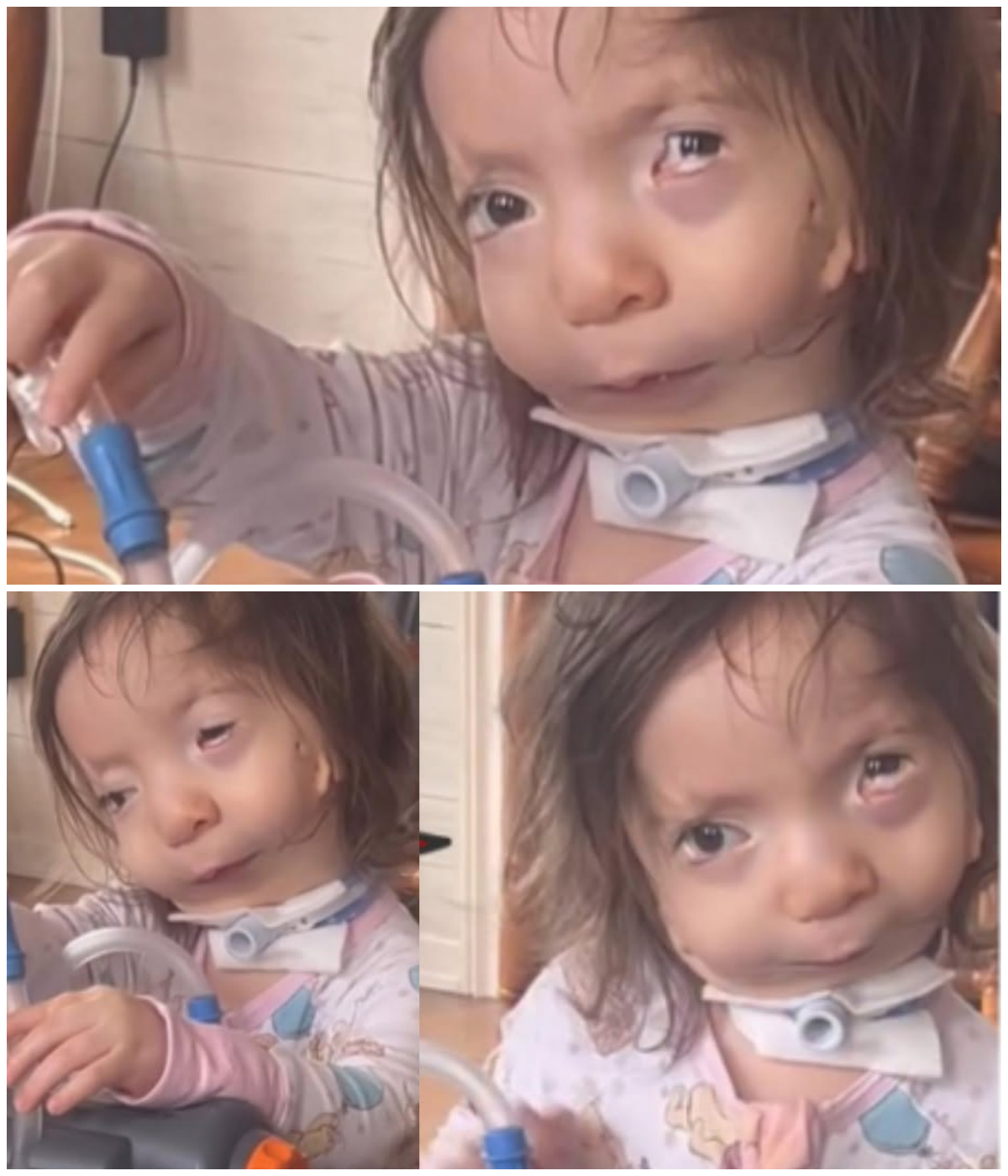
In living rooms and kitchens around the world, some of the bravest battles are fought not on battlefields, but at the kitchen table. A little girl in pink pajamas sits before a portable medical machine, her small hands adjusting tubing with practiced focus. A white collar secures a tracheostomy tube at her neck. Clear tubing runs across her chest. Her eyes are bright, her expression calm. To those who do not know this life, the scene looks fragile. To the families who live it every day, it is simply Tuesday morning.
A tracheostomy is a surgically created opening in the windpipe that allows a child to breathe when the upper airway cannot do the job safely on its own. Conditions that lead to this procedure include congenital airway narrowing, severe lung disease after premature birth, neurological disorders that weaken breathing muscles, and rare syndromes that affect the structure of the face and airway. Once the tube is in place, air no longer needs to travel through the nose and mouth. The child breathes through the neck.
That single change reshapes an entire family’s daily rhythm. Caregivers must suction secretions from the tube many times a day so it does not become blocked. They must keep the air humidified, change ties and dressings, watch skin around the stoma for irritation, and remain alert for emergencies such as accidental decannulation—when the tube comes out. Many children also need a ventilator, a feeding tube, oxygen, and pulse-oximetry monitoring around the clock. An awake, trained adult must be nearby at all times.
Yet the photographs and videos that families share tell another story. Children with trachs laugh, play with toys, sit at the table, and look straight into the camera with the same curiosity as any other toddler. Parents describe “inchstones” rather than milestones: the first night at home without an alarm, the first time their child tolerated a bath without panic, the first school trip made possible because the trach gave them a stable airway. One mother whose daughter later had her tube removed after more than three years wrote that the device had given her child the chance to speak, eat, and visit Disneyland—things she once thought impossible.
Medical teams emphasize that a tracheostomy is not a life sentence of isolation. With training, home nursing support when available, and the right equipment, children can attend school, travel, and participate in family life. The greatest challenges are often logistical and emotional: the shortage of pediatric home-care nurses, the cost of supplies, the constant vigilance, and the social stares that can wound a child’s self-image as they grow older.
Still, families repeatedly describe a transformation. In the first months after surgery they feel stretched, frightened, and overwhelmed. By the end of the first year many speak of gratitude, competence, and a new definition of normal. “It’s old hat now,” one father said of his son’s trach care. Another parent looked back on a year of hospital gray skies and realized the family was now sitting in ordinary sunshine.
The little girl in the photograph does not need to be named to be understood. Her story is shared by thousands of children whose airways needed help. Every careful suction, every tube change, every night a parent sleeps with one ear open is an act of love that keeps a small heart beating. Courage, in this context, is not the absence of fear. It is the decision to keep going—one breath, one therapy session, one ordinary morning at the kitchen table at a time.
Her bright eyes remind us of a simple truth: the smallest bodies can carry the largest measure of resilience. And every day she is here is already a victory.
Sources
- Children’s Hospital of Philadelphia. “Caring for Your Child with a Tracheostomy at Home.”
- Memorial Sloan Kettering Cancer Center. “Caring for Your Child’s Tracheostomy.”
- Shiley Pediatric Homecare Handbook (Medtronic).
- “Feeling stretched: Parents’ narratives about challenges to resilience when their child has a tracheostomy.” International Journal of Pediatric Otorhinolaryngology, 2024.
- “Impact of paediatric tracheostomy on children and caregivers’ quality of life.” PMC, 2025.
- Nationwide Children’s Hospital and similar pediatric ENT patient stories (Eliza and other trach-to-decannulation cases).
- Connecticut Children’s and UC Davis Children’s Hospital family education materials on pediatric tracheostomy home care.