Bark on the Hands: Epidermodysplasia Verruciformis and the Child in the Photographs
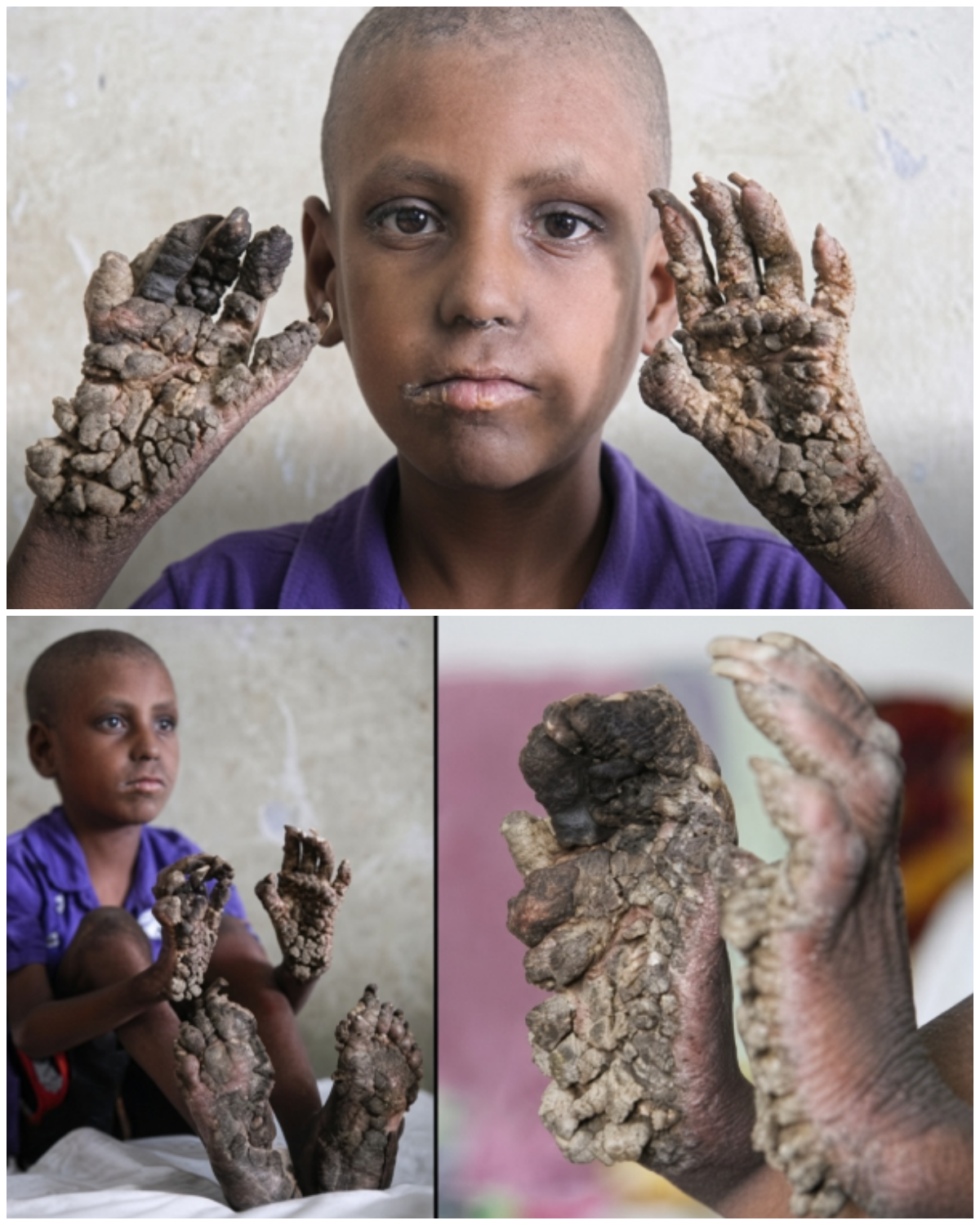
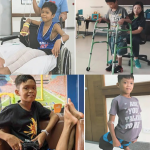
The pictures show a boy with a shaved head holding up hands that look like cracked wood. The same thick, brown, bark-like keratin covers his feet. The Spanish caption names him Shah Gul, places him in rural Pakistan, and says Karachi surgeons cut the growths away and grafted skin so he could use his joints again.
No news archive or medical paper confirms a Pakistani child by that name treated for “tree-man” disease in Karachi. A different Shah Gul Mazari, also from Pakistan, was reported in 2017 with Hirschsprung’s disease and a swollen abdomen—not bark-like skin. A consanguineous Pakistani family with epidermodysplasia verruciformis (EV) has been published (a TMC8 splice variant), but that report does not match this boy’s name or a documented multi-stage reconstructive series.
The condition in the photos is real. EV—also called Lewandowsky-Lutz dysplasia or, in extreme form, “tree-man syndrome”—is a rare genetic failure of the skin’s defense against certain beta human papillomaviruses (especially HPV-5 and HPV-8). Mutations in TMC6 (EVER1), TMC8 (EVER2), or CIB1 leave the immune system unable to keep those viruses in check. Ordinary people clear the same viruses without notice. In EV, flat warts and scaly plaques appear in childhood, usually on sun-exposed skin. In the rarest, most severe cases they pile into woody, overlapping masses that lock the fingers and toes.
Those masses are not contagious in the casual sense; you do not catch EV by touching the child. The virus is widespread; the gene defect is not. Growths can ulcerate, smell, bleed, and raise the lifetime risk of skin cancer on sun-damaged sites. Surgery can lift the bark and free a joint. The warts often return. Patients need repeated excision, sun protection, and lifelong skin checks. There is no gene cure.
Whether the boy in these frames is named Shah Gul, and whether Karachi microsurgeons restored his grip, remains unverified in the public record. What the images do document is the extreme end of EV: a child’s hands and feet turned into something that looks like tree bark, and a medical problem that is genetic, viral, and brutally visible.
Sources
- Cleveland Clinic / Verywell Health / Medical News Today: epidermodysplasia verruciformis (“tree-man syndrome”)
- Clinical and Experimental Dermatology (2023): TMC8 splice variant causing EV in a Pakistani family
- WebMD / Pathology Outlines: clinical features, HPV-5/8, cancer risk
- Daily Mail (2017): Shah Gul Mazari—Hirschsprung’s disease, not EV (name collision)
- Classic “tree man” surgical cases (e.g., Abul Bajandar, Muhammad Taluli) for comparison of bark-like keratin and recurrent surgery