Roona Begum: Extreme Congenital Hydrocephalus, Staged Shunting, and Cranial Remodelling
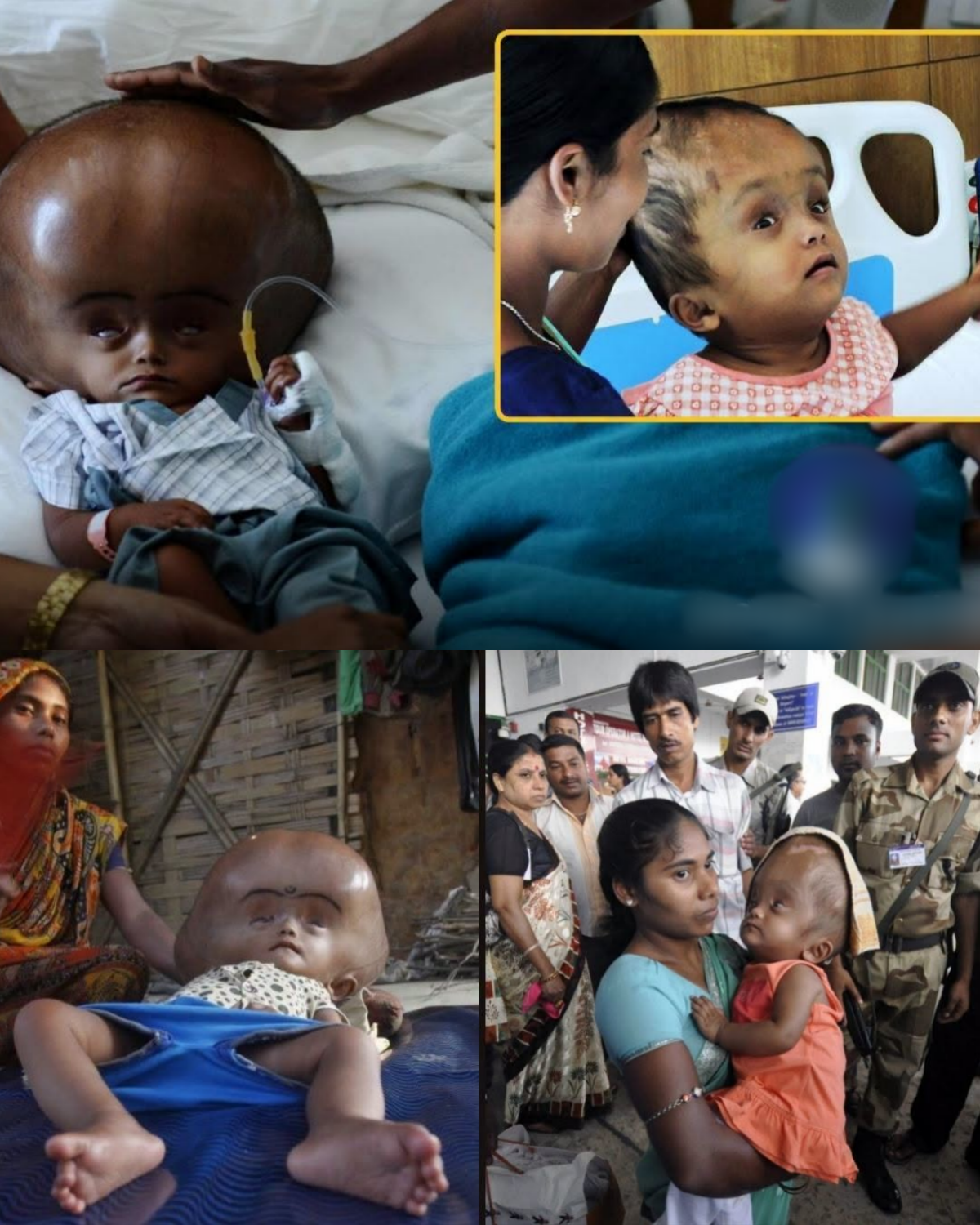
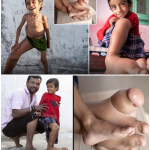
Roona Begum was born in a remote village in Tripura, in India’s northeast, to daily-wage labourer Abdul Rehman and Fatima (Fatema) Khatun. Soon after birth she developed congenital hydrocephalus: cerebrospinal fluid accumulated in the ventricles, the skull expanded, and her head became so heavy it was estimated to account for about half her body weight. She could not sit or lift her head. Stretched scalp pulled her eyelids over her eyes. Local hospitals had no way to treat a case of that size.
By the time she reached Fortis Memorial Research Institute in Gurgaon in April 2013, at about 16–18 months, her head circumference was 94 centimetres—roughly three times a typical infant measurement. Surgeons described about ten litres of excess fluid. Photographs taken in the village circulated worldwide. Two Norwegian students ran a crowdfunding campaign that raised more than $60,000; Fortis Foundation covered the rest and treated her without charge. Neurosurgeon Sandeep Vaishya said there was no useful precedent at that extreme.
The team did not empty the skull at once. Rapid decompression can collapse the brain and cause bleeding. They first used an external ventricular drain to remove fluid in a controlled way, then placed a ventriculoperitoneal shunt—a valve and catheter that send fluid into the abdomen, where it is absorbed. Cranial remodelling followed: excess bone was reduced and the vault reshaped over several operations, with pressure dressings between stages. After the first admission of 105 days her circumference was about 58 cm. A later stay brought it near 57 cm. She could move her neck, open her eyes, smile, and later sleep on her stomach instead of living with pressure sores on the back of the head. Plastic surgeon Rashmi Taneja was part of the reconstructive team. Estimated cost of the first campaign of care was about 30 lakh rupees.
The result was functional, not a return to a textbook skull. She still needed further surgery, physiotherapy and nutrition. She did not walk or feed independently. In June 2017, at about five and a half, after eight procedures at Fortis and while another operation was planned, she died at home after an acute respiratory crisis. Her father said she had eaten that day and then deteriorated within minutes. Media reports attributed the death to complications with residual fluid and infection rather than a simple reversal of the 2013 reconstruction.
Roona’s case showed two things at once. Extreme infant hydrocephalus can be reduced with slow drainage, a shunt and staged vault remodelling when a tertiary centre and funding exist. It also showed the limit of that rescue: delayed treatment, thin cortical mantle, underdeveloped neck muscles and a village without follow-up care leave a child fragile even after the headline measurement falls from 94 cm to the high 50s. The operations gave her years of sight, interaction and a lighter head. They did not give her a durable, ordinary childhood.
Sources
- CNN; AFP via The Independent and Yahoo
- Business Standard / PTI; Times of India (Gurgaon)
- Fortis Healthcare / Fortis Foundation statements
- India.com report on her death, June 2017
- Netflix documentary Rooting for Roona (clinical narrative of the Fortis admissions)