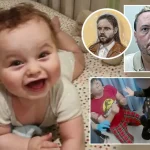
Baby Harlow’s Battle With a Rapidly Growing Hemangioma and the Fight to Protect Her Vision
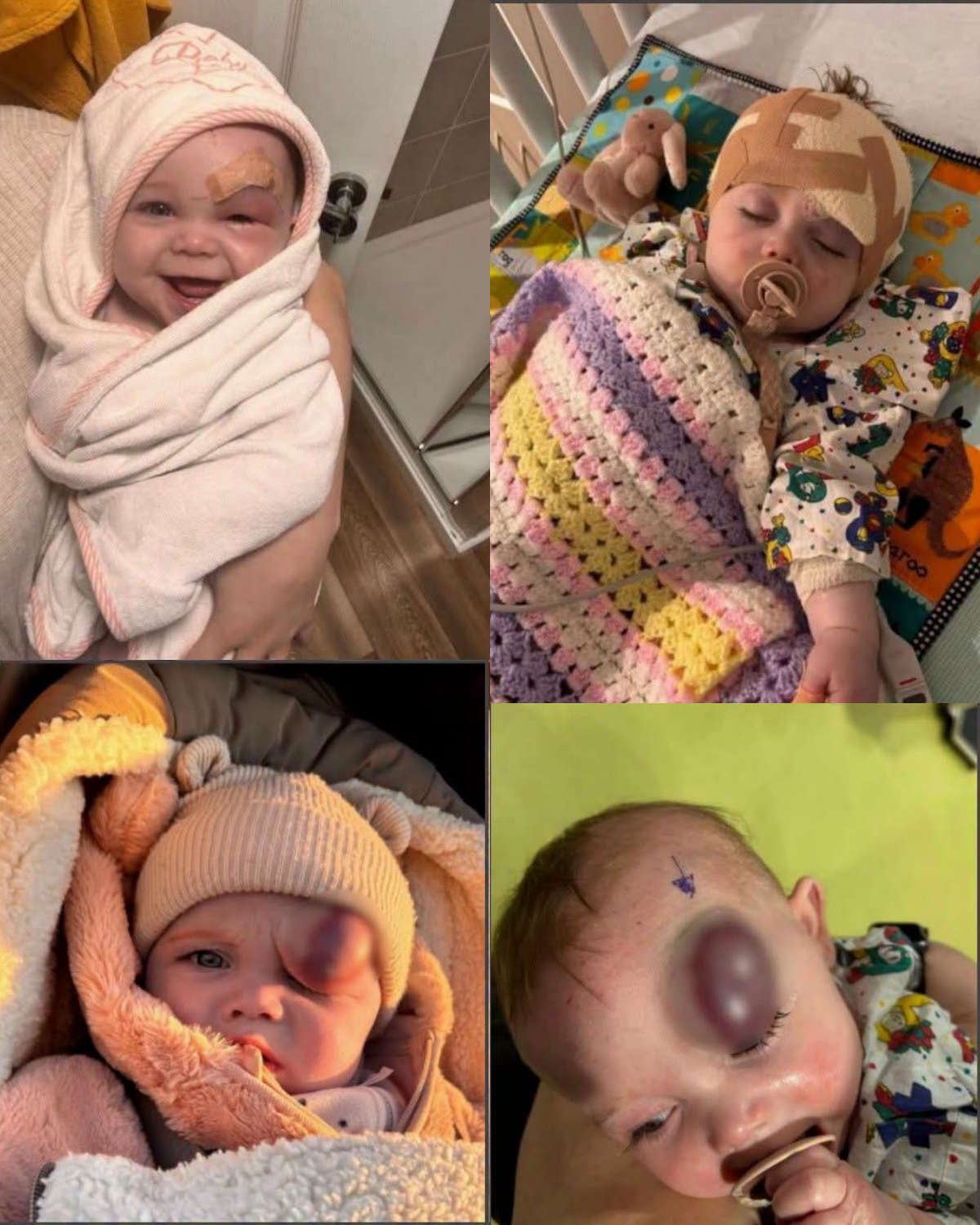
What first appeared to be a small red mark on baby Harlow’s face eventually became a serious medical concern for her family.
According to a recent account of Harlow’s story, doctors diagnosed the mark as a hemangioma, a benign growth involving an abnormal collection of blood vessels. Although many infantile hemangiomas are harmless and eventually shrink on their own, some can grow quickly and cause complications when they develop near important structures such as the eyes.
A small mark that began to grow
Harlow’s family initially believed the mark might be something they could manage with treatment. However, the growth reportedly increased rapidly around her eye, raising concerns about the potential impact on her vision.
This type of situation can be particularly urgent in infants. The American Academy of Pediatrics notes that infantile hemangiomas typically experience their most rapid growth between 1 and 3 months of age, and lesions involving the eyelids or area around the eye can interfere with the visual axis and contribute to problems such as astigmatism, strabismus and amblyopia, commonly known as “lazy eye.”
For Harlow’s family, the medical issue became more than an unusual mark on their daughter’s face. Hospital appointments, treatments and ongoing monitoring became part of their daily lives, accompanied by the fear that the growth could permanently affect her sight.
Treatment did not provide the answer the family hoped for
Medical treatment is often the first approach for problematic infantile hemangiomas. Current clinical guidelines identify oral propranolol as the preferred systemic treatment when medication is required. The drug can reduce the size and color of many hemangiomas and has become a major treatment option for lesions that threaten function.
However, not every lesion responds sufficiently to medical treatment.
In Harlow’s reported case, the treatments being attempted were ultimately not enough to address the danger posed by the growth. With her vision potentially at risk, doctors and her family were faced with a difficult decision: surgery.
A particularly difficult decision because of her age
Surgery for an infantile hemangioma is not normally the first choice. The AAP notes that operating on very young infants can carry increased concerns involving anesthesia, blood loss and injury because hemangiomas can be highly vascular. Nevertheless, surgery can be considered in selected cases, including when other treatments fail or when a lesion creates a critical functional problem.
According to the account of Harlow’s experience, doctors determined that surgical removal offered the best opportunity to protect her eyesight.
The report also describes Harlow as becoming the youngest baby at her hospital to undergo the specialized procedure. That particular claim could not be independently confirmed in the medical or hospital sources located for this article, so it should be regarded as information from the published account rather than an independently verified hospital record.
For her parents, however, the significance was not about a record. It was about their baby.
More than a medical struggle
Harlow’s family also faced an emotional challenge that many families of children with visible medical conditions experience: the reactions of strangers.
According to the account, people sometimes stared at Harlow or made assumptions about her appearance without knowing what she and her family were going through.
A visible birthmark or vascular condition can quickly become the first thing strangers notice. But behind the medical diagnosis is still a child — with a personality, a family and a life beyond the condition.
Harlow’s story illustrates why awareness matters. Infantile hemangiomas are medical conditions that can vary enormously from one child to another. Some require only observation, while others need medication, laser treatment or, in selected circumstances, surgery.
A fight centered on her future
The most important part of Harlow’s story is not simply the appearance of the hemangioma, but the potential effect it had on something her family could not take for granted: her ability to see.
Medical guidelines emphasize that hemangiomas around the eye require early assessment because vision-related complications can become permanent if treatment is delayed.
For Harlow’s family, what began as a tiny red mark became months of uncertainty, medical treatment and difficult decisions. Eventually, they placed their trust in specialists and proceeded with surgery when other options were no longer sufficient.
Her story is a reminder that a seemingly small change on a baby’s skin can sometimes require careful medical attention — and that behind every diagnosis is a child whose future matters far more than the appearance of a birthmark.
Sources
- American Academy of Pediatrics — Clinical Practice Guideline for the Management of Infantile Hemangiomas
- American Academy of Pediatrics — Diagnosis and Management of Infantile Hemangioma
- American Academy of Pediatrics — Diagnosis and Management of Infantile Hemangioma: Executive Summary
- Published account of Baby Harlow’s case