Mohammad Kaleem: The Indian Boy Whose Extraordinary Hands Drew Worldwide Attention
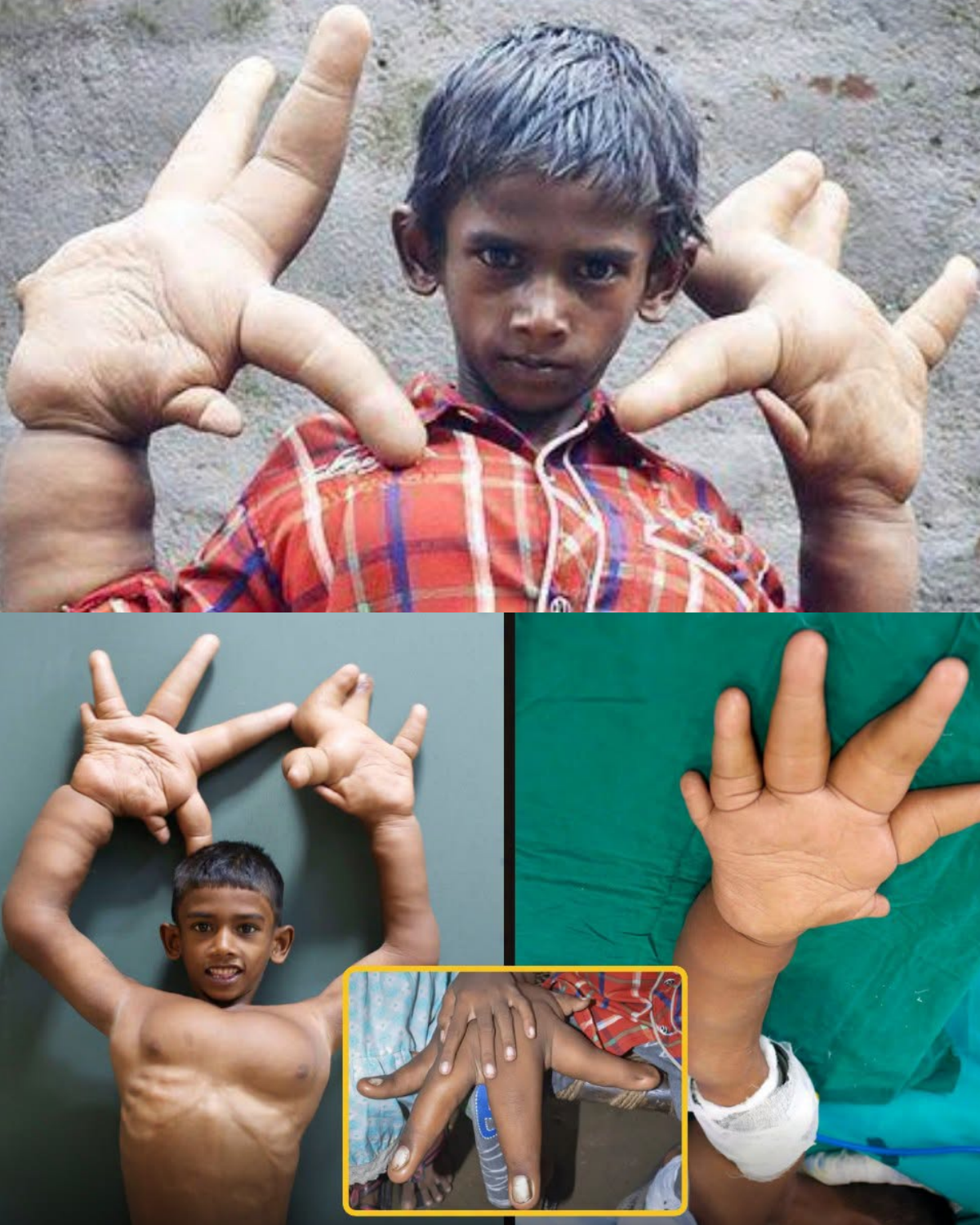
When Mohammad Kaleem was born in a small village near Bokaro in Jharkhand, India, his parents quickly noticed that his hands were unusually large. As he grew, the difference became increasingly pronounced, with his hands and forearms developing far beyond the proportions expected for his age. By the time he was eight, reports described each hand as measuring about 33 centimeters from the wrist to the fingertips and weighing several kilograms.
Medical reports have described Kaleem’s condition as a form of localized gigantism associated with abnormal overgrowth of the tissues of the hands and limbs. Some contemporary reports referred to the condition as macrodactyly, while a 2015 report from the Times of India described it as Proteus syndrome/local gigantism. Because the publicly available reports are not entirely consistent about the exact diagnosis, it is more accurate to describe his case as rare localized overgrowth of the hands and upper limbs rather than present one diagnosis as definitively established.
The condition had a major impact on Kaleem’s everyday life. His oversized hands made ordinary tasks such as eating, dressing, bathing, fastening buttons and tying his shoes extremely difficult. He often needed assistance from his family, while the physical weight of his hands and arms placed additional demands on him.
His difficulties were not limited to physical challenges. Growing up in a poor rural community, Kaleem was subjected to ridicule and social isolation because of his appearance. Reports from the period said some villagers considered him cursed and used the cruel label “devil’s child.” His father also reported that Kaleem was unable to attend school because teachers and other families were concerned that his unusual hands would frighten other children.
For years, the family struggled to find appropriate medical help. Their circumstances made treatment difficult to afford, but Kaleem’s story eventually attracted international attention. His family was introduced to Dr. Raja Sabapathy, a hand and microsurgery specialist in Tamil Nadu, who believed that surgery could improve the boy’s hand function and quality of life.
Treatment was carried out at Ganga Hospital in Coimbatore through a series of procedures rather than a single operation. According to the Times of India, the first operation on Kaleem’s right forearm was performed in November 2014 and reduced a substantial portion of its weight. In January 2015, surgeons subsequently operated on his fingers, removing excess tissue and extra digits and addressing the growth plates in an effort to prevent further enlargement.
The surgeries were followed by rehabilitation and physiotherapy. Doctors hoped that reducing the size and weight of the affected limb would allow Kaleem to perform more activities independently and give him a better opportunity to attend school and participate in ordinary childhood activities.
Kaleem’s story subsequently became widely reported around the world, not simply because of the extraordinary appearance of his hands, but because of the combination of a rare medical condition, difficult living circumstances and the social stigma he experienced as a child.
His case also illustrates why unusual physical conditions should be approached through medical evidence rather than superstition. What some people in his community once interpreted as a curse was, according to the medical teams who treated him, a complex disorder involving abnormal tissue growth that required specialized surgical care.
Sources: Times of India; UPI; Ganga Hospital reporting; detikHealth; Asian Voice.