Shalini Yadav: The Indian Teenager Who Faced a Rare Skin Disorder and Found Hope in Spain
- NguyenMien
- September 17, 2026
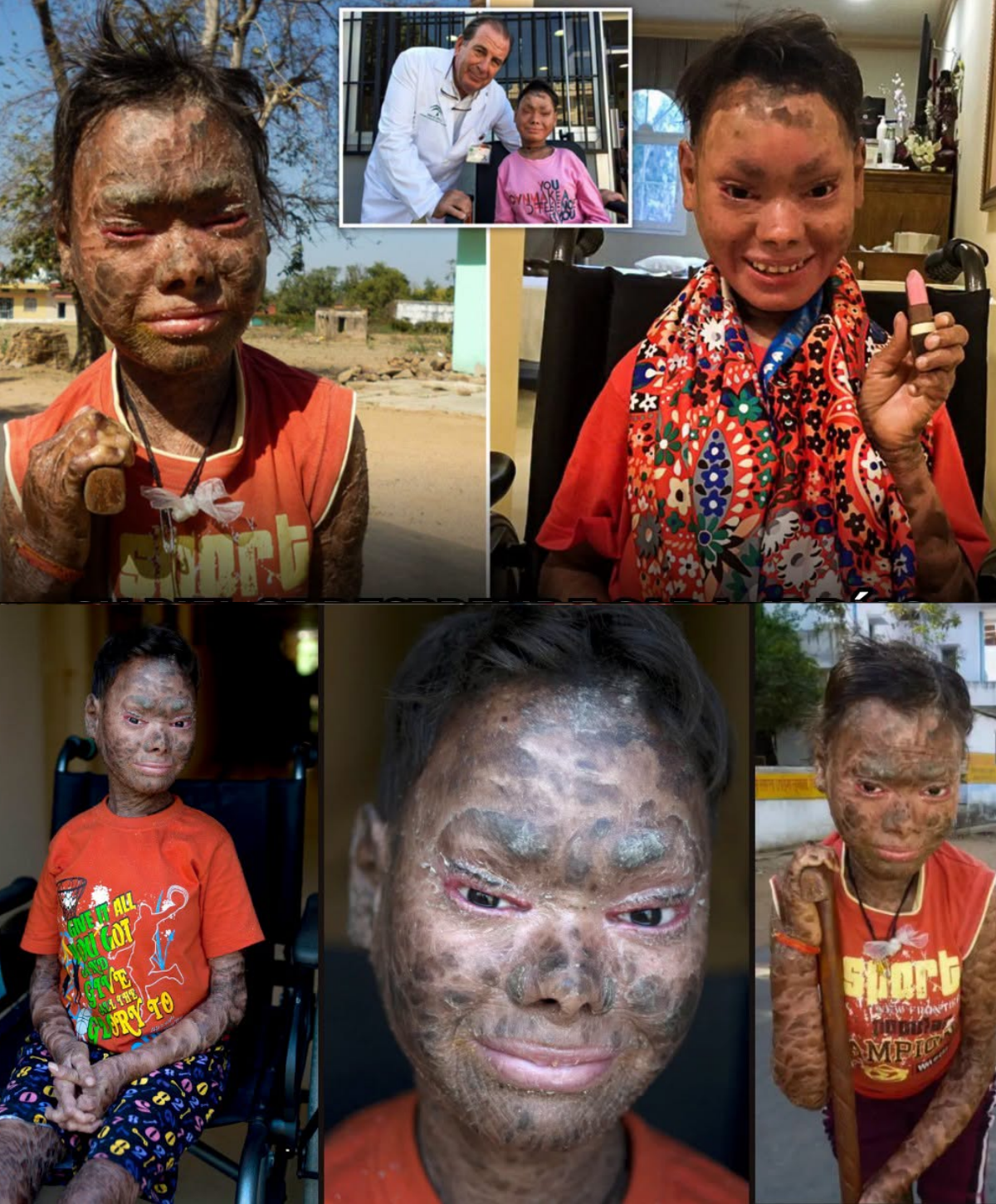
For years, Shalini Yadav lived with a rare genetic skin disorder that dramatically changed her appearance and made ordinary daily life extraordinarily difficult. Born in Madhya Pradesh, India, Shalini was diagnosed with lamellar ichthyosis, a rare inherited disorder of keratinization in which the outer layer of skin does not shed normally. Instead, thick, plate-like scales can accumulate across much of the body.
Reports from 2017 described Shalini as shedding large amounts of skin approximately every six weeks—around 45 days. Her skin could become extremely dry and rigid, requiring frequent bathing and moisturizing to prevent it from hardening and cracking. The condition was not contagious, but the unusual appearance of her skin led to fear, misunderstanding and social isolation in her community.
Her difficulties extended beyond her skin. According to contemporary reports, Shalini was forced to leave school when she was still young and spent much of her time inside her home. Her family struggled to find effective specialist care, while limited medical resources made long-term management especially difficult.
Everything changed after her story attracted international attention. In September 2017, Shalini traveled from India to Málaga, Spain, where a team of dermatology specialists associated with the International Medical Academy agreed to treat her without charge. Dermatologist Enrique Herrera and other specialists confirmed the diagnosis of lamellar ichthyosis and developed a treatment plan aimed at controlling the abnormal keratinization process.
One of the principal medicines used was acitretin, an oral retinoid that can reduce excessive scaling in inherited ichthyoses. Shalini was also treated with moisturizers, including products containing urea, to help maintain hydration and improve the skin barrier. Medical literature confirms that oral retinoids and intensive moisturizing are established approaches for managing severe forms of ichthyosis, although inherited ichthyoses generally do not have a definitive cure.
The response in Shalini’s case was reportedly rapid. Within weeks, photographs showed a striking reduction in the heavy scaling that had covered her face and body. Contemporary reports said she had gained weight, appeared more comfortable and had returned to India to continue treatment. She also spoke about wanting to study medicine—an aspiration that had seemed distant when her illness had kept her away from school.
It is important to distinguish improvement from a permanent cure. Lamellar ichthyosis is a chronic genetic condition, and long-term skin care is generally required. Treatment can reduce scaling and improve quality of life, but it does not simply eliminate the underlying genetic disorder.
Shalini’s story is therefore not only about an extraordinary medical condition. It also illustrates how access to specialist care can transform the daily experience of someone living with a rare disease. Her treatment in Spain did not erase the genetic condition, but it reportedly gave her healthier-looking skin, greater independence and, perhaps most importantly, the confidence to imagine a future beyond the isolation she had experienced for years.
Sources
- The New Indian Express
- Sur in English
- El Español
- Redacción Médica
- American Journal of Clinical Dermatology
- National Library of Medicine (PubMed)