JANUARY 2027 IS COMING — BUT IT IS NOT THE MADELEINE MCCANN TRIAL THE WORLD IS WAITING FOR

A date has been set.
January 11, 2027.
For anyone following the Madeleine McCann investigation, those numbers immediately sound significant. Christian Brückner, the man German authorities identify as the prime suspect in Madeleine’s disappearance, is due to face a major legal hearing in Germany.
But there is a crucial detail that many headlines risk obscuring.
The January hearing is not a trial for Madeleine McCann’s disappearance.
It concerns appeals connected to Brückner’s acquittal on five sexual-offence charges in a separate case.
Germany’s Federal Court of Justice has scheduled the hearing in Leipzig. The proceedings could renew scrutiny of evidence from that separate case and put Brückner back under intense legal attention.
But it does not mean that prosecutors have charged him with Madeleine’s disappearance.
That distinction is especially important because media coverage surrounding the case has increasingly linked the January hearing to the possibility of future developments in the Madeleine investigation.

At the same time, British investigators have reportedly received a dossier containing material concerning Brückner.
This creates a potentially important moment—but not yet a confirmed breakthrough.
Operation Grange remains active. The Metropolitan Police continues to investigate Madeleine’s disappearance and work with authorities in Germany and Portugal.
The new dossier is therefore being examined within an investigation that has already lasted almost 20 years.
Madeleine disappeared from Praia da Luz on May 3, 2007.
She was three years old.
Her disappearance changed the lives of her parents, Kate and Gerry McCann, and became one of the most closely followed missing-person cases in the world.
Despite enormous public attention, Madeleine has never been found.

German prosecutors believe she died and have identified Brückner as responsible. But those conclusions have never been tested in a Madeleine criminal trial.
Brückner has never been charged in connection with Madeleine’s disappearance and denies involvement.
That leaves prosecutors facing a fundamental evidentiary problem.
To bring a case, suspicion must be transformed into admissible evidence.
And after years of investigation, that threshold has not yet been publicly crossed.
The new dossier could potentially change that situation.
But at present, nobody outside the investigation knows enough about its full contents to make that determination.
Reports have described the files as containing potentially significant evidence. Some media accounts have referred to information, photographs and material that German investigators believe strengthens their theory.
However, those descriptions largely come from media reports and sources familiar with the investigation rather than from a full public release of the evidence.
That means caution is necessary.
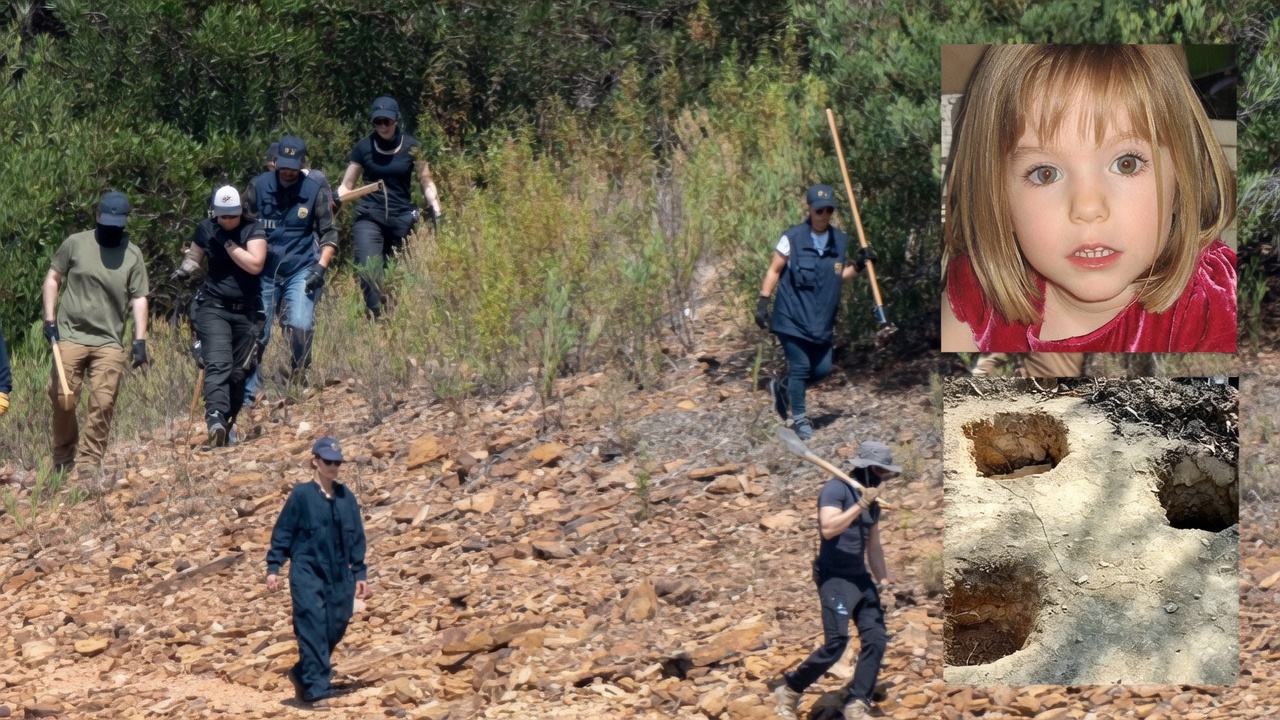
The most dramatic headlines may suggest that investigators are on the verge of charging Brückner.
The publicly confirmed position is more limited.
Police are continuing to investigate.
The dossier has reportedly been transferred.
Brückner remains a suspect.
And Madeleine remains missing.
The January hearing could nonetheless become a major moment in the wider story because it will bring Brückner back before Germany’s highest court in relation to the separate proceedings.
It could also generate renewed reporting about evidence that has previously received limited public attention.
But whether it has any direct legal consequence for the Madeleine investigation remains unknown.
For now, investigators appear to be following two parallel tracks.
One is the continuing investigation into Madeleine’s disappearance.
The other is Brückner’s separate legal history in Germany.
The two stories intersect because the same individual sits at the center of both, but legally they remain distinct.
That distinction will matter enormously if prosecutors eventually attempt to bring a Madeleine case.
A conviction for another offence cannot automatically establish guilt in Madeleine’s disappearance.
Investigators would still need evidence connecting Brückner directly to what happened to the three-year-old.
That is why the reported dossier may matter.
If it contains corroborated information directly connecting Brückner to the events surrounding Madeleine’s disappearance, it could potentially become important.
If it merely reinforces existing suspicions without providing a new evidentiary link, its impact could be much more limited.
For now, the world is waiting.
January 2027 is approaching.
Operation Grange remains active.
German investigators continue to stand by their theory.
And British detectives are reportedly examining new material.
But the most important fact has not changed.
There is still no confirmed answer to what happened to Madeleine McCann.
And there is still no Madeleine trial scheduled.
The next major chapter may come in January—but what that chapter ultimately means for the missing-child investigation remains to be seen.