Two Girls, One Pair of Shoes: How a Friendship Outlasted the 2015 Nepal Earthquake
On April 25, 2015, a magnitude 7.8 earthquake tore through Nepal, killing nearly 9,000 people, injuring more than 22,000, and damaging more than a million homes. Among the children pulled from the rubble were two little girls who would lose a leg each — and find, in the same hospital ward, a friendship that has lasted more than a decade.
Nirmala Pariyar was seven. She had been visiting friends in Kathmandu when the building shook. She tried to run outside, but a metal gate and concrete wall collapsed on her. Rescuers later spotted her hair in the debris and carried her to hospital; her right leg could not be saved. Khendo Tamang, then eight and from a Tamang-speaking family east of the capital, lost her left leg. She also lost eight relatives, including her elder sister and grandmother. A foreign tourist helped get her out.
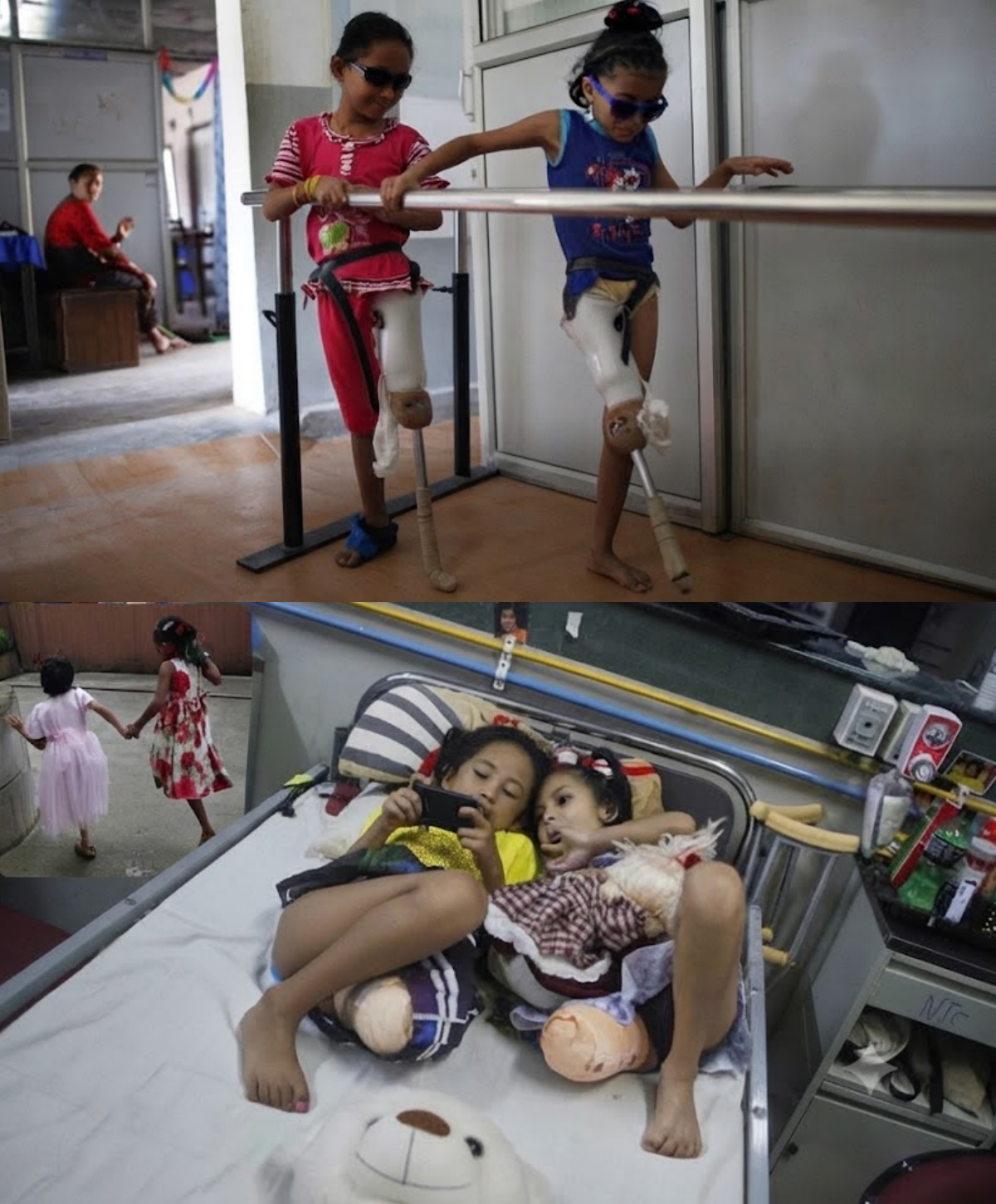
They met at the trauma center of Bir Hospital in Kathmandu. At first they had no shared language — Nirmala spoke Nepali, Khendo only Tamang — but they called each other sathi, friend. They whispered secrets, slept in the same bed, and sat through debridements, wound infections, traction, and the first fittings of prosthetic limbs. Associated Press photographer Niranjan Shrestha, covering the disaster’s aftermath, noticed Nirmala’s smile during physiotherapy and later saw her comfort the quieter, grieving Khendo. “You’ve lost one leg, and so have I. But we survived. Isn’t that beautiful?” Nirmala told her.
Because each girl was missing a different leg, they sometimes shared a single pair of shoes while waiting to be measured for new prostheses — an image that became a symbol of their bond. Aid group Handicap International (now Humanity & Inclusion) helped fit and adjust the devices as the girls grew. They learned to walk again on parallel bars, then on crutches, then on artificial legs that had to be replaced as they outgrew them.
After months in hospital they went home, then to the same boarding school. Shrestha’s photographs helped an NGO fund their education through high school. Three years after the quake they were still nearly inseparable. Ten years later, as young women, they told AP their friendship remained strong. “She has been my biggest support even during the times when I am away from family,” Nirmala said.
Their story sits inside a larger pediatric emergency. Children trapped under masonry often developed crush injuries: muscle death, swelling, infection, and in severe cases crush syndrome with kidney failure. Kathmandu’s referral hospitals — Bir Hospital for trauma and Kanti Children’s Hospital for pediatric care — performed reconstructive surgery, skin grafts, amputations when a limb could not be salvaged, and long courses of physiotherapy. Survivors adapted to wheelchairs, axillary crutches, and biomechanical prostheses, then returned to drawing, play, and school.
Shrestha kept returning, sometimes without a camera, to watch them grow. The pictures he made in 2015 — two girls on one hospital bed with a phone, two girls sharing shoes, two girls taking their first wobbly steps — remain among the most widely recognized images of childhood resilience after the Nepal earthquake.
Sources
Associated Press photo essays and anniversary reporting by Niranjan Shrestha, Binaj Gurubacharya and Mansingh Upendra (2015–2016 and 2025 ten-year follow-up)
AP photographer’s first-person account of documenting Nirmala Pariyar and Khendo Tamang at Bir Trauma Center
Humanity & Inclusion (formerly Handicap International) field updates on the girls’ rehabilitation and schooling
India Today, NBC News, CBS News and Seattle Times reports based on AP coverage (2016)
BMC Pediatrics study on pediatric inpatient patterns at Kanti Children’s Hospital after the 2015 earthquake
Orthopedic case series from Nepali hospitals on earthquake-related limb injuries and amputations