BREAKING: The Night Police Found 16 Children — What Happened Before Officers Entered the Ohio Home?

The most disturbing part of the Ohio “House of Horrors” case may not be what happened after police arrived.
It may be what happened before they ever opened the door.
On June 30, authorities entered a home on Ohmer Street in Hamden, Vinton County, while executing search warrants connected to a child-sex-abuse investigation.
Inside, they found 16 children.
Authorities said the children were living in extremely poor conditions, with many spending most of their time in a small room. The youngest was a toddler, while the oldest was 18.
Some children were taken to hospitals. Others required intensive medical and behavioral support after being removed from the home.
Four adults were arrested.
But the investigation has continued to expand.
And now, court documents have revealed that the family had previously taken in another teenager.
According to PEOPLE, Elizabeth and Gary Siders Jr. took in a teenager between the ages of 13 and 16 during 2022. That teenager was not among the 16 children discovered in June. Prosecutors allege that the teenager later accused Gary Jr. of abuse. Elizabeth Siders is facing separate allegations involving the same minor.
That detail changes the timeline.
The story did not begin on June 30.
At least some of the allegations now being prosecuted relate to events that allegedly occurred years earlier.
And that creates an important question:
Was the June search simply the moment authorities finally discovered the larger family situation?
According to prosecutors, the answer is not yet known.
What is known is that the original investigation was separate from the child-endangerment case involving the 16 children.
Vinton County Prosecutor William Archer said authorities were serving search warrants connected to a child-sex-abuse investigation when they discovered the children and the conditions inside the property.

That discovery led to a second, much larger investigation.
The defendants include Elizabeth Siders, Gary Siders Jr., Gary Siders Sr. and Christina Siders.
The original charges involved 16 counts of child endangerment against each adult.
The grand jury later expanded the indictments.
Elizabeth and Gary Jr. now face 19 child-endangerment counts along with two counts of sexual battery and two counts of unlawful sexual conduct with a minor. Christina faces 19 child-endangerment counts, while Gary Sr. faces 16.
But the legal situation is becoming increasingly complicated.
Elizabeth appeared in court on September 16 and pleaded not guilty to the new charges.
Her bond was increased by another $250,000, bringing the reported total to $550,000.
Then her attorney raised another issue: competency.
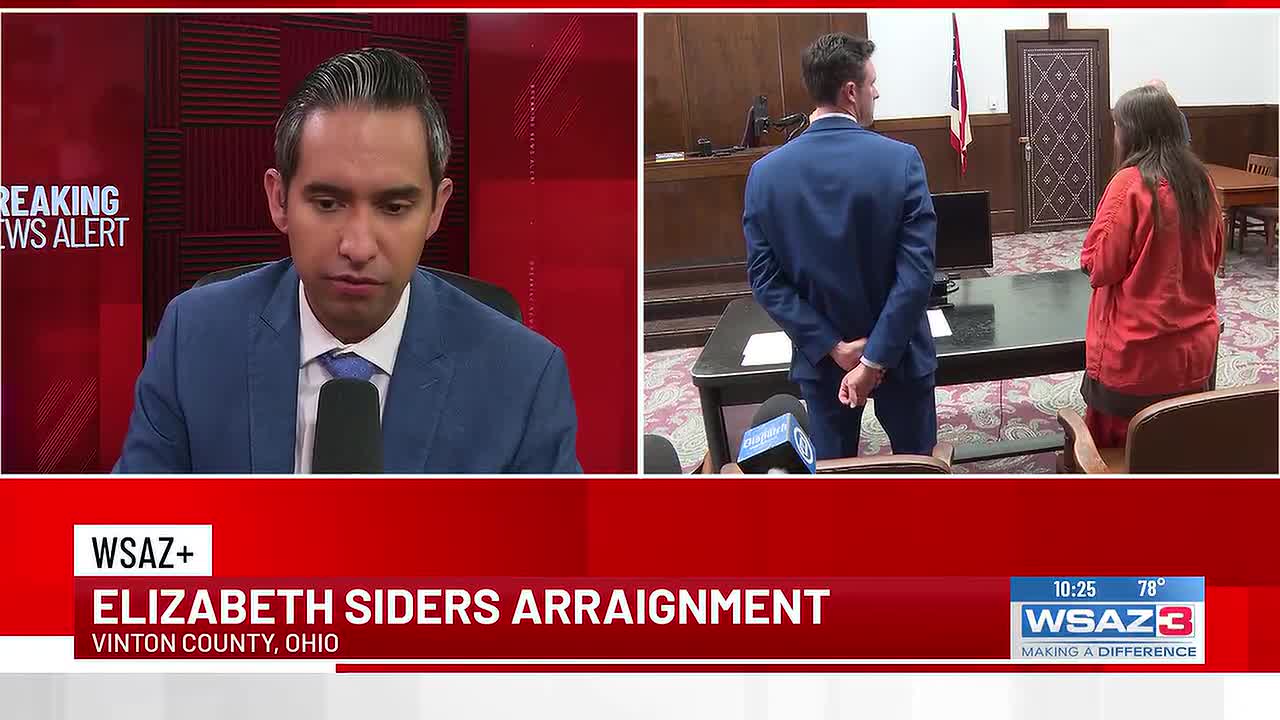
The defense says there are concerns about whether Elizabeth fully understands the legal proceedings and the consequences of the charges she faces.
That claim remains a defense position. A court has not yet ruled that she is incompetent.
Her evaluation is pending.
Gary Siders Sr. has already gone through that process.
On September 9, a judge accepted a mental-health evaluation and ruled the 73-year-old incompetent to stand trial. His attorney said his condition was not restorable, while prosecutors did not challenge the finding.
The development does not mean Gary Sr. was found guilty.
Competency and guilt are completely different legal questions.
That distinction will be important as the case continues.
Meanwhile, the other defendants’ competency proceedings remain unresolved.
There is another major question surrounding the case: the role of the child-welfare system.

Ohio officials have ordered a review of how the system handled the family.
That review could potentially examine prior contacts, decisions and procedures.
But it is important not to confuse a review with a finding of misconduct.
The state has not announced that a particular agency or individual failed to act appropriately.
Instead, officials are examining the record and determining whether policies were followed and whether changes may be necessary.
For investigators, the challenge may be reconstructing a timeline that stretches back years.
When did concerns about the family first appear?
Were there previous interactions with schools, hospitals or social services?
Were there reports involving individual children?
Were those reports connected to the same household?
And if information existed, did different agencies have access to the same information?
These questions may eventually become part of the public record.
But for now, many remain unanswered.
There is also another mystery surrounding the 17th child.
Why did that teenager live with the Siders family?
What circumstances led to the arrangement?
Why did the teenager leave?

And what happened between January and September 2022?
Court records provide some information, but they do not answer every question.
The allegations against Elizabeth and Gary Jr. must also be tested through the legal process.
No defendant should be treated as guilty simply because prosecutors have filed charges.
At the same time, the allegations involving the teenager cannot simply be ignored because the case remains unresolved.
The courts will ultimately determine what evidence is admissible and what facts can be proven.
For the 16 children found on June 30, the consequences are already real regardless of how the criminal cases unfold.
They were removed from the home and placed under government or county care.
Officials have said they are receiving medical and behavioral-health services.
Their long-term placement and recovery could take considerable time.
The public may never know every detail of what happened inside the home.
Some records will remain sealed or protected because they involve minors.
But as additional court documents become public, the timeline is slowly becoming clearer.
What first appeared to be one shocking discovery has developed into a much wider investigation.
A search warrant led investigators to 16 children.
That discovery led to four arrests.
A grand jury later added new charges.
A separate teenage victim emerged in court records.
One defendant was found incompetent to stand trial.
Another is awaiting a competency evaluation.
And Ohio officials are reviewing the child-welfare response.
The central question now may no longer be simply “What happened inside that house?”
It may be:
“How far back does this story really go?”
The answer will depend on evidence still being investigated and presented in court.