Two Spines, Four Legs, One Child: Baby Dominique of Côte d’Ivoire
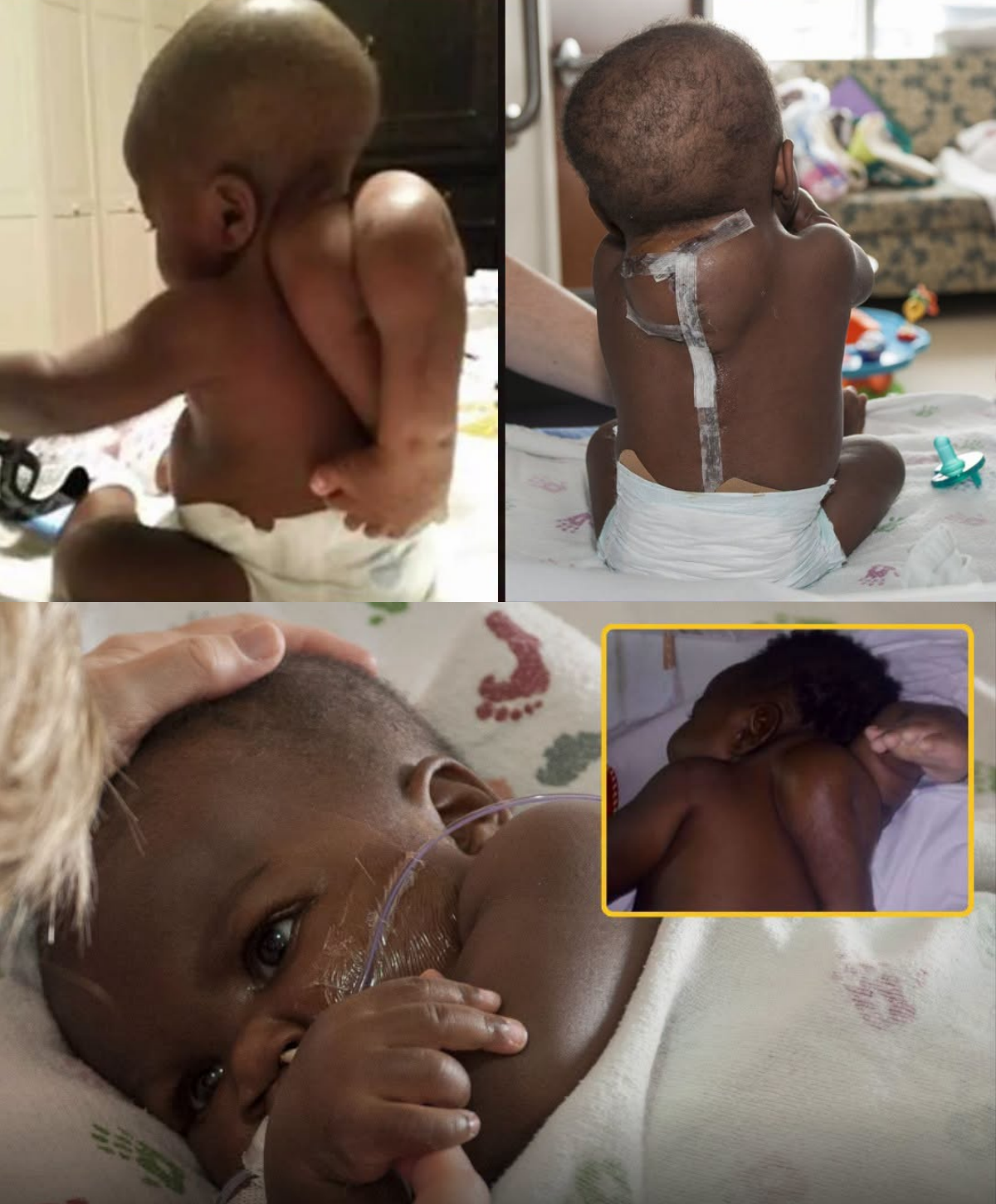
Dominique was born in Côte d’Ivoire with what looked like two extra legs growing from her neck and upper back. Her mother had expected twins. One embryo never became a separate child. The lower half of that twin — pelvis, bladder, moving legs and feet — stayed attached to Dominique’s spine. She also had two spinal columns, tightly joined. Doctors call this a parasitic twin: an identical twin that failed to separate and lived off the host’s heart and lungs.
Cases attached at the spine are so rare they are counted in handfuls. Without an operation she risked paralysis from traction on the cord, and her organs were feeding a body and a half. Care of that complexity did not exist at home. Children’s Medical Mission West, an Ohio nonprofit that flies children abroad for free surgery, arranged the trip. She arrived in the Chicago area in February 2017, about nine or ten months old. Her last name was withheld at the family’s request. Tim and Nancy Swabb of Edgebrook, who answered a Facebook call for a host family, took her to appointments and later brought her home from hospital.
On 8 March 2017, at Advocate Children’s Hospital in Park Ridge, Illinois, pediatric neurosurgeon Dr. John R. Ruge led a team that included a second neurosurgeon, two plastic and reconstructive surgeons and orthopedic spine surgeon Dr. Eric Belin. Supporting staff brought the room to more than fifty people. They had studied a 3-D model of her anatomy. The operation lasted six hours. Surgeons divided deep blood vessels, lifted the extra limbs away and used muscle from the twin to cover Dominique’s cord. Both of her own spines were left in place; the team judged she could live with them. She sat up the next day, left hospital in five days, and was reaching for toys with both arms.
Six weeks later, on 20 April 2017, her mother, father and three sisters met her at Abidjan airport. The mother put her hands over her mouth as the stroller came forward. Doctors expected a normal life: walking, play, school — a back that no longer carried another child’s legs.
The surgery did not invent a new kind of twin. It finished a separation that nature had started and then stopped, so that one girl could grow up looking like every other child in her family.
Sources
CNN reports on the March 2017 surgery and April reunion in Abidjan
Reuters and Chicago Tribune coverage from Advocate Children’s Hospital, Park Ridge
Advocate Children’s Hospital patient story and surgical team statements
Dr. John R. Ruge and Dr. Frank Vicari comments on parasitic twin anatomy and risk of paralysis
Illinois Bone & Joint Institute account of Dr. Eric Belin’s role
Children’s Medical Mission West and host family Nancy and Tim Swabb
CBS News and Washington Post summaries of the six-hour procedure