Made Without a Studio, Copied by Everyone: What The Mother’s Monster Says About AI Cinema in 2026
Hollywood still treats the feature film as an industrial object: years, unions, locations, a hundred crafts. The Mother’s Monster treats it as a file. Zahid Iqbal has framed MYTHRA as a place where myth can be authored by one imagination and finished as a watchable world. The first film from that bet did not stay in a niche AI feed. It became a template other channels could duplicate by Friday.
That is the double story of this release. On one side is authorship. The credits list story, screenplay, and direction under Iqbal, with ZETOMATE holding rights. The work is openly labeled as AI-generated visuals and synthetic voices. On the other side is the internet’s habit of treating a hit as raw material. Within a week there were Parts 2 and 3 from accounts that did not make the original, “complete” 55-minute compilations, Hindi story versions, and near-identical thumbnails with new channel names. Some uploads thank MYTHRA. Others recycle the same synopsis paragraph word for word.
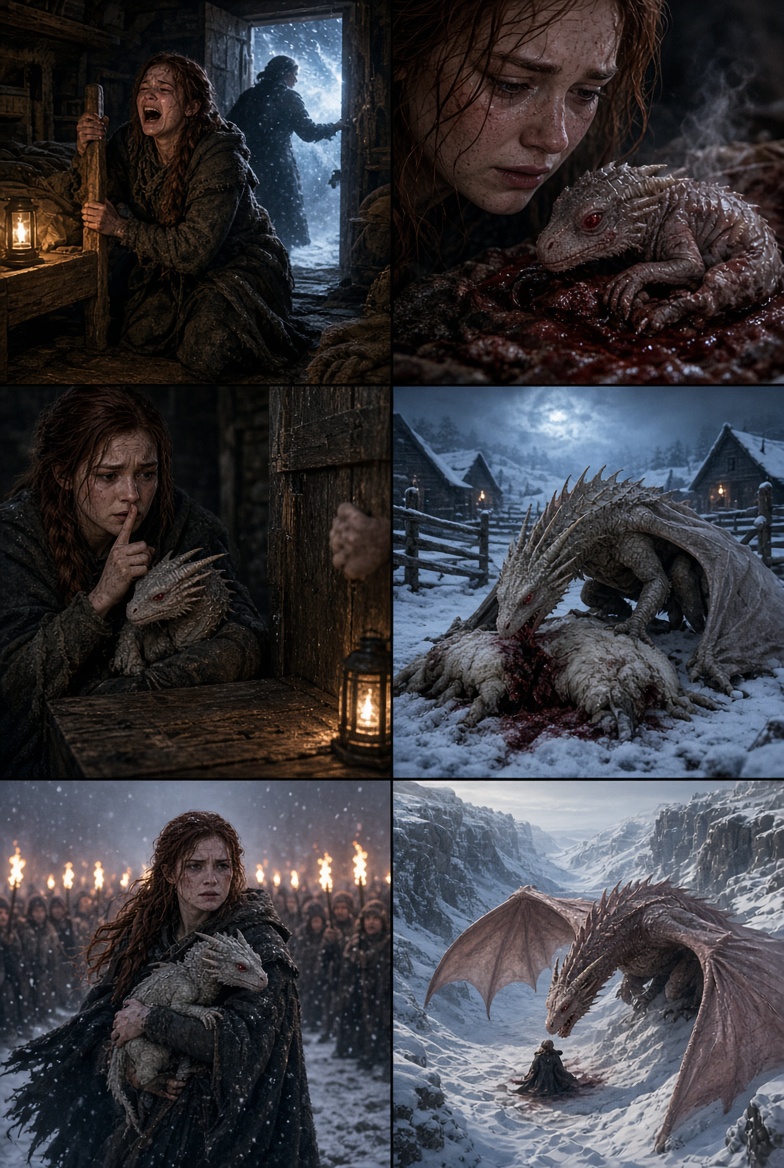
The copies are not only a copyright headache. They are evidence of what the format now rewards. A 28-minute 4K fantasy with a single unforgettable hook travels like a song. Recap channels can narrate it. Shorts can lift the scream, the tub scene, the torch line. A sequel can be invented overnight because the original ending already points offscreen: the dragon will return. Iqbal has said Part 2 is coming from the source. Until then, unofficial continuations occupy the same search results as the film they imitate.
Technically, the movie sits at a familiar 2026 compromise. Landscapes, scale, snow, and creature design look closer to a mid-budget fantasy than to last year’s AI shorts. Hands, crowd motion, and some mouth shapes still betray the pipeline. Viewers mention that and then keep watching. The comments that matter are not “this is fake.” They are “I cannot believe I cried at an AI movie.” That sentence is the industry signal. The test is no longer whether the image is real. The test is whether the story survives the knowledge that it is not.
There is also a geography story that the trending data made visible. A film made in Pakistan, without a traditional set, ranked in another country’s YouTube film category on the strength of one title. That does not replace festivals or theatrical cinema. It does change who gets to attempt a complete narrative world. The barrier is no longer cameras and extras. It is taste, structure, and the discipline to cut a story before it becomes a slideshow.
Critics of the wave argue that emotional “hits” like this one are engineered: wounded heroine, baby creature, snow, torches, a burial. They are not wrong that the ingredients are familiar. Folklore has been using them for centuries. What is new is the speed from private draft to global mirror. A creator can feel a scene, generate it, and watch strangers in Iraq, Brazil, and the Philippines answer in the same vocabulary of mothers and monsters.
The ethical argument will follow the views. Who owns a face that never lived? Who owns a dragon design that a hundred channels now use as a brand? When does homage become a scrape of someone else’s grief? MYTHRA’s own pinned note tried to reclaim the work as feeling rather than toolset. Iqbal wrote that he stopped when Elara died, and stopped again for a day when the dragon buried her. Whether or not a viewer accepts that account, it is a useful reminder. The tools are generic. The choice to kill the mother and let the child perform the funeral is not.
The Mother’s Monster will not be the last 28-minute myth to seize a week of the internet. It may be one of the first that people remember as a story instead of a demo. That is a higher bar than resolution badges and “4K UHD” stamps. A film this short has no room to hide. It has to make a village, a lie, a meal of meat, and a flight into weather feel inevitable.
The original remains the one to watch before the copies explain it to you.
Watch the full film below.