Until the Last Bus Leaves ( part 1)
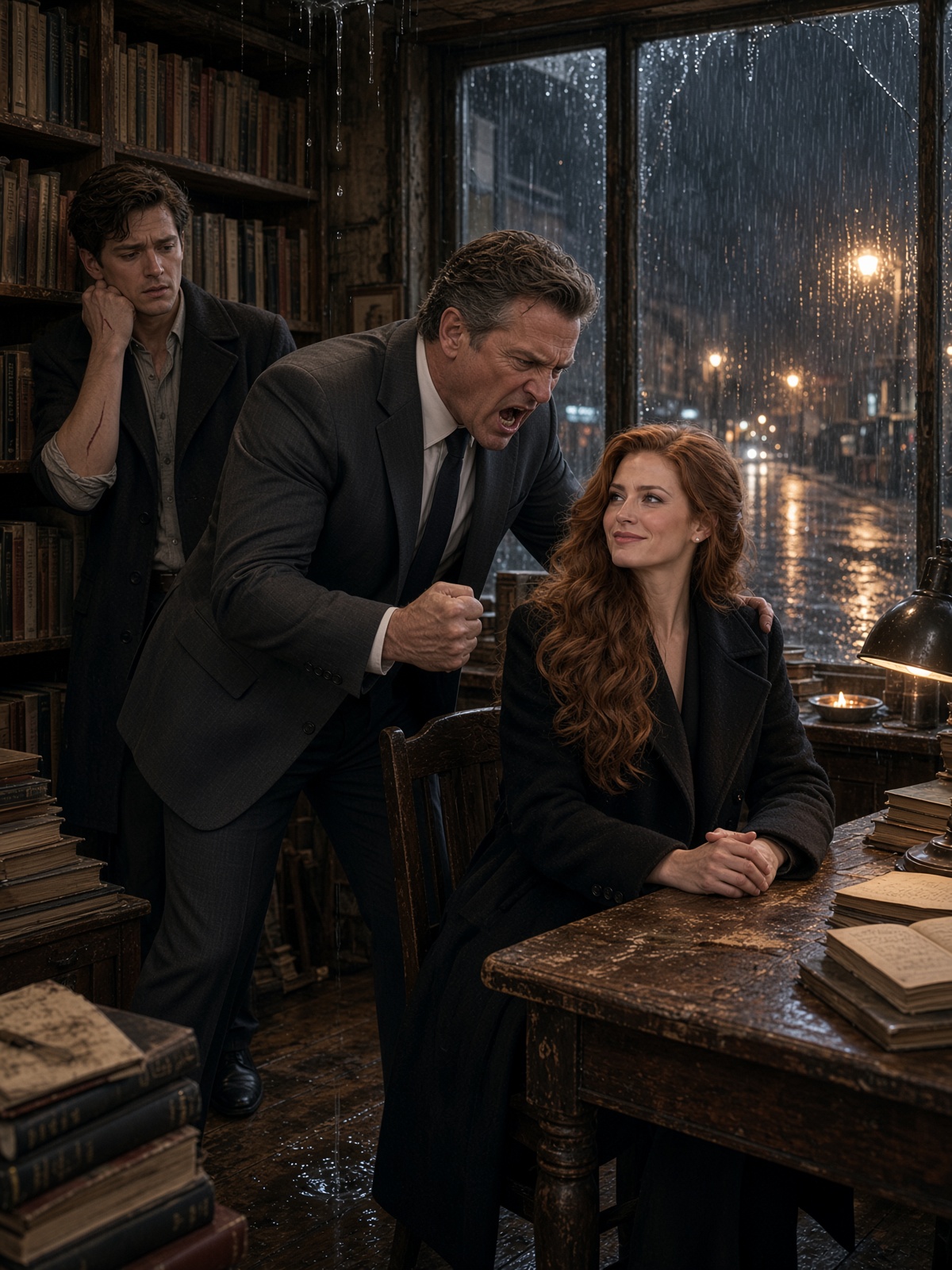
The rain came down in sheets against the cracked window of the old bookshop on Riverside Lane. Anna pressed her forehead to the glass, watching the streetlights smear gold across the wet pavement. Her phone buzzed again. Another message from her father.
Where are you?
She didn’t answer.
Behind her, Balloi was stacking the last of the unsold poetry books onto a leaning shelf. His sleeves were rolled to the elbows. There was a thin scar across the back of his left hand that he never explained. When he looked up and found her watching him, he smiled the way he always did—quiet, a little surprised, as if he still couldn’t believe she was real.
“You should go,” he said. “Before they send someone.”
Anna shook her head. “Not yet.”
They had thirty-seven minutes before the last bus. Thirty-seven minutes that already felt stolen.
They had met three months earlier, on a night neither of them planned to remember. Anna had been running from a dinner her father arranged with a man whose last name opened bank doors. She ducked into the bookshop to catch her breath and found Balloi sitting on the floor between two shelves, reading a battered copy of The Little Prince as if it were scripture. He looked up, saw her expensive coat and the way her hands were shaking, and simply said, “You can stay. No one asks questions here.”
She stayed.
After that, she came back. First once a week. Then twice. Then every evening she could invent an excuse. Balloi never asked why a girl who arrived in a black car with tinted windows wanted to sit on a dusty floor and talk about books no one bought. He just made tea on a hot plate behind the counter and listened.
Anna learned that he lived in a room above the shop that leaked when it rained. That he worked two other jobs. That his mother had died when he was sixteen and his father had disappeared long before that. That he wrote poems in a notebook he kept in his back pocket and never showed anyone.
She showed him the first one anyway, one night when the shop was empty and the rain was louder than their voices. He read it twice. Then he looked at her like she had handed him something dangerous.
“You shouldn’t love me,” he said.
“I know.”
They both knew.
Anna’s family owned half the shipping contracts that moved through the city’s port. Her father measured people by last names and balance sheets. Balloi had neither. When Anna’s older brother saw them together one afternoon outside the university library—Balloi’s hand brushing hers as they pretended to look at a street vendor’s maps—he didn’t speak to her. He went straight home.
That night her father waited in the living room with the lights off.
“You will not see him again,” he said. No raised voice. That was worse. “I have already spoken to the owner of that shop. The lease will not be renewed. If you continue this, I will make sure that boy has nowhere left in this city to stand.”
Anna sat very still. In the next room her mother was crying quietly, the way she always did when she disagreed but would never say so out loud.
“He’s not what you think,” Anna whispered.
Her father looked at her for a long time. “Neither are you, apparently.”
Now, in the bookshop, Balloi set the last book down and came to stand beside her at the window. He didn’t touch her. He never did when they both knew someone might be watching.
“They’re going to take the shop,” he said. “Your brother was here this morning.”
Anna’s throat tightened. “I know.”
“I can leave. Go south. Start over. You don’t have to—”
“Don’t.” Her voice broke on the word. “Don’t you dare finish that sentence.”
Outside, a black car slowed at the corner. Anna’s pulse jumped. Balloi saw it too. He stepped back from the window, into the shadows between the shelves.
The car did not stop. It rolled past, water hissing under the tires, and disappeared around the bend.
Anna let out a breath that shook.
Balloi reached into his pocket and pressed something into her palm. A folded scrap of paper, warm from his hand.
“If they take you away,” he said, “read it when you’re alone.”
She closed her fingers around it.
The shop lights flickered. Somewhere above them, the roof began to leak again, a slow, steady drip onto the floorboards.
Anna looked at him—at the scar on his hand, at the way he stood as if he had already decided to disappear if it would keep her safe—and felt the first true terror of her life. Not that her family would win.
That they already had.
She unfolded the paper just enough to see the first line in his cramped handwriting.
If they ask you to choose—
The rest was hidden in the fold.
Outside, the rain grew heavier. The last bus would leave in twelve minutes.
Anna did not move.
Neither did he.
And somewhere, two streets over, her father’s driver turned the car around.