Two days before the wedding … Part 1
Two days before the wedding, Grant forgot to hang up.
I was folding Caleb’s navy suit when his mother’s voice came through the speaker, thin and impatient.
“Did she sign the property agreement?”
Grant laughed. The sound was easy. Familiar. The same laugh he used when he told my son he was proud of him.
“Not yet,” he said. “Once she does, the house and the savings are ours.”
I did not hang up either.
The call had started with flowers. Hydrangeas or peonies. Something that would photograph well. Then Colleen asked why my attorney had been allowed near the papers at all.
Grant sounded amused.
“Don’t worry. She wants the family more than she wants to argue about paperwork.”
Then they talked about the children.
Caleb was twelve. Maisie and June were nine — my sister’s twins, mine in every way that mattered since the funeral. For three years Grant had sat at our table. He had tied dance-recital ribbons. He had told Caleb that courage was not the absence of fear.
Now he explained, calmly, that the children were the reason I would sign.
“She won’t risk losing me over a property agreement.”
Colleen asked what came after the signature.
“Then we restructure.”
My house was worth nearly nine hundred thousand dollars and carried almost no debt. The architecture firm was mine. The investments from my grandparents were mine. The twins’ trust had been kept separate, and that irritated him.
“I’ll work on her,” Grant said.
“How?”
He laughed again.
“She’s sentimental. Sentimental people are easy once you know which promise they need to hear.”
I should have been angriest about the money.
I was not.
Colleen asked, “You’re sure you can tolerate living there?”
Grant sighed, the way a man sighs when a performance has gone on too long.
“Honestly? I’m tired of pretending I enjoy that noisy little household. I just need to get through Saturday.”
I set the suit down.
Nine minutes. The phone had recorded all of it.
I made copies. I sent one to Rebecca before I slept.
In the morning she told me not to sign a single line. We locked the accounts. We protected the house. We checked every document that touched the children.
I did not cancel the wedding.
Saturday morning Maisie and June put on their green flower-girl dresses. Caleb wore the navy suit I had been folding when the call began. When it was time, he offered me his arm.
“Are you scared?” he whispered.
“Yes.”
“Good,” he said. “You always tell me courage isn’t not being scared.”
So my twelve-year-old son walked me toward the man who believed love for a family made a woman easy to empty.
Grant stood under the arch and smiled as if the week had been ordinary.
“You look incredible,” he whispered.
The minister spoke about truth. About responsibility. About marrying not one person, but an entire household.
Then he closed the book.
Grant frowned.
“You skipped the vows.”
The minister looked at me.
“Mara has something she needs to say first.”
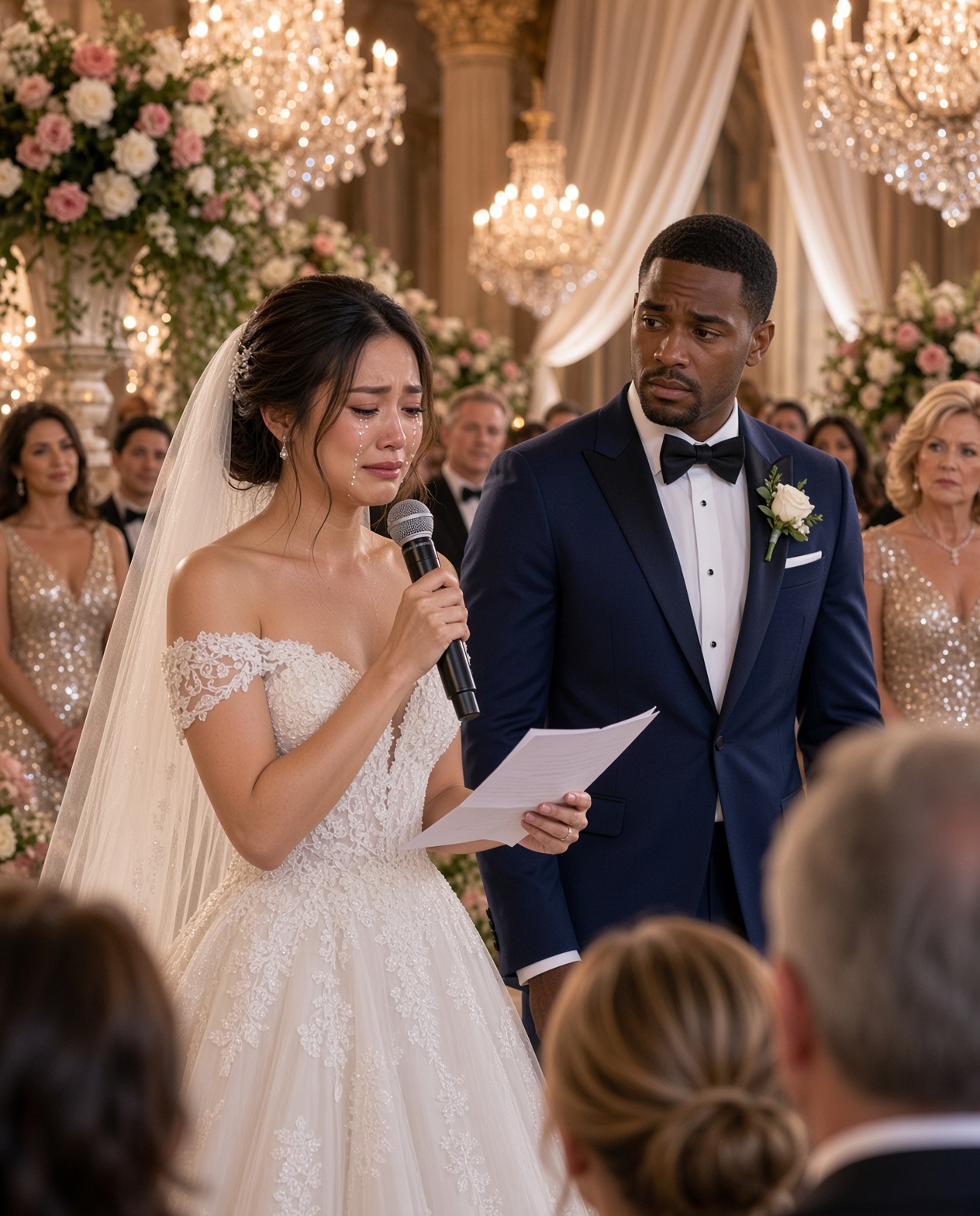
I stepped to the microphone.
“There will still be dinner,” I told the guests. “There will definitely still be cake. But there will not be a wedding.”
Grant’s smile went out.
“Mara. Privately.”
“No.”
A few minutes later the lights in the reception barn dimmed. One hundred people stood in the kind of silence that has weight.
Then Colleen’s voice filled the room.
“Did she sign the property agreement?”
Grant did not move.
And before his own recorded answer reached the speakers, he looked across the aisle at me and understood, at last, why I had put on the dress and walked toward him anyway.