Part 5: The Fortune Was Never the Real Gift

Rick Hale was smiling when I entered the boardroom.
It was the same smile he’d worn when I signed our divorce papers.
The same arrogant curve of his mouth.
The same expression that said he already knew how the story would end.
Only this time, he wasn’t sitting beside Brooke Ellis.
He was sitting beside Leonard Pike.
And when he saw Arthur Weiss walking behind me, his smile faltered.
The Northstar Meridian boardroom occupied the forty-sixth floor of a glass tower overlooking Manhattan.
Twelve directors sat around a long table.
Three attorneys stood near the windows.
A court reporter had been retained to document the disputed shareholder presentation.
I wore a navy suit I’d bought the previous afternoon.
Nothing expensive.
Nothing dramatic.
Just something that fit.
Sam had helped me choose it.
“You look like someone who knows where she’s going,” he’d said.
I hadn’t felt that way.
But I was beginning to.
The chairwoman, Margaret Voss, rose when I entered.
“Ms. Bennett?”
“Yes.”
She shook my hand.
“We’ve been expecting you.”
Rick leaned back.
“Apparently everyone has.”
See more Stories :
I ignored him.
Arthur placed a folder on the table.
“Before we begin, my client wishes to establish her identity and her authority under the Bennett Family Trust.”
Leonard cleared his throat.
“That authority is disputed.”
Arthur looked at him.
“Then we should review the documents.”
For the next twenty minutes, they discussed trust provisions, notarized records, and the shareholder register.
I understood more than Rick expected.
Not everything.
But enough.
Enough to recognize when Leonard tried to change the subject.
Enough to recognize when Rick interrupted because he didn’t like the direction of a question.
And enough to recognize the moment Margaret Voss stopped looking at me as an inconvenience and began looking at me as a shareholder.
Finally, Leonard stood.
“We have a document that changes the entire situation.”
He removed a sealed folder.
Rick smiled again.
Leonard placed a photocopy before the chairwoman.
“This is a letter of intent signed by Eleanor Bennett, Claire’s mother, shortly before her death.”
My chest tightened.
I hadn’t heard my mother’s full name spoken in years.
Leonard continued.
“The letter indicates that Eleanor intended to transfer certain family interests to a charitable foundation rather than leave them to her daughter.”
I stared at him.
“Why would my mother do that?”
Leonard looked at me with practiced sympathy.
“Perhaps she believed it was in your best interests.”
I felt anger rise.
For years, Rick had spoken to me that way.
As though other people knew what was best for me.
As though my own wishes were childish.
Margaret examined the document.
“Was this transfer ever executed?”
Leonard hesitated.
“The intention is clear.”
“That wasn’t my question.”
His expression tightened.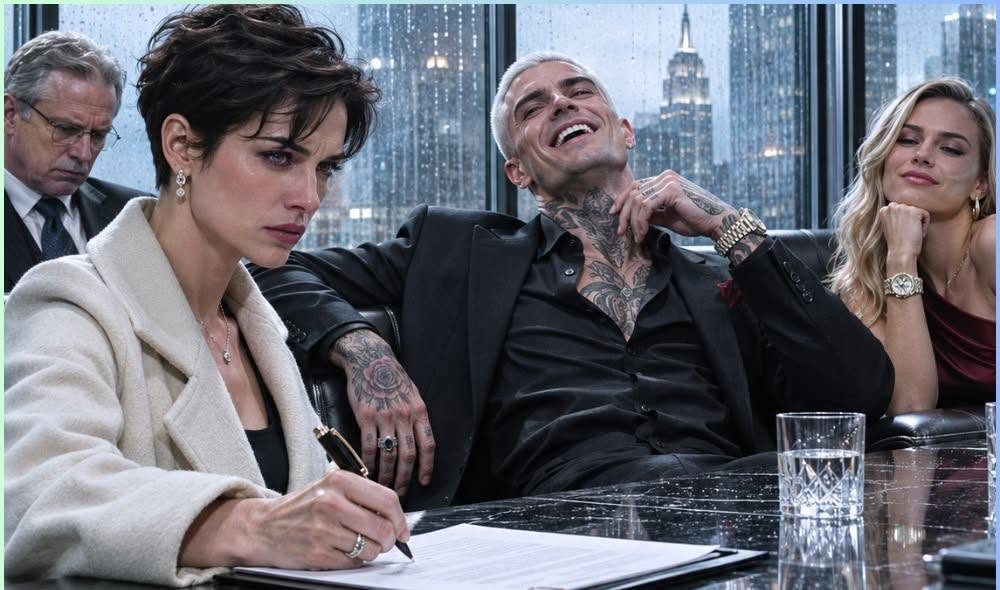
“No completed transfer has been located.”
Margaret set the paper down.
“Then this letter does not establish a transfer of ownership.”
Arthur nodded.
“Furthermore, we dispute its authenticity.”
Rick sat forward.
“Of course you do.”
Arthur opened another folder.
“We have obtained a certified copy of Eleanor Bennett’s actual estate instructions, executed six months before her death.”
Leonard went pale.
Arthur continued.
“Those instructions specifically preserve the beneficial interests for Claire, subject to the trust’s administration provisions.”
Margaret turned toward Leonard.
“Why wasn’t this document included in your submission?”
He said nothing.
Arthur looked at me.
“Claire, there’s something I need you to see.”
He slid a photograph across the table.
It showed my mother’s original signature.
Then he placed Leonard’s document beside it.
The signatures were different.
Not dramatically.
Just enough.
The first letter of her surname curved in the wrong direction.
Exactly the same kind of mistake I’d noticed in the forged property transfer.
Rick stared at the documents.
For the first time, he looked uncertain.
Arthur spoke calmly.
“We’ve referred both documents to independent forensic examiners. Until their authenticity is resolved, no one should rely on the disputed letter.”
Margaret nodded.
“Agreed.”
Leonard reached for his briefcase.
“I believe this meeting has become unnecessarily adversarial.”
“Sit down, Leonard.”
The voice came from behind me.
I turned.
A woman in her early sixties stood in the doorway.
She wore a charcoal coat and carried a worn leather folder.
Arthur stood immediately.
“Dr. Bennett.”
My breath caught.
Bennett?
The woman looked at me.
Her eyes filled with tears.
“Oh, Claire.”
I stared at her.
“Who are you?”
She stepped closer.
“My name is Rebecca Bennett.”
I shook my head.
“I don’t know you.”
“I know.”
She swallowed.
“I’m your father’s younger sister.”
The room seemed to tilt.
“My father didn’t have a younger sister.”
See more Stories :
Rebecca’s expression crumpled.
“He did.”
I looked at Arthur.
He nodded.
“Your aunt Helen contacted Rebecca before she passed away.”
I stared at the woman.
“Why didn’t anyone tell me?”
Rebecca sat down slowly.
“Because I was the one who helped your parents establish the original company structure. And after they died, I made a decision I’ve regretted every day since.”
I couldn’t speak.
Rebecca opened her folder.
“Your parents were preparing to expose serious financial misconduct involving an early business partner. The matter was referred to authorities, but they died before the investigation was complete.”
Leonard shifted in his chair.
Rebecca looked directly at him.
“That partner was Leonard Pike’s older brother, Daniel.”
A murmur moved around the table.
Leonard stood.
“This is outrageous.”
Rebecca continued.
“Daniel later settled civil claims connected to the company’s early finances. Leonard became obsessed with the idea that the Bennett family had taken something from his brother.”
Rick stared at Leonard.
“Is that true?”
Leonard didn’t answer.
Rebecca turned toward me.
“After the accident, Helen and I agreed that your inheritance should be protected until you were old enough to manage it.”
“Then why did you disappear?”
Her eyes filled.
“Because Helen believed distance would protect you from the people still fighting over the company. I accepted that decision. I shouldn’t have.”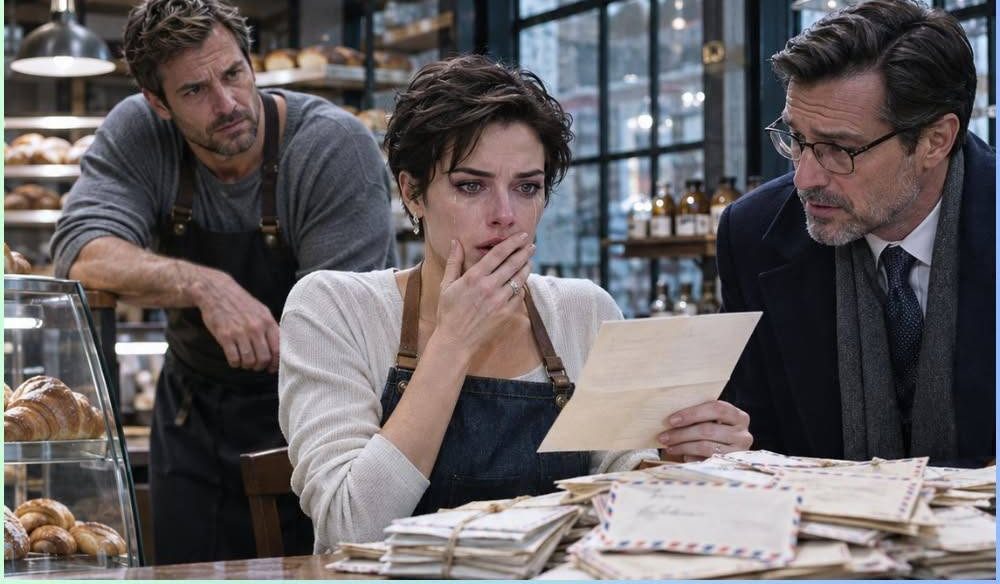
I felt tears burning.
“You let me think I had no family.”
Rebecca lowered her head.
“Yes.”
For several seconds, I couldn’t look at her.
Then Margaret spoke.
“Dr. Bennett, do you have evidence relevant to today’s proceedings?”
Rebecca nodded.
She removed an original trust amendment, complete with signatures and a certification record.
“This was executed by Claire’s parents. It confirms her beneficial ownership and the restrictions on any attempted transfer.”
Arthur examined it.
Then Margaret’s counsel did the same.
After several minutes, Margaret looked at Leonard.
“Your claim of authority over these interests is unsupported by the records presented today.”
Leonard’s face hardened.
Rick turned toward me.
“Claire, we need to talk.”
I looked at him.
“No.”
He blinked.
“Don’t be ridiculous.”
I almost smiled.
There he was.
The man who believed every conversation belonged to him.
“Seven years, Rick.”
His expression changed.
“For seven years, you made me feel ashamed for needing anything.”
He glanced around the room.
“Not here.”
“Yes. Here.”
My voice was steady.
“You controlled my paycheck. You intercepted my mail. You convinced me my aunt hated me. And when you thought I had nothing left, you laughed.”
Rick stood.
“I was trying to protect our finances.”
“You were trying to control my life.”
He opened his mouth.
I continued.
“You didn’t know what I owned when you married me. You knew what you hoped to take.”
His face flushed.
“That’s not fair.”
I looked at him.
“Neither was our marriage.”
Arthur placed another folder before Margaret.
It contained the evidence collected from the forged transfer, the redirected correspondence, and Brooke’s preserved files.
“These materials have been provided to the appropriate investigators,” he said. “Any criminal or civil liability will be determined through the proper process.”
Leonard said nothing.
Rick stared at the folder.
And for the first time since I’d met him, he had no clever answer.
The board adjourned the disputed acquisition vote pending a full review of the records.
My beneficial ownership was formally acknowledged, subject to the remaining administrative verification.
No one handed me a giant check.
No one declared me a billionaire on the spot.
There were still attorneys, auditors, trustees, and years of records to examine.
But something had changed.
For the first time in my adult life, no one could tell me I had nothing.
Three months later, the investigations were still ongoing.
Leonard had withdrawn from representing Rick.
The attempted transfer of the blue house had been blocked.
And Rick’s petition to reopen the divorce had failed.
The court found no basis to set aside the settlement merely because he later discovered assets he hadn’t known about.
Arthur told me the ruling with a smile.
“Apparently,” he said, “your ex-husband should have gotten a better lawyer.”
I laughed so hard I cried.
But the biggest surprise came on a Sunday morning in May.
I was working at the bakery.
Not because I needed the paycheck anymore.
Because I wanted to.
Lily was decorating cupcakes behind the counter.
Sam was arguing with a supplier about the price of butter.
And I was pouring coffee for Mrs. Kowalski when Arthur walked through the door.
He carried a sealed envelope.
“Claire, I found something in Helen’s final instructions.”
I set down the coffee pot.
“What?”
He looked at Sam.
“Actually, it’s addressed to both of you.”
Sam frowned.
“Me?”
Arthur nodded.
“Your aunt knew Samuel Reed.”
I stared at him.
“How?”
Sam looked equally confused.
Arthur handed us the envelope.
Inside was a photograph.
Helen stood outside Reed Bakery.
Beside her was a much younger Sam.
And in front of them stood a little girl holding a paper bag.
Me.
I gasped.
I was nine years old.
Sam looked at the photograph.
Then his eyes widened.
“Wait.”
He leaned closer.
“That’s you?”
I stared at him.
“You knew me?”
He shook his head.
“Not by name. My father used to bring me here after school. Your aunt sometimes visited with a little girl.”
He laughed in disbelief.
“You were the girl who always bought cinnamon rolls and gave half to the pigeons.”
I covered my mouth.
I remembered.
The bakery.
The boy behind the counter.
The cinnamon rolls.
I had forgotten all of it.
Arthur unfolded Helen’s letter.
My darling Claire,
If this letter reaches you, I hope you have finally found your way back to the people who make you feel safe.
There is something I never told you.
Years ago, when your parents were still alive, your father helped a struggling baker named Thomas Reed keep his shop.
Thomas had nearly lost everything after a fire.
Your father arranged a private loan and refused to take interest.
Thomas repaid every penny.
But he never forgot.
When I learned that Thomas’s son Samuel had opened his own bakery, I visited him.
I told him very little.
Only that I had a niece I loved deeply and worried about terribly.
I asked him to promise me something.
If Claire ever came into his life again, would he treat her kindly?
Sam’s face went pale.
He looked at me.
“I remember that woman.”
My heart pounded.
“She came into the bakery about four years ago,” he whispered. “She asked whether I remembered the Bennett family.”
Arthur continued reading.
Samuel promised that he would.
But I must tell you something else, Claire.
Samuel was not asked to find you.
He was not asked to interfere with your marriage.
And he was never told about your inheritance.
If he helped you, it was because he chose to.
I looked at Sam.
His eyes were wet.
Arthur turned to the final page.
There was one last surprise.
Your father left a separate fund to support small businesses in the neighborhoods where we grew up.
I have preserved it.
The fund is now yours to administer.
I hope you use it to help people who need a chance to begin again.
And I hope you remember that the greatest inheritance your parents left you was never money.
See more Stories :
It was the knowledge that kindness can survive long after the people who first offered it are gone.
Love always,
Aunt Helen.
I sat down.
For a long time, nobody spoke.
Then Sam reached across the table.
“Claire, I need to tell you something.”
I looked at him.
“What?”
He took a breath.
“When you came to the bakery after your divorce, I knew you needed somewhere safe.”
“I know.”
“But I didn’t offer you the apartment because of your aunt.”
I smiled through my tears.
“I know that too.”
He shook his head.
“No. You don’t.”
He reached into his pocket.
Then he placed a small, folded piece of paper on the table.
It was the receipt from our high school prom night.
Twelve dollars.
Pizza.
I laughed.
“You kept that?”
“For twenty years.”
“Why?”
Sam looked at me.
“Because I liked you then.”
My heart stopped.
He smiled nervously.
“And apparently I’m a very patient man.”
I started crying.
Then laughing.
Then crying again.
“Sam Reed.”
“Yes?”
“You are absolutely ridiculous.”
“I’ve been told.”
I leaned forward and kissed him.
Behind the counter, Lily gasped.
“Finally!”
We turned.
She was standing beside the cupcake tray with both hands on her hips.
“Dad, that took forever.”
Sam covered his face.
I laughed until my stomach hurt.
Six months later, I stood outside the blue house in Connecticut.
The shutters had been repaired.
The porch had been painted.
The old kitchen was filled with sunlight again.
Rebecca stood beside me, holding a box of family photographs.
We were still learning how to be family.
Some conversations were painful.
Some questions had no satisfying answers.
But she showed up.
Every week.
And I was learning that rebuilding trust didn’t require pretending the past had never happened.
Arthur had helped establish the Bennett Second Chance Fund, using the separate charitable assets my parents and Helen had preserved.
Its first grants went to struggling neighborhood businesses.
One helped a Queens family reopen a laundromat.
Another helped a widowed mother purchase equipment for a small catering business.
And one helped a bakery expand its kitchen.
Sam protested that last one.
I reminded him he still owed me interest on the twelve-dollar pizza.
He stopped protesting.
One afternoon, I received a letter from Rick.
He said he was sorry.
He said he had made mistakes.
He said he hoped we could talk.
I read it once.
Then I placed it in a drawer.
I didn’t answer.
Not because I hated him.
But because I finally understood that forgiveness and access were two different things.
He no longer had access to my life.
That evening, Sam found me sitting on the porch.
The ocean was turning gold beneath the sunset.
He sat beside me.
“Thinking about anything important?”
I looked at the house.
The home I thought I’d lost.
The family I thought had abandoned me.
The life I thought was over.
Then I looked at Sam.
“Actually, yes.”
He raised an eyebrow.
“What?”
I smiled.
“I think I finally understand why my father wanted me to have freedom instead of just money.”
Sam waited.
“Because money can buy a house,” I said. “But it can’t make a place feel like home.”
He slipped his hand into mine.
“That’s pretty good.”
“I’ve had time to think.”
“Clearly.”
I leaned against his shoulder.
For a while, we watched the waves.
Then Lily came running down the porch steps, carrying a small wooden box she’d found in the attic.
“Claire! There’s something inside!”
I laughed.
“Another family secret?”
“Maybe!”
She handed me the box.
Inside was a faded photograph of my parents on their wedding day.
And beneath it, a little note in my mother’s handwriting.
For our Claire:
One day, someone may try to convince you that love means giving up pieces of yourself.
Don’t believe them.
The right people will never ask you to become smaller so they can feel bigger.
I read the words twice.
Then I folded the note carefully and placed it against my heart.
Seven years earlier, I had married a man who made me feel lucky to be chosen.
Six months earlier, I had walked out of a divorce hearing with $18,400 and two suitcases.
I had thought that was the end of my story.
It wasn’t.
It was the beginning.
And the greatest twist of all wasn’t that I had inherited a fortune.
It wasn’t that my husband had spent years trying to steal something he didn’t understand.
It wasn’t even that the little boy who once shared cinnamon rolls with me had grown into the man who gave me a place to begin again.
The greatest twist was that I had spent seven years believing I was worth nothing without Rick Hale.
And the moment I walked away from him, I finally discovered what my parents had been trying to give me all along.
A life that belonged entirely to me.
One year after the divorce, Sam and I married beneath the old pine trees behind the blue house.
Lily carried the rings.
Rebecca walked beside me.
Arthur cried harder than anyone.
And when Sam slipped the ring onto my finger, he whispered, “You still owe me twelve dollars.”
I smiled.
“Put it on my tab.”
Then I kissed him.
And for the first time in my life, I wasn’t afraid of what tomorrow might bring.
Because I had not married a man who promised to give me the world.
I had married a man who loved me when he believed I had nothing.
And that was worth more than every dollar my father had ever left behind.
The End.