Asiya Manghrio: A Toddler’s Rare Condition and Her Parents’ Fight for Surgery
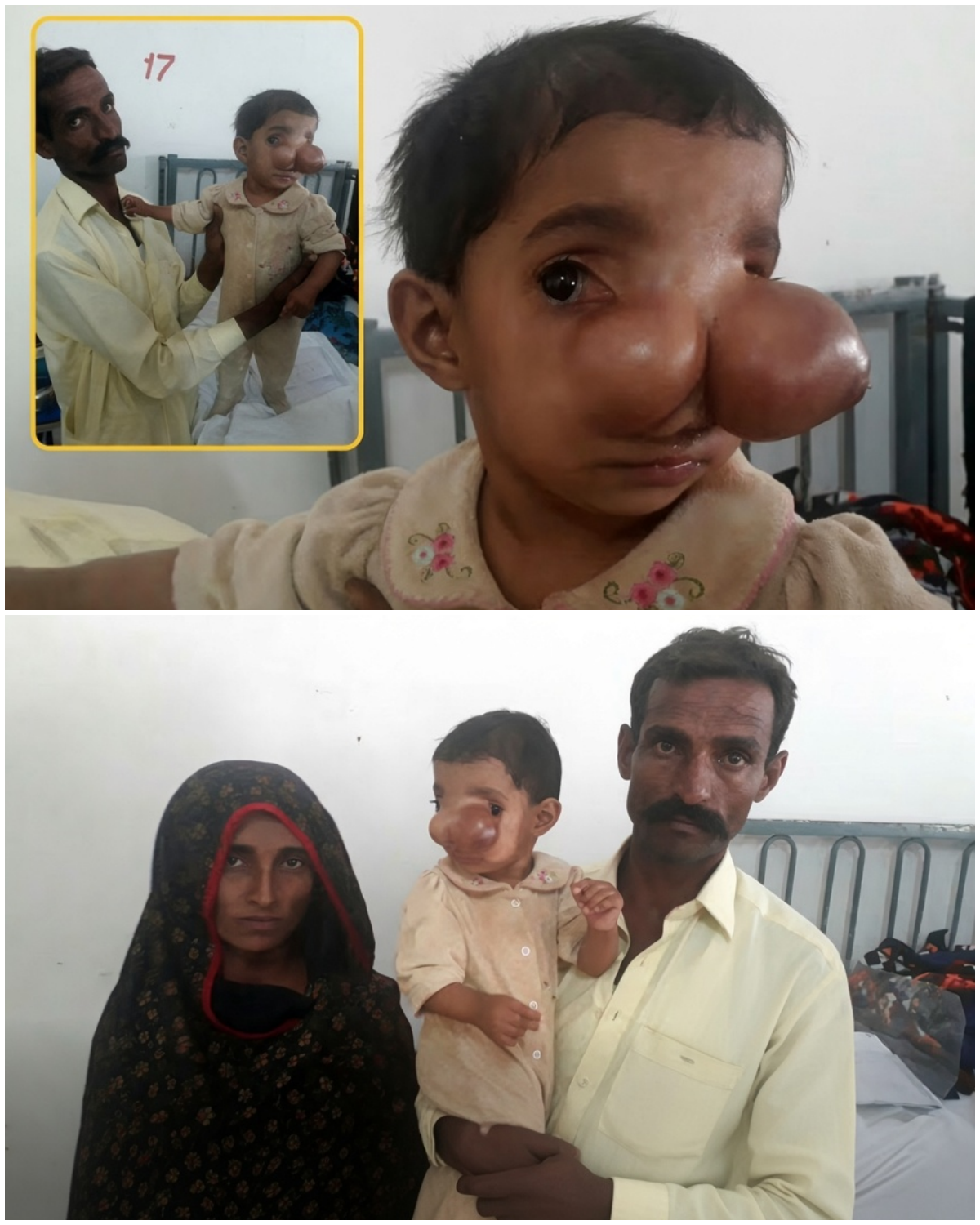
Fifteen-month-old Asiya Manghrio from Sanghar in Pakistan’s Sindh province was born with a rare congenital condition known as frontonasal encephalocele. In this neural tube defect, brain tissue and membranes protrude through an opening in the skull, in her case forming a large, trunk-like swelling on her nose that grew bigger than two tennis balls.
The mass made it difficult for Asiya to eat and sleep properly and caused her constant distress. Some relatives reportedly called her a “curse” or “defected baby,” adding emotional strain to an already difficult situation for her parents, Fatan Achar and Achar Manghrio. Her father worked as a farmer with limited means. The family traveled more than 160 miles (about 250 kilometers) by bus to Karachi so doctors could examine her at Jinnah Postgraduate Medical Centre.
Neurosurgeon Dr. Lal Rehman confirmed the diagnosis and explained that surgical correction was the only effective treatment. At the time, the swelling was not yet obstructing her breathing, but doctors warned it could grow larger and create serious complications if left untreated. Due to a heavy caseload at the public hospital, the family was initially told they would have to wait about two months for the operation. Fatan had already sold her only gold bangle to cover travel and medical costs.
In January 2018, Asiya underwent a complex three-hour surgery at Jinnah Postgraduate Medical Centre. The procedure involved a craniotomy, disconnection of the encephalocele, dural repair, and removal of the abnormal tissue. According to Dr. Rehman, the operation went as planned. Asiya recovered well, progressed from liquid to semi-solid foods, and was expected to return home shortly afterward.
Frontonasal encephalocele is an uncommon congenital defect. Early surgical intervention can significantly improve quality of life by reducing the mass, protecting brain tissue, and allowing more normal facial development. Asiya’s case drew international attention to both the medical challenges of the condition and the barriers poor families in Pakistan can face when seeking specialized care. Her parents’ determination, combined with eventual surgical treatment, offered her the chance of a far better future.
Sources
- The Mirror and Daily Mail reports on Asiya Manghrio’s condition and family appeal (December 2017)
- Follow-up coverage confirming successful surgery at Jinnah Postgraduate Medical Centre (January 2018)
- Statements attributed to neurosurgeon Dr. Lal Rehman regarding diagnosis and operative details