Brazilian twins joined at the head separated after marathon surgery using virtual reality
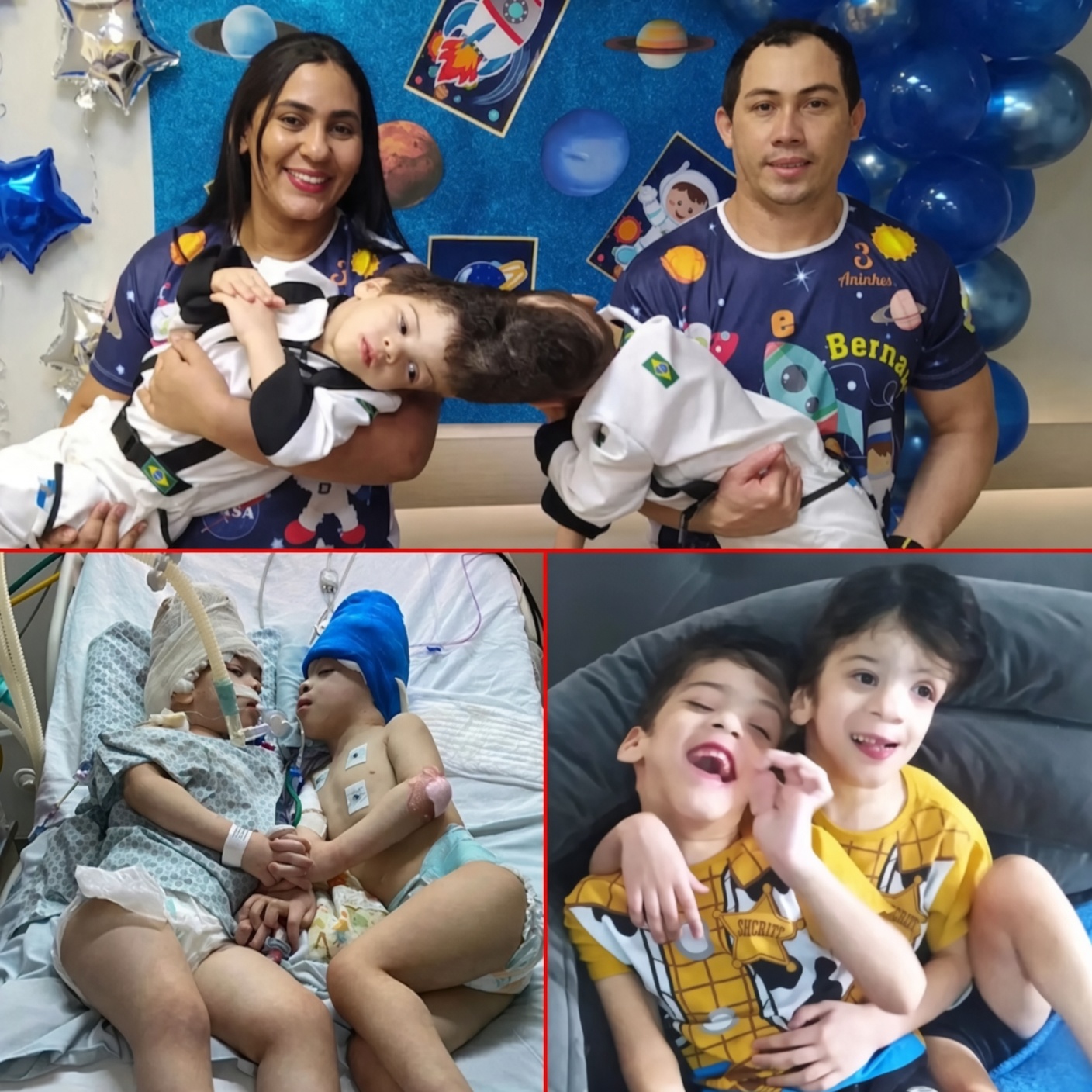
RIO DE JANEIRO — Bernardo and Arthur Lima were born in 2018 in rural Roraima, in northern Brazil, fused at the top of the skull. They shared part of their brain and vital veins that return blood to the heart — an extremely rare form of craniopagus twinning that left them unable to look at each other for nearly four years.
Most of their lives were spent in a specially adapted hospital bed at the Instituto Estadual do Cérebro Paulo Niemeyer in Rio de Janeiro. Other specialists had told the family the boys could not be separated. Their parents, Adriely and Antonio Lima, refused to give up.
In June 2022, after months of planning, an international team completed the final stages of one of the most complex twin-separation operations ever attempted. The brothers, then almost four years old, underwent a series of seven surgeries involving nearly 100 medical staff. The last intervention alone lasted more than 27 hours. Both boys survived.
The operation was led by Brazilian pediatric neurosurgeon Dr. Gabriel Mufarrej and British pediatric neurosurgeon Prof. Noor ul Owase Jeelani of Great Ormond Street Hospital in London, working with the charity Gemini Untwined, which Jeelani founded. The twins were among the oldest craniopagus children with fused brains ever successfully separated.
To reduce the risk, surgeons in Rio and London spent months rehearsing in a shared virtual-reality operating room. Using CT and MRI scans, they built a digital model of the boys’ shared anatomy and practiced the procedure while wearing VR headsets — the first time teams on two continents had operated together in the same virtual space before putting the children on the table.
“The twins had the most serious and difficult version of the condition, with the highest risk of death for both,” Mufarrej said. “No one else believed in this surgery at first, but we always believed there was a chance.”
After separation, the boys’ blood pressure and heart rates spiked, as often happens in such cases, then settled when they were reunited and touched hands days later. They began a long rehabilitation program. Later that year they left hospital and spent their first Christmas at home as two separate children.
Craniopagus twins account for only about 5 percent of conjoined births, which themselves occur in roughly one in 60,000 deliveries. Sharing brain tissue and major veins makes separation especially dangerous. The Lima brothers’ case became a landmark for the use of cross-continental virtual-reality planning in pediatric neurosurgery.
Sources
- Gemini Untwined, case summary: Arthur and Bernardo
- The Washington Post, “Surgeons use virtual reality techniques to separate conjoined twins,” August 2022
- Sky News / BBC reporting on the Rio operations and VR preparation, August 2022
- The Independent and The National, interviews with Prof. Noor ul Owase Jeelani and Dr. Gabriel Mufarrej