Face to Face at Last: How Surgeons Separated Abigail and Micaela Bachinskiy
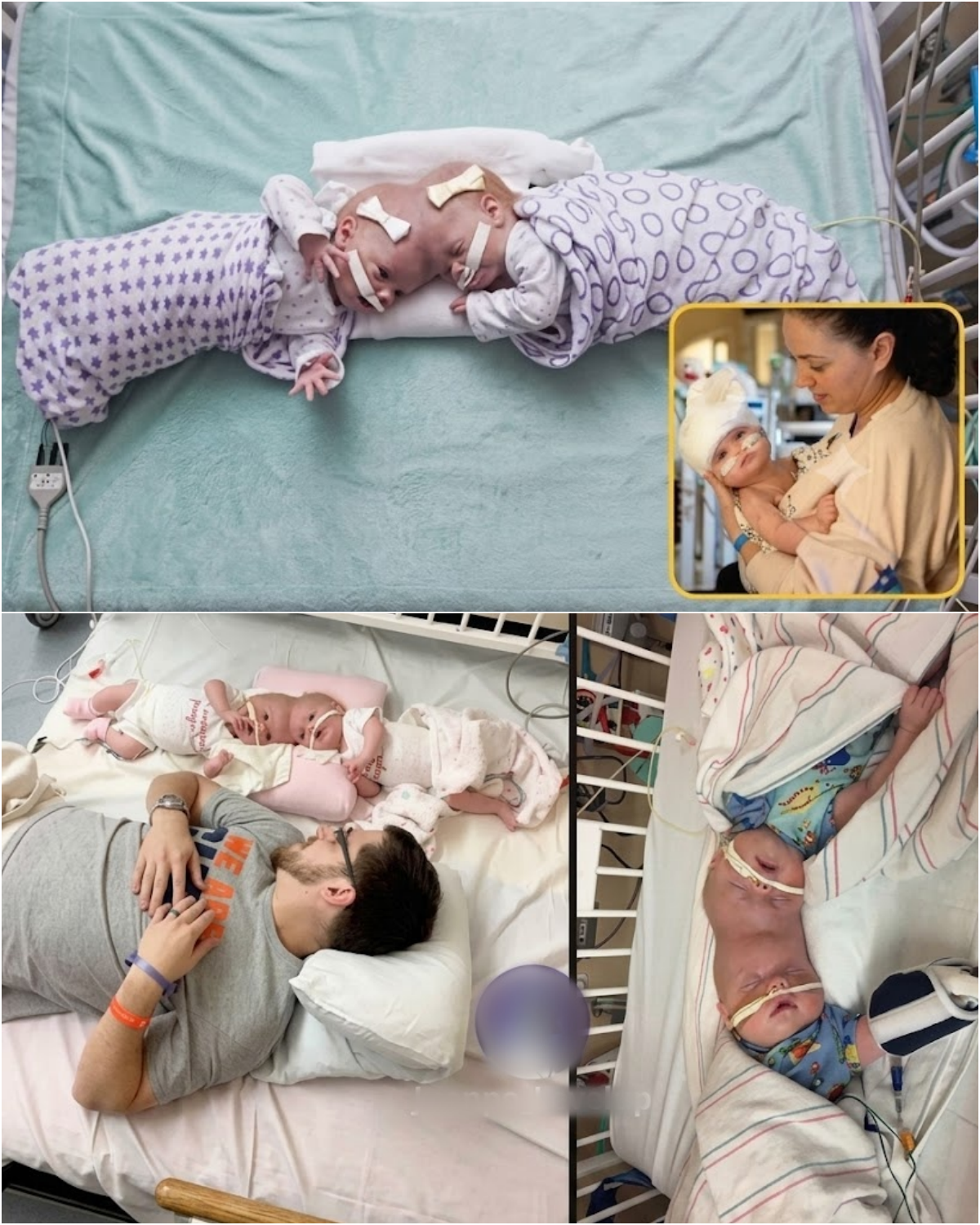
Abigail and Micaela Bachinskiy were born in December 2019 in Sacramento, California, joined at the crown of the skull and facing opposite ways. They were craniopagus twins, a fusion so rare it is estimated at one in 2.5 million births. Their brains were distinct, but they shared bone, scalp and a hazardous lattice of veins that carried blood from one sister’s brain toward the other. For ten months they could not look each other in the eye. Their mother, Liliya, and father, Anatoliy, already parents to three boys, were told survival itself was uncertain and that separation, if it ever came, would be among the most dangerous operations in pediatric neurosurgery.
Doctors at UC Davis Children’s Hospital spent months mapping that shared circulation with scans, 3-D models and rehearsal. Tissue expanders were placed under the scalp so there would be enough skin to close two separate heads. On 23–24 October 2020, when the girls were about ten months old, a team of more than thirty specialists began a procedure that ran close to twenty-four hours. Neurosurgeons divided the shared venous channels millimetre by millimetre, knowing that a single error could starve a brain of blood or flood it. Plastic surgeons reconstructed two skull vaults and two scalps. Anaesthetists kept two infants stable on one table, then on two. When the last connection was cut, the twins were moved into separate beds. For the first time they lay side by side instead of fused. Liliya later said running from one cot to the other felt strange; she was not used to them being apart.
The operation did not end the story. Both girls needed intensive care, further reconstruction and long rehabilitation. They went home in time for Christmas 2020, just before their first birthday. In the years since, their parents have described ordinary childhood arriving in pieces: sitting, crawling, walking, birthday parties, two faces that can finally meet. Craniopagus separation remains exceptional. Many such twins die in infancy; of those who reach an operating theatre, not all survive with intact function. Abigail and Micaela did. The work that made it possible was not a single burst of heroism but planning, imaging, staged preparation and a night that did not end until two children existed where one body had been.
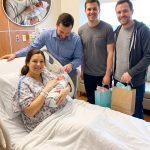
What the photographs show—a father with both babies on his chest before the cut, two small figures on a hospital blanket afterwards, a mother holding a bandaged infant—is the visible edge of that labour. The deeper fact is simpler. Two sisters who had shared a skull were given separate lives, and they lived.
**Sources:** UC Davis Health / UC Davis Children’s Hospital announcements and documentary series on Abigail and Micaela Bachinskiy (2020–2021); People magazine, 30 October 2020 and 5 November 2020; The Guardian, “Experience: my daughters were born conjoined at the head”; ABC10, KCRA and related local reports on discharge, December 2020; The Sun / Daily Mail later family interviews (2025–2026).