THEY ARE TWINS. TIME MOVES FASTER FOR THEM THAN FOR ALMOST ANYONE ELSE ON EARTH.

THEY ARE TWINS. TIME MOVES FASTER FOR THEM THAN FOR ALMOST ANYONE ELSE ON EARTH.
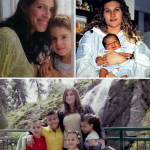
Elis and Eloá Lima Carneiro were born together in Boa Vista, Roraima, Brazil. They have stayed together through every milestone that followed — including a diagnosis so rare that researchers believe they may be the only identical twins in the world living with it.
The sisters have Hutchinson-Gilford progeria syndrome, a genetic condition that makes the body age far faster than it should. It is caused by a mutation in the LMNA gene, usually not inherited from parents, and it affects only about one person in many millions. Children with progeria often look older than their years: thinning hair, delicate skin, small stature, and medical risks that belong to much older bodies. Average life expectancy has historically been around the early teens.
For Elismar Lima Carneiro, their mother, the first signs appeared early. The twins were born premature. By four months, their skin was thinning, their hair was falling, and their faces were changing in ways that did not match other babies. At seven months, specialists named what the family had been afraid to hear.
What came after was not only medicine. It was a childhood lived under a clock no parent wants to watch.
The girls have needed constant medical follow-up. Their bodies stay very small — at age three they weighed only a few kilograms and measured about 60 centimeters — while their minds have kept developing like other children’s. One sister is more affectionate, the other more restless. They play. They learn. They depend on each other in a way that makes their rarity feel, at home, almost ordinary.
Their story crossed borders because science is paying attention and because the public could not look away. The Progeria Research Foundation in the United States has followed cases worldwide; Elis and Eloá became part of that map. On social media, their family shared daily life rather than only the diagnosis. Millions watched not a medical curiosity, but two little girls being loved out loud.
Progeria has made researchers look harder at how human aging works. For the Carneiro family, the question is simpler and heavier: how do you give children a full life when time itself seems to be in a hurry?
Elis and Eloá are still here, still growing in understanding if not in height, still answering that question the only way children can — by living one more year, then another.
Their faces show a condition the world barely understands. Their story shows something it understands perfectly: dignity, affection, and strength when the years refuse to move at the usual speed.
Source: Brazilian reporting including G1, Revista Crescer, and Marie Claire interviews with the family of Elis and Eloá Lima Carneiro; Progeria Research Foundation context.