Science And Humanity: Hennglise Dorival’s Extraordinary Journey And The Surgery That Gave Her A New Future
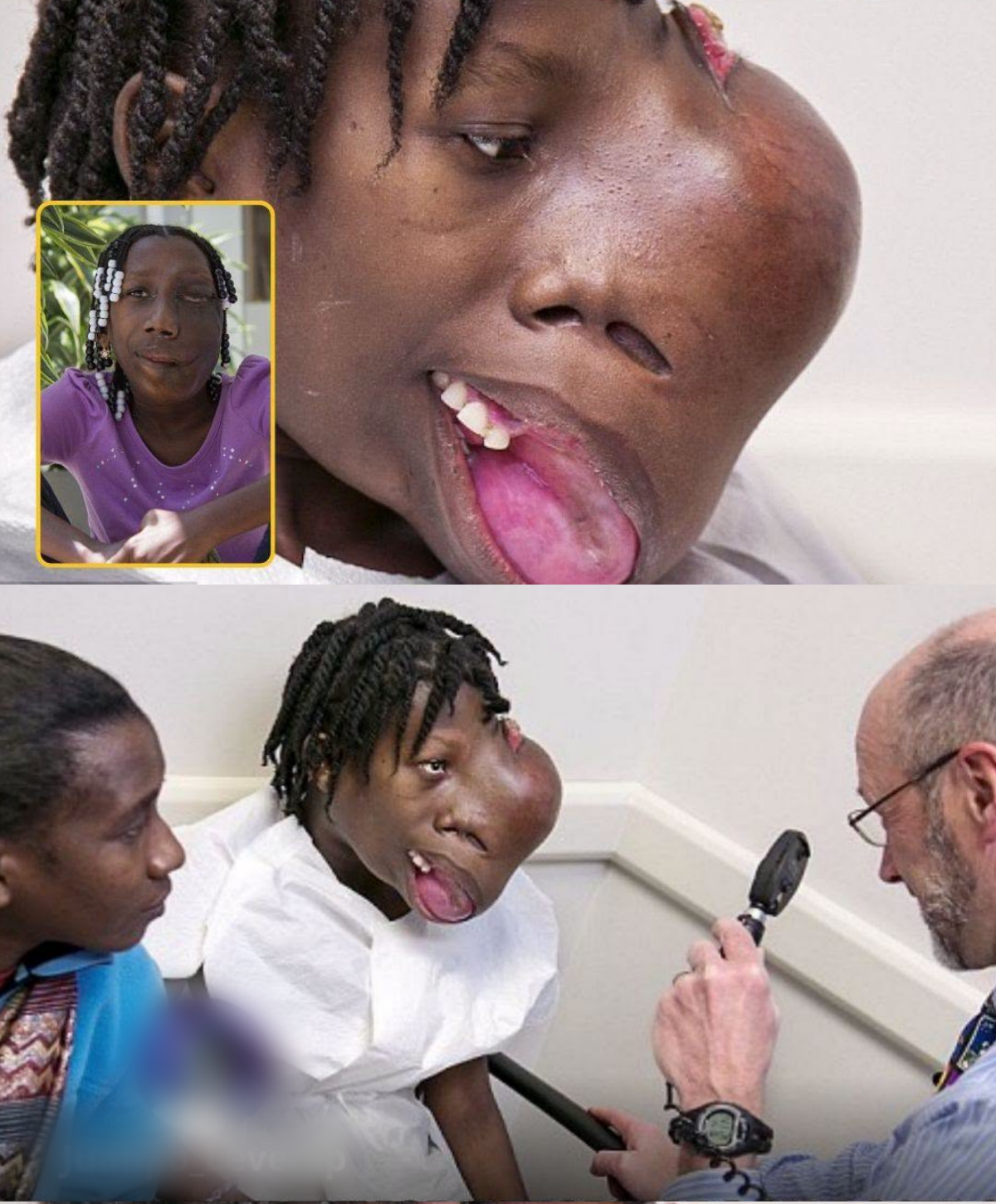
At just 15 years old, Hennglise Dorival was living with an enormous facial tumor that had progressively transformed her appearance, displaced her left eye and threatened her ability to breathe. What began as a small growth when she was 12 eventually developed into a massive ameloblastoma, a benign but locally aggressive tumor associated with the jaw.
Her story would eventually lead her from Haiti to Virginia, where a team of specialists performed a painstaking 12-hour operation to remove the tumor and begin reconstructing her face. The procedure became a turning point in the teenager’s life.
From A Small Growth To A Four-Pound Tumor
Hennglise was originally from Bahon, Haiti. According to reports, the problem began when she was around 12 years old, when what initially appeared to be a small swelling developed inside the region of her upper jaw and maxillary sinus.
Doctors identified the growth as an ameloblastoma, a tumor of dental origin. Although ameloblastomas are generally classified as benign, they can behave aggressively, growing into surrounding bone and tissues and causing significant facial destruction if untreated.
Over approximately four years, Hennglise’s tumor grew from roughly the size of a pea to a mass comparable to two grapefruits. By the time she reached her mid-teens, it weighed approximately four pounds, or 1.8 kilograms.
The enormous mass originated around the left upper jaw and dramatically altered the structure of her face.
It pushed her left eye outward and displaced her nose and mouth. Her left eye had lost its function, leaving her with little or no useful vision on that side. The tumor also caused extensive damage to the surrounding jaw and facial muscles.
A Teenager Forced To Hide From The World
The physical consequences were accompanied by profound social consequences.
As Hennglise’s face changed, she stopped attending school and spent much of her time at home. When she had to go outside, she often covered her face with a scarf.
Her mother, Yvrose, described how the condition affected their family and her daughter’s ability to interact with other people. Hennglise reportedly told people involved in her care that other children bullied her and that she felt as though she had no friends.
The tumor was not simply an appearance-related problem. Its continued growth was creating an increasingly serious medical threat.
Dr. William Magee, who would eventually lead the operation in the United States, said the tumor was approaching the point where it could obstruct Hennglise’s airway. Contemporary reports quoted him as estimating that continued growth could have resulted in life-threatening airway obstruction within months.
An Earlier Operation Had Not Solved The Problem
Hennglise’s journey to definitive treatment was not straightforward.
An earlier attempt had been made to remove the tumor in Haiti. According to accounts from the time, surgeons had performed a lengthy operation, but the tumor later returned because it had not been completely removed.
When Larry O’Reilly, an American businessman who had first encountered Hennglise during a visit to Haiti, returned and saw how dramatically the tumor had grown again, he began working to find another solution.
The case was particularly difficult because of the complexity and risks associated with the operation. Eventually, Project HOPE and Operation Smile became involved in helping bring Hennglise and her mother to the United States for specialized treatment.
A Journey To Virginia
Hennglise traveled with her mother to Virginia, where she was treated at Children’s Hospital of The King’s Daughters in Norfolk.
The hospital had the specialist resources required for such a complicated craniofacial procedure, including expertise in craniofacial surgery, neurosurgery, anesthesia and intensive postoperative care.
The operation was scheduled for April 28, 2014.
Before the surgery, Hennglise reportedly expressed little fear about what was ahead. Instead, she was focused on something remarkably simple: seeing herself in a mirror after the tumor was gone.
Her wish was to look at her reflection and see that she was no longer the same.
A 12-Hour Surgical Marathon
On April 28, 2014, Dr. William Magee, co-founder of Operation Smile and a craniofacial surgeon, worked with other specialists to remove the massive tumor.
The operation lasted approximately 12 hours.
The surgical team carefully separated the tumor from the surrounding facial structures. Because the mass was attached to the upper jaw and extended around the region of the eye, removing it required extensive surgical dissection and removal of affected bone.
Importantly, reports stated that the tumor had not invaded the skull or brain, allowing surgeons to remove it completely.
After excising the mass, the team also performed reconstructive work, including reconstruction of the eye socket and repositioning of the affected eye. Further reconstructive procedures were expected as part of Hennglise’s longer recovery.
The procedure was one of the most challenging operations undertaken by the team, with the size and location of the tumor creating considerable technical difficulties.
The Moment She Saw Her New Face
After years of hiding behind a scarf, Hennglise was finally able to see her face without the enormous tumor.
The transformation was immediate and profound.
Her face was dramatically smaller, although the reconstruction was not yet complete. Doctors expected her to undergo additional procedures, particularly to further reconstruct her jaw.
For the immediate postoperative period, she could eat only soft or liquid foods while her facial structures healed. Her left eye also remained severely damaged, and doctors believed the chances of restoring useful vision were limited.
Yet Hennglise’s attitude had changed.
After the operation, she told an Operation Smile representative through a translator that she was happy because her face was smaller and that although her mouth looked different, she believed it would improve with time.
Her mother also described a change in their relationship. She said Hennglise was no longer as afraid to go outside and socialize.
More Than A Surgical Transformation
The operation did not represent the end of Hennglise’s medical journey.
Additional reconstructive procedures were anticipated, including further work on her jaw. She and her mother remained in Virginia for postoperative care before returning to Haiti.
But the removal of the tumor gave Hennglise something she had gradually lost during the previous four years: the possibility of participating in ordinary life without constantly hiding her face.
By 2016, Operation Smile reported that Hennglise had returned for additional surgical revisions and was attending school. She was also described as no longer being afraid to leave her home.
Her journey illustrates how a condition that is technically classified as benign can nevertheless become devastating when it grows unchecked, particularly when access to specialized diagnosis and surgery is limited.
For Hennglise, the operation was about much more than removing a tumor. It was the beginning of rebuilding her ability to eat, speak, socialize and imagine a future without the enormous mass that had defined so much of her adolescence.
From a small swelling discovered in childhood to a nearly four-pound tumor—and finally to a painstaking 12-hour operation—her story became a powerful example of how specialized medicine, international cooperation and human generosity can change the course of a young person’s life.
Sources:
- ABC News, “Teenager ‘Happy’ After 4-Pound Facial Tumor Removed,” May 2014.
- Operation Smile, reports and patient stories concerning Hennglise Dorival and the World Care program.
- The Virginian-Pilot, “4-pound tumor removed from Haitian girl’s face,” May 2014.
- Fox News, “Operation Smile: Doctors Remove 4-Pound Tumor From Girl’s Face,” May 2014.
- Children’s Hospital of The King’s Daughters, contemporary reports on Hennglise Dorival’s treatment.
- PR Newswire / Operation Smile, report on Hennglise Dorival’s return for additional surgical revisions, 2016.