The Rancher Who Lost His Housekeeper — Part 3: The Forty-Seven-Day Twist
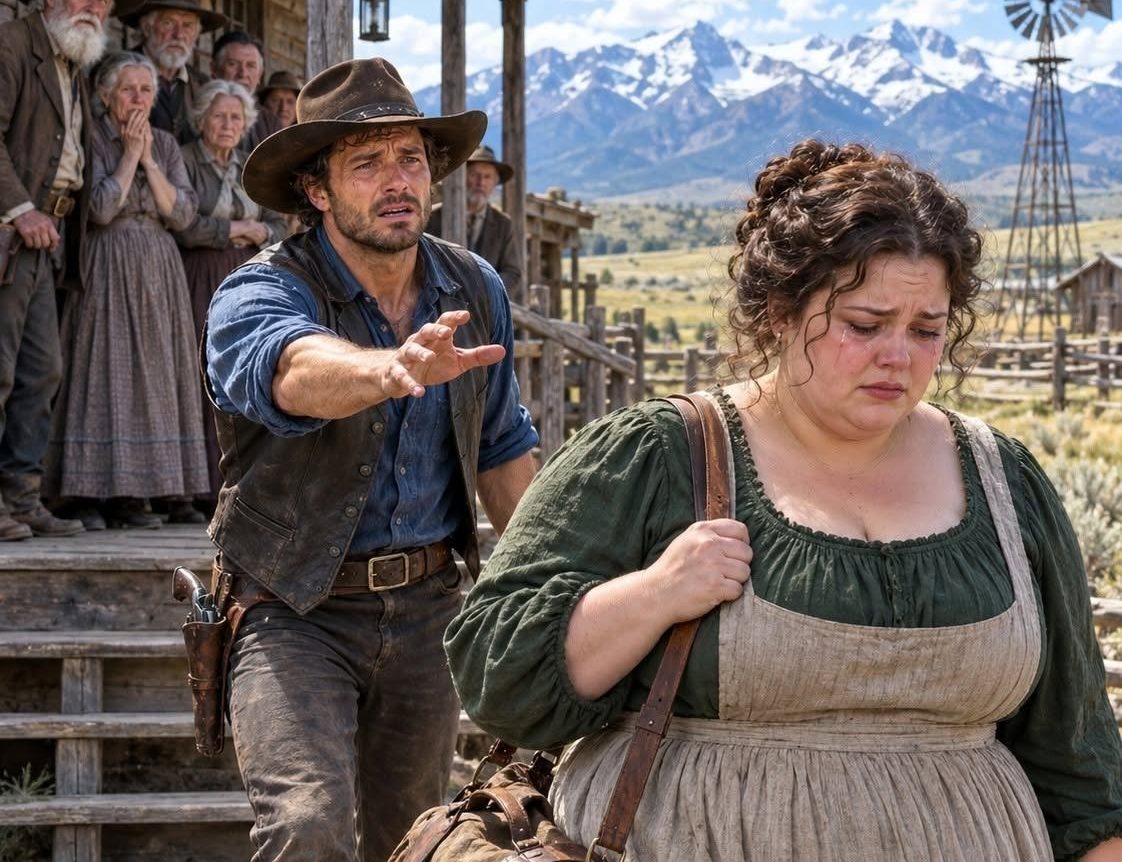
The water was rising faster than Gideon Mercer could believe.
Within minutes, it had reached his knees.
The underground cellar beneath the old barn was filling from a broken irrigation channel, and the collapsed staircase had sealed their only visible escape.
Silas Crowe was shouting orders.
Sheriff Briggs was clawing at the fallen beams.
Mabel stood beside Gideon, holding the brass key so tightly that its edges cut into her palm.
Then, through the ceiling, came Tobias’s voice.
“Mabel! Remember what you told me!”
She looked up.
“Which part, sweetheart?”
“The house always has another door!”
Mabel suddenly understood.
Caroline’s letter.
The torn map.
The strange markings beside the underground room.
She hurried toward the rear wall.
There, beneath years of dust, was a narrow iron plate.
She fitted the key into a hidden opening.
Nothing happened.
She tried again.
Still nothing.
Gideon joined her.
“Let me.”
“No.”
Mabel pressed her shoulder against the wall.
“The key doesn’t open a door.”
She looked at the iron plate.
“It releases something.”
She twisted the key in the opposite direction.
A heavy mechanism clicked.
Somewhere beneath their feet, an old drainage gate opened.
The water began rushing away.
Gideon stared.
“How did you know?”
Mabel gave a trembling smile.
“Caroline always said the smartest people built a second way out.”
Then the wall shifted.
A narrow passage appeared behind the iron plate.
Gideon grabbed the ledgers.
Mabel seized the metal box.
They climbed into the passage just as Crowe lunged toward them.
“Give me those papers!”
Gideon shoved him backward.
Crowe slipped in the muddy water and struck his shoulder against the stone wall.
Sheriff Briggs dropped his revolver and scrambled toward the passage.
But Gideon refused to move.
“You’re coming with us,” he told them.
Crowe laughed bitterly.
“You think a few books will send me to prison? I own the sheriff. I own the bank. I own half the judges in this territory.”
Mabel stepped into the passage.
“Not the judge Caroline trusted.”
Crowe’s face changed.
“What did you say?”
Mabel held up the metal box.
“Judge Samuel Whitcomb.”
For the first time, Crowe looked afraid.
They emerged through a concealed opening beside the creek.
Waiting outside were Tobias and three armed men.
One was the county deputy.
The others were federal investigators from Wichita.
Gideon stopped in disbelief.
Tobias ran into Mabel’s arms.
She dropped to her knees and held him so tightly that he squeaked.
“I thought they’d hurt you!”
“They tried,” Tobias whispered. “But I remembered the hiding place you showed me.”
Gideon turned toward the investigators.
“How did you know to come?”
One of them stepped forward.
“Miss Pike sent us a letter six weeks ago.”
Gideon looked at Mabel.
She lowered her eyes.
“There are things I haven’t told you.”
Crowe and Briggs were arrested before sunset.
The evidence recovered from the cellar exposed a scheme involving forged land transfers, stolen livestock, fraudulent mortgages, and payments made to corrupt officials.
But the most important discovery was a letter written by Caroline shortly before her death.
It described her final meeting with Silas Crowe and identified the men who had threatened her.
The investigation would take months.
Yet the Mercer Ranch was finally safe from Crowe’s immediate control.
That evening, Gideon sat at the kitchen table with Tobias’s notebook.
Forty-seven days.
Forty-seven entries.
Some were ordinary.
“Day 4: Mabel fixed the fence even though Gideon said it was impossible.”
“Day 9: Mabel gave me her last biscuit because she said she wasn’t hungry.”
“Day 16: Gideon shouted at Mabel. She cried behind the smokehouse where he couldn’t see.”
Gideon’s throat tightened.
He continued.
“Day 23: Mabel sold her mother’s silver brooch to buy medicine when I was sick.”
He stopped reading.
He remembered that week.
Tobias had developed a fever.
Gideon had been away searching for missing cattle.
When he returned, the boy was recovering.
He had assumed Mabel used household money to purchase the medicine.
But there had been no household money.
She had sold something precious to save his brother.
He turned another page.
“Day 35: Mabel said people can be good even when they’re too sad to remember how.”
Gideon covered his face.
Then he reached the final entry.
Day 47.
The handwriting was different.
Not Tobias’s.
Mabel’s.
“Gideon is not a cruel man. But grief has made him careless with other people’s hearts. If I stay, he may never understand that love cannot survive where dignity is forgotten.”
Below it was a second sentence.
“I hope someday he learns to ask someone to stay without making them feel they have nowhere else to go.”
Gideon closed the notebook.
For a long time, he sat alone.
Then he walked to the guest bedroom.
Mabel was packing again.
He stood in the doorway.
“You’re leaving?”
“Yes.”
His heart sank.
“Even after everything?”
She folded a dress carefully.
“Gideon, the danger is over. That doesn’t mean the past six months never happened.”
He nodded slowly.
“I know.”
He placed an envelope on the bed.
Inside were thirty dollars in wages, ten dollars in interest, and a signed document.
Mabel unfolded it.
It was a deed.
One hundred and twenty acres of land adjoining the Mercer Ranch.
She stared at him.
“What is this?”
“Land in your name. No conditions. No obligation to stay.”
Mabel shook her head.
“I can’t accept this.”
“You can. Because I’m not offering it to buy your forgiveness.”
He swallowed.
“I’m offering it because you spent six months building a future for people who never asked whether you had one of your own.”
Tears filled her eyes.
Gideon stepped back.
“I love you, Mabel.”
She looked up sharply.
He continued.
“But you don’t owe me love because I finally learned how to behave like a decent man.”
For the first time, Mabel saw something different in his face.
Not desperation.
Not guilt.
Respect.
Still, she left the next morning.
Gideon watched her wagon disappear down the road.
Tobias stood beside him.
“Are you going to chase her again?”
Gideon shook his head.
“No.”
“Why?”
“Because this time, she gets to choose.”
Three months passed.
Winter settled over Kansas.
Gideon repaired the farmhouse, paid every worker on time, and began rebuilding the ranch.
He also established a small schoolroom in the old bunkhouse, using the money recovered from Crowe’s fraudulent accounts.
Tobias attended every morning.
And every evening, he asked whether Mabel had written.
She hadn’t.
Then, on the first warm day of March, a wagon appeared on the southern road.
Mabel sat beside the driver.
Behind her were six women and four children.
Gideon stepped onto the porch.
Tobias ran outside.
“Mabel!”
She climbed down and embraced him.
Gideon approached slowly.
“You’re back.”
Mabel smiled.
“Not exactly.”
She pointed toward the land Gideon had given her.
“I’ve come to build something.”
The women behind her were widows, abandoned wives, and young mothers who had nowhere safe to work.
Mabel planned to establish a cooperative farm where they could earn wages, learn trades, and eventually own property.
Gideon looked toward the open fields.
“You’ll need fences.”
“I know.”
“And a well.”
“Already arranged.”
“And a barn.”
She smiled.
“I was hoping to hire someone.”
Gideon laughed for the first time in what felt like years.
“What’s the pay?”
“Five dollars a month.”
He looked at her.
Then they both burst out laughing.
But the greatest surprise came two weeks later.
A lawyer from Wichita arrived carrying a sealed document.
It had been deposited with Judge Whitcomb nearly two years earlier.
Caroline’s final will.
Gideon opened it with trembling hands.
Most of the estate remained with him and Tobias.
But one paragraph changed everything.
Caroline had secretly purchased the adjoining acreage before her death.
She had placed it in trust for Mabel Pike, with instructions that it be transferred to her if she ever came to Kansas.
Gideon stared at the document.
The land he believed he had given Mabel had never truly been his to give.
Caroline had already chosen her.
But there was something even more astonishing.
Attached to the will was a second letter.
It was addressed to Mabel.
“My dearest friend,
If you are reading this, then you have found your way back to the place I hoped would someday become your home.
I know you have spent much of your life being told you must earn kindness, affection, and belonging.
You do not.
You deserve those things simply because you are you.
I bought this land because I wanted you to have something no one could take away.
Not a job.
Not a favor.
A beginning.
And if Gideon has finally learned to see the goodness standing in front of him, perhaps you will both discover something I always believed was possible.
A home can have room for more love than one lifetime.”
Mabel pressed the letter to her chest.
Gideon stood beside her, speechless.
Caroline had known Mabel long before Gideon ever met her.
She had planned for her friend’s future.
And without realizing it, she had also left her grieving husband a final lesson about love.
But Mabel had one last revelation.
She reached into her bag and removed a small envelope.
“I didn’t return because of the land,” she told Gideon.
“Then why?”
She handed him the envelope.
Inside was a photograph taken in Wichita.
It showed Mabel standing beside the newly formed cooperative’s first members.
On the back, she had written:
“I spent six months saving your home. I spent three months learning how to build my own. Now I know I can love you without losing myself.”
Gideon’s eyes filled.
He looked at her.
“Does that mean there’s still a chance?”
Mabel took his hand.
“It means you may court me properly, Mr. Mercer.”
Tobias shouted with delight.
Six months later, beneath the cottonwood trees, Gideon and Mabel married in a small ceremony attended by the ranch workers, the cooperative families, and the people who had helped expose Silas Crowe.
There were no expensive decorations.
No grand speeches.
Only wildflowers, homemade bread, and a little boy carrying two wedding rings in a wooden box.
The box had once held his broken toy horse.
Gideon had repaired it.
Years later, travelers passing through Kansas would find two prosperous neighboring properties.
The Mercer Ranch.
And Pike Haven, a cooperative where women earned fair wages and families found new beginnings.
Above the entrance to Pike Haven hung a wooden sign.
Mabel had chosen the words herself.
“No one works without dignity. No one stays without choice.”
And in the Mercer farmhouse, Gideon kept six carefully folded flour sacks in a wooden chest.
Not as a reminder of what he had paid.
But as a reminder of what he had almost lost.
Because the greatest twist of all was never the hidden cellar, the stolen deeds, or the woman who had uncovered a criminal conspiracy.
It was that Gideon had spent six months believing he was the one providing Mabel with a home.
When, in truth, she had been the one teaching him what a home was supposed to be.
And the woman he once failed to pay became the woman who helped an entire community discover its worth.
The End.