Snake Fang Comparison: Nature’s Perfectly Evolved Venom Delivery Systems
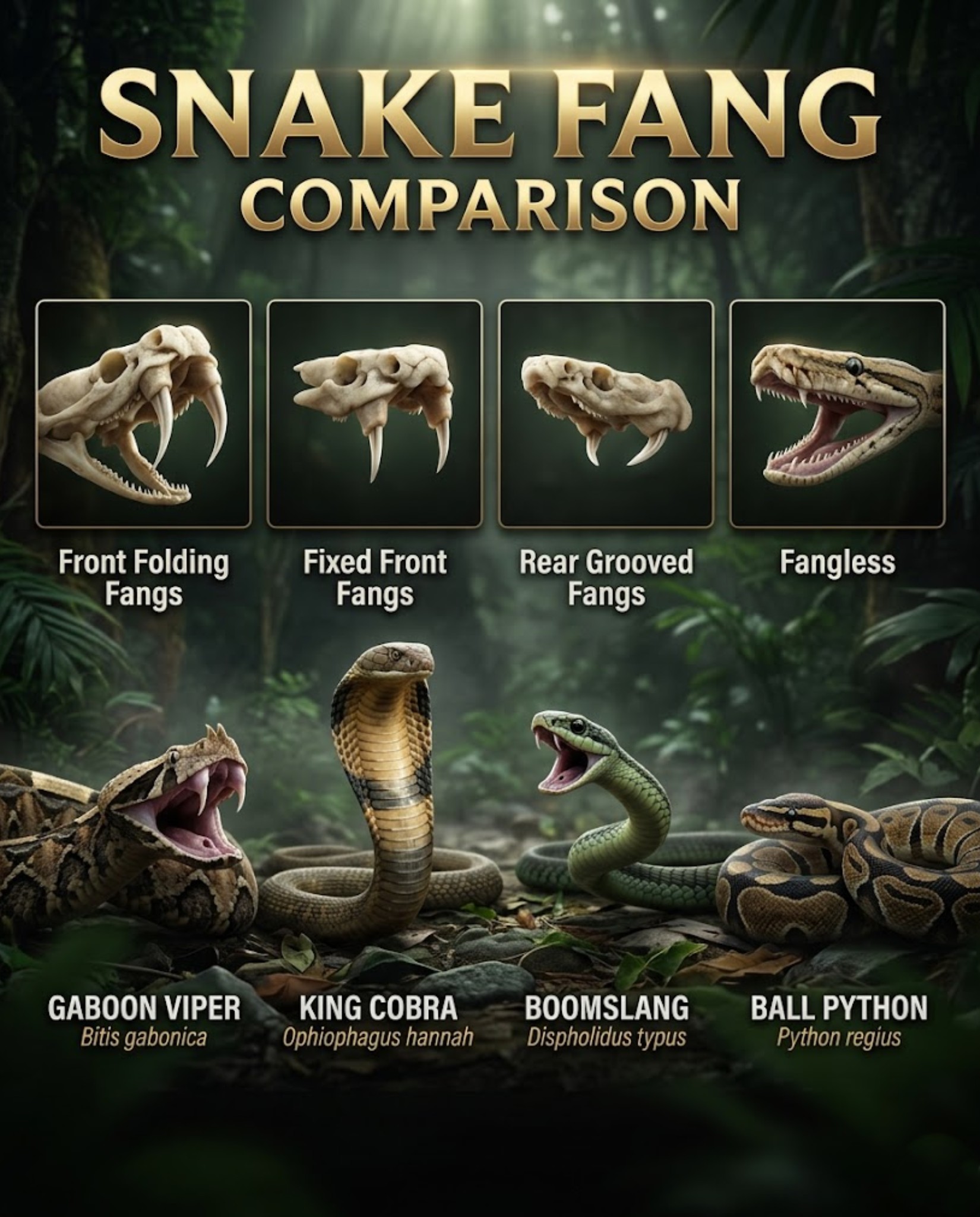
From deadly vipers to gentle constrictors, snakes have developed incredibly specialized fangs that match their unique hunting styles. Here’s a clear breakdown of the four main types:
1. Front Folding Fangs — Gaboon Viper (Bitis gabonica)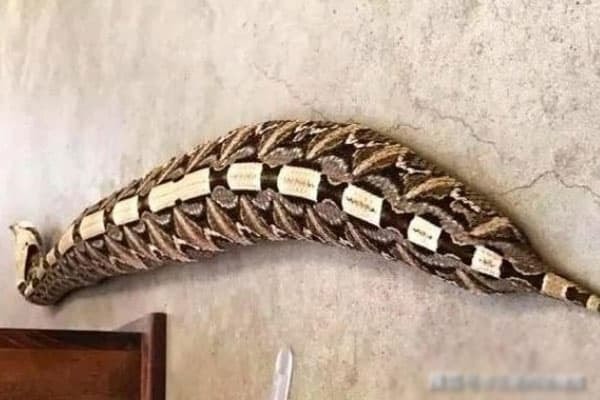
These are the longest fangs in the snake world — up to 2 inches (5 cm) long. They fold back against the roof of the mouth when closed and swing forward like switchblades when the snake strikes. This design allows for deep penetration and massive venom injection in a single, lightning-fast bite.
2. Fixed Front Fangs — King Cobra (Ophiophagus hannah)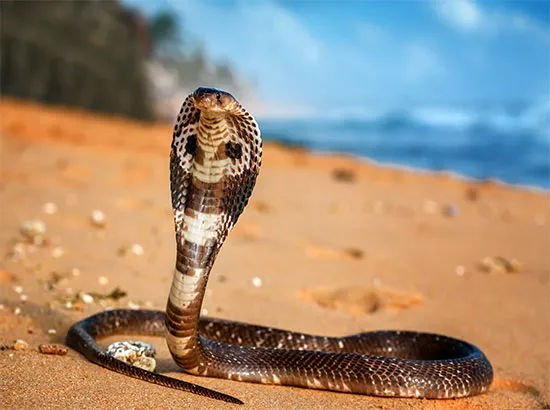
The king cobra has shorter, rigid fangs fixed at the front of its mouth. While not as long as the Gaboon’s, they are highly effective. The cobra compensates by delivering multiple controlled bites and “chewing” to push more venom into its target.
3. Rear Grooved Fangs — Boomslang (Dispholidus typus)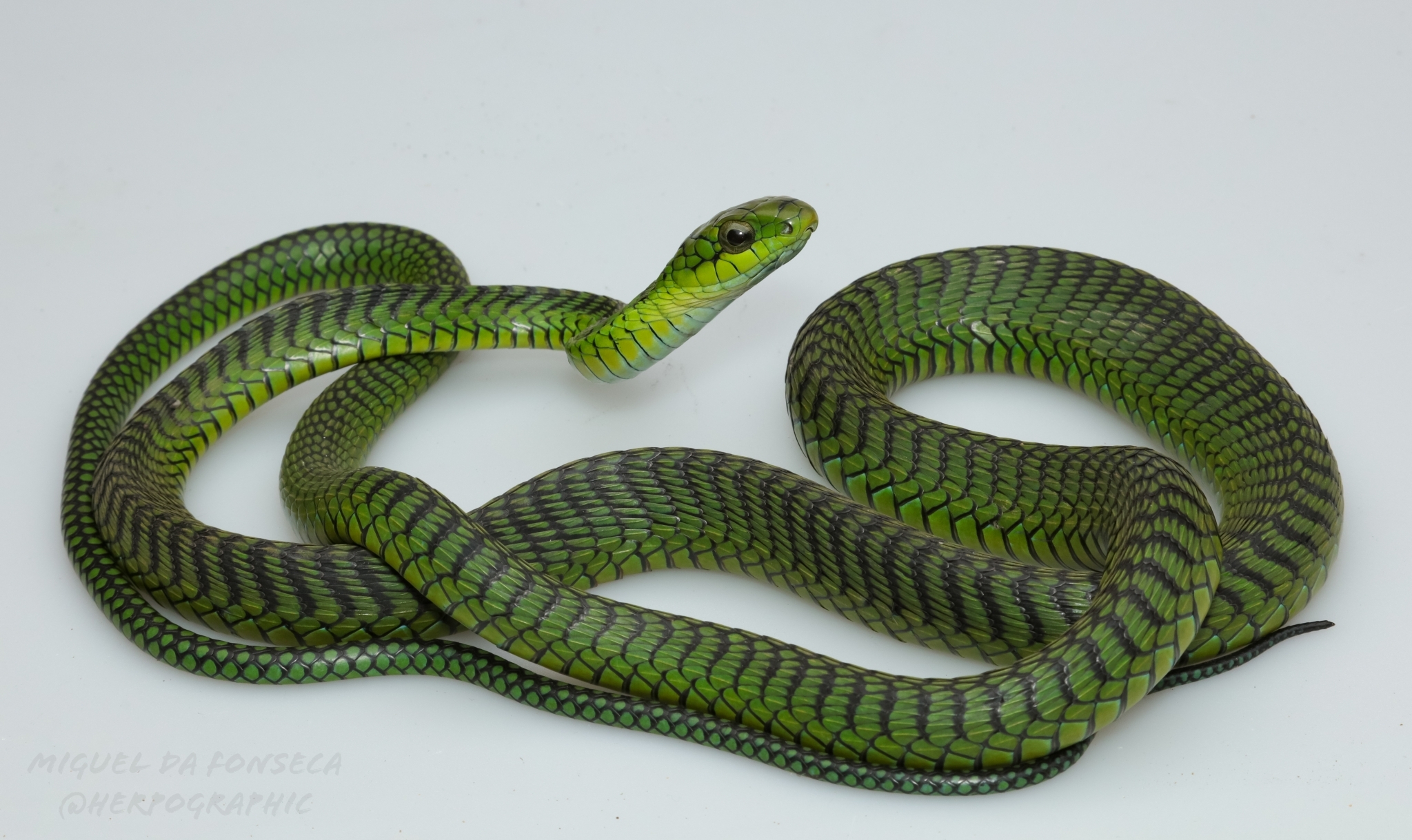
These fangs are located toward the back of the mouth with grooves along the outside. Venom flows down the grooves rather than through a hollow center. Because of their rear position, the Boomslang must “chew” on its prey to deliver a lethal dose — making it a slower but extremely potent venom delivery system.
4. Fangless — Ball Python (Python regius)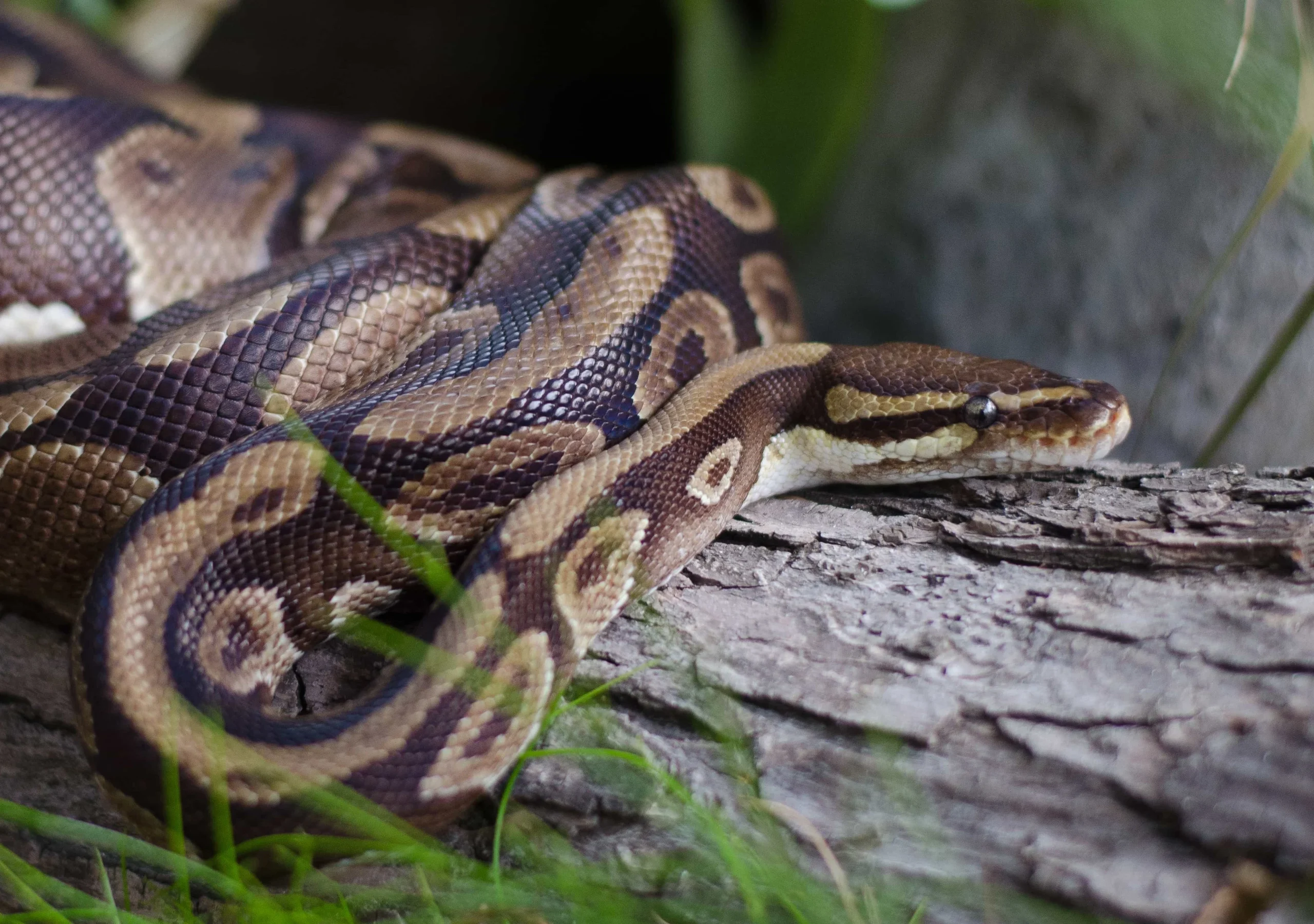
Not all snakes have venom fangs. The Ball Python is completely fangless (like most pythons and boas). Instead, it has rows of small, backward-curving teeth used only for gripping. It subdues prey through powerful constriction rather than venom.
Each fang type represents millions of years of evolutionary fine-tuning. Whether it’s the explosive strike of a viper, the calculated bite of a cobra, the deliberate chew of a boomslang, or the crushing power of a python — every adaptation is perfectly suited to its owner’s lifestyle and environment.
Nature’s engineering is truly remarkable. 🐍
Which fang type fascinates you the most?