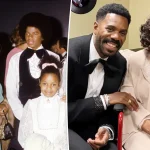
‘He Never Did Anything to Me’: Macaulay Culkin’s Testimony Defends Michael Jackson in 2005 Trial

Macaulay Culkin’s seven simple words — “He never did anything to me” — echoed through the courtroom and across global media when he took the witness stand during Michael Jackson’s 2005 child molestation trial. At a time when the pop superstar faced intense scrutiny and serious allegations, the former child actor’s testimony stood out as one of the most high-profile defenses from someone who had spent considerable time with Jackson during the 1990s.

Culkin, who rose to worldwide fame as the star of the Home Alone films, described his relationship with Jackson as a genuine friendship built on shared interests rather than anything sinister. In court, he made it clear that he had never experienced any inappropriate behavior from the singer. He also emphasized that his parents had never pressured or forced him to spend time with Jackson. Instead, Culkin said he visited because he genuinely enjoyed it.
During the 1990s, the unlikely bond between the two celebrities attracted significant public attention. Culkin was one of the biggest child stars on the planet, while Jackson was already a global icon living under constant media glare. When Culkin visited Jackson’s home, their time together was filled with ordinary childhood activities: playing video games, watching movies, and enjoying the rides and attractions at the amusement park built on the grounds of Neverland Ranch. Culkin has consistently recalled these moments as fun and innocent.
Years later, when Jackson was charged and stood trial in Santa Maria, California, in 2005, prosecutors called Culkin as a witness. His appearance drew widespread media coverage precisely because of his fame and the close association he had maintained with Jackson during the peak of the singer’s controversies. On the stand, Culkin did not waver. He told the jury that nothing inappropriate had ever occurred during his visits. He reiterated that he had gone to Neverland of his own free will and that his parents had supported his decision rather than pushing him into the friendship.

The testimony carried particular weight because it came from one of the most recognizable figures linked to Jackson in that era. While other witnesses and accusers presented conflicting accounts, Culkin’s clear and direct statements offered a different perspective — one rooted in personal experience rather than rumor or speculation. His words quickly became some of the most quoted moments from the entire trial.
Jackson was ultimately acquitted on all counts in June 2005. However, the case did little to settle the broader public debate surrounding the singer. Even today, more than two decades later, Michael Jackson remains one of the most polarizing figures in entertainment history. Supporters point to his musical legacy, his charitable work, and acquittals in court, while critics continue to raise questions based on allegations and documentaries that have emerged in recent years.

Macaulay Culkin’s testimony has often been cited by those defending Jackson’s legacy. For many, it serves as important counter-evidence from someone who was a child at the time and who spent repeated time alone with the singer. Culkin has never changed his account in the years since. He has maintained that his experiences with Jackson were positive and that no misconduct took place.
The contrast between Culkin’s recollections and the ongoing accusations against Jackson highlights the complicated and deeply divided public perception that still surrounds the late singer. While some view Culkin’s words as a powerful exoneration, others argue that individual experiences do not erase broader patterns or other claims. The conversation continues in media, documentaries, and public discourse, with new generations discovering both Jackson’s music and the controversies that followed him.
What remains clear is that Macaulay Culkin’s 2005 courtroom statement — simple, direct, and unwavering — continues to resonate. “He never did anything to me” was more than just a quote; it was a personal testimony from one of the most famous children of the 1990s about one of the most famous men in the world. Whether it changes minds or simply adds another layer to an already complex story, Culkin’s words remain a significant part of the enduring debate over Michael Jackson’s legacy.