16-Year-Old Lifeguard Ran Into Monster Waves to Save a 10-Year-Old — Weeks Later, They Met Again at the White House
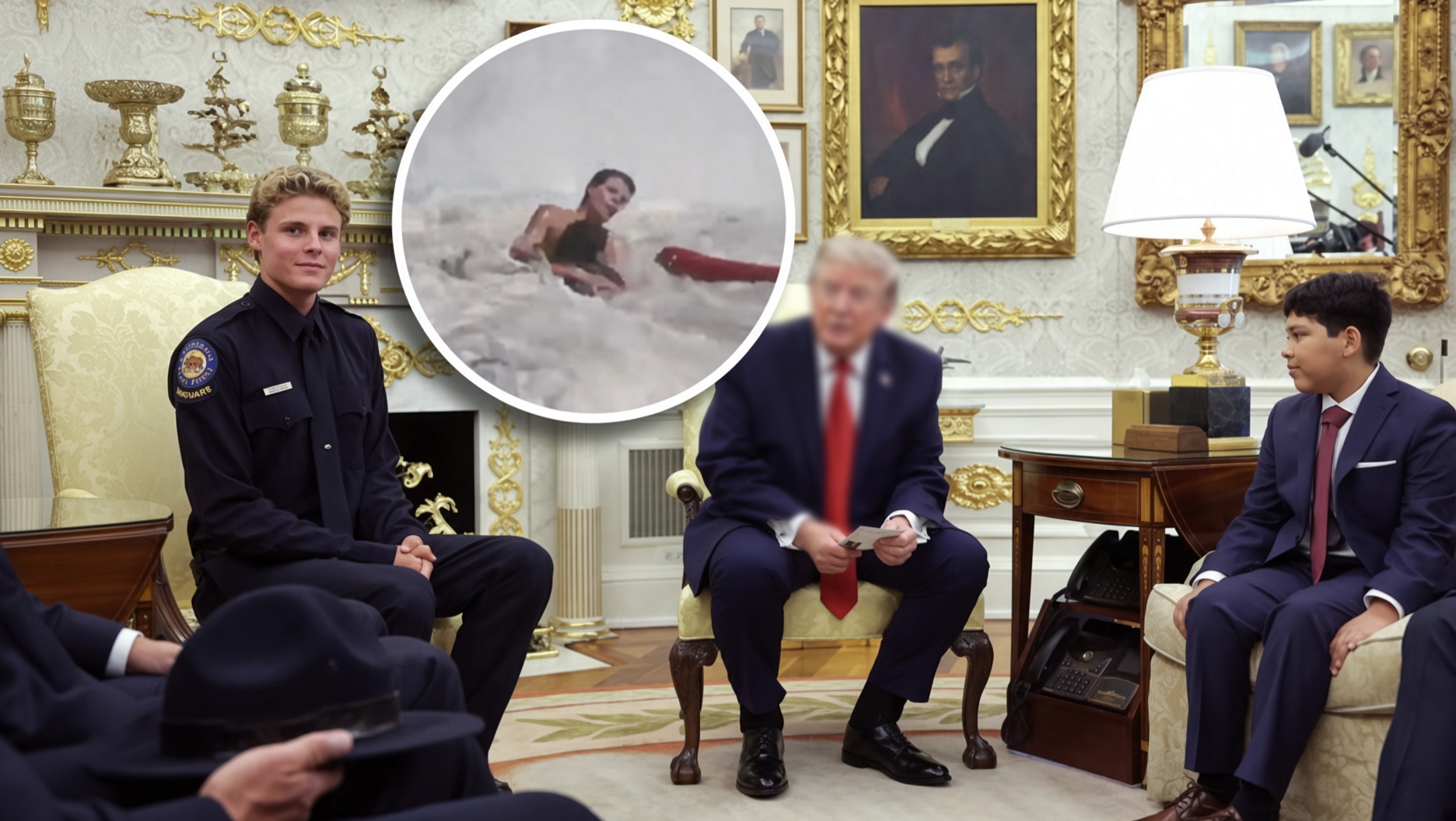
It began with a moment so ordinary that almost nobody on the beach could have predicted what would happen next.
Ten-year-old Nathaniel Rai was standing in ankle-deep water at Seabright State Beach in Santa Cruz, California, on July 25 when a powerful wave suddenly knocked him off his feet.
Within seconds, the ocean pulled him into dangerous surf.
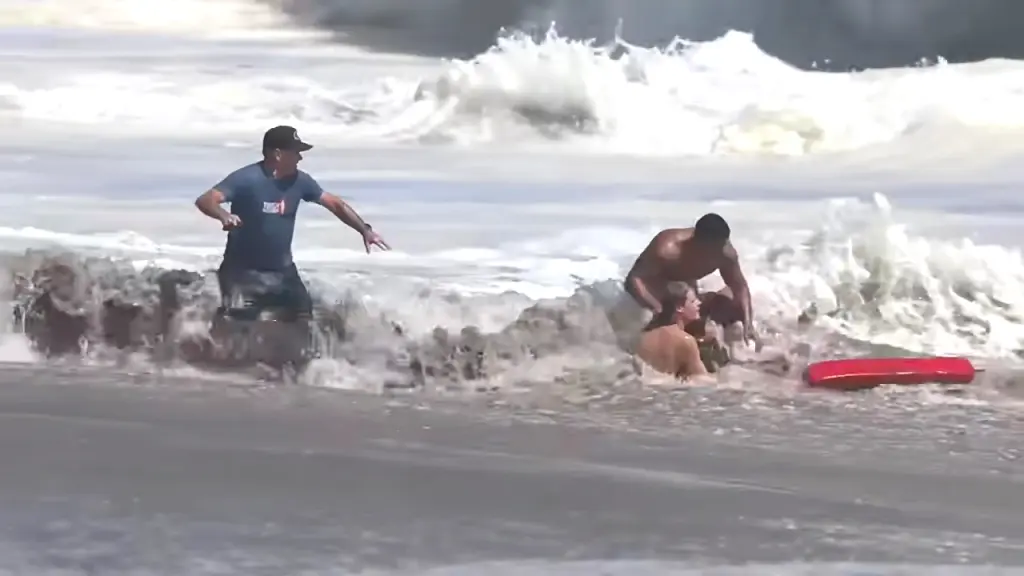
Nearby, 16-year-old lifeguard Ryder Williams saw it happen.
He did not wait.
Williams radioed the emergency, dropped his radio and sunglasses near his tower, grabbed his rescue equipment and ran directly into the water.
What followed was captured on video and watched by millions.
But the footage tells only part of the story.
Nathaniel would later reveal that he remembers almost nothing about the most frightening moments because he lost consciousness.
His father believes another few seconds could have changed everything.
And weeks after Ryder fought through the waves to bring Nathaniel home, the two would meet again somewhere neither could have imagined that afternoon:
Inside the White House.
Nathaniel Was Only in Ankle-Deep Water
One of the most frightening details of the rescue is where it began.
Nathaniel was not deliberately swimming far offshore.
He was vacationing in California with his mother and sister and had remained near the shoreline because the waves looked unusually large.
California State Parks said a significant south swell was affecting the Santa Cruz coastline that weekend.
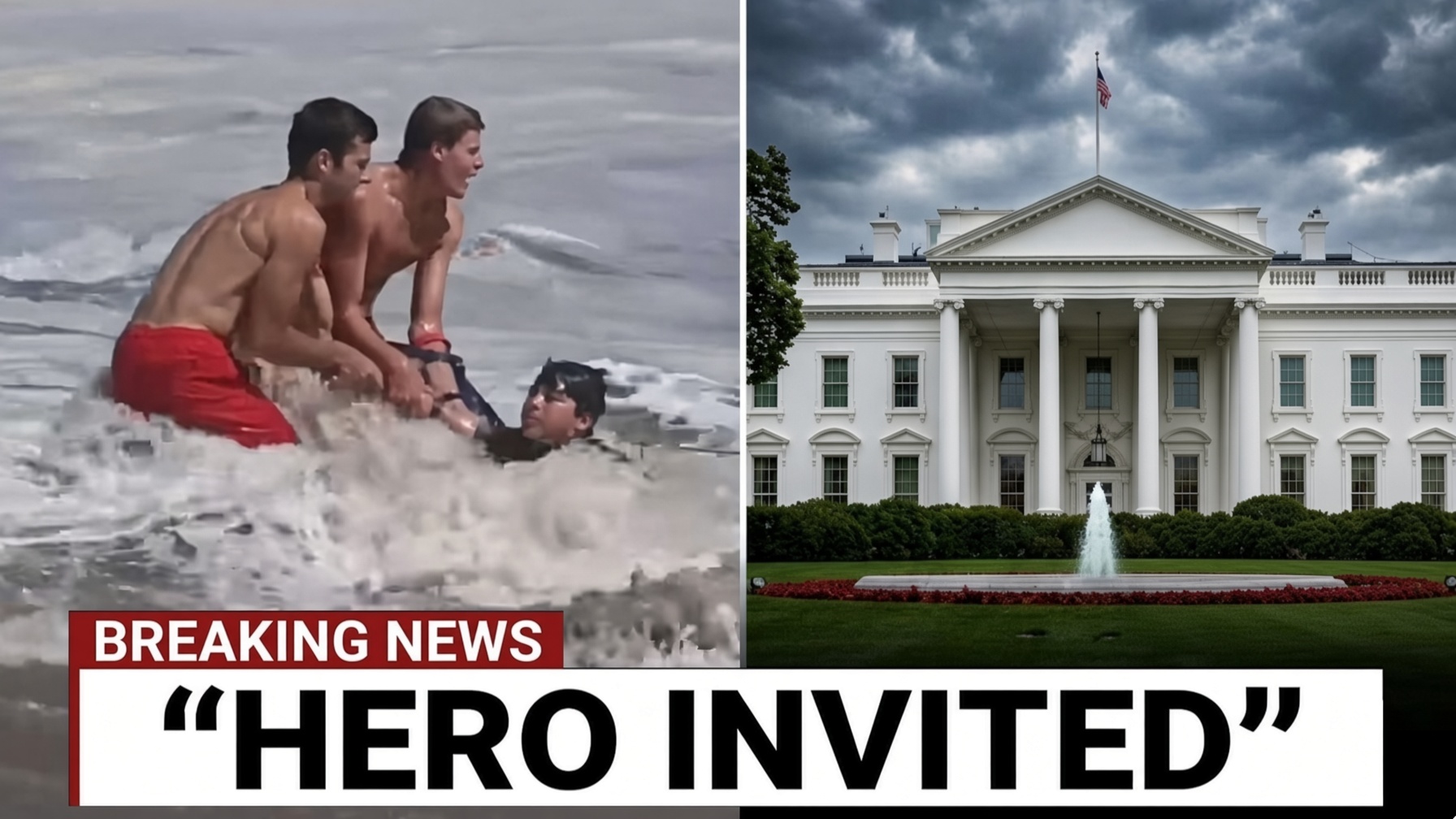
Surf was consistently around 4 to 6 feet, with occasional sets estimated at 8 to 10 feet.
Powerful shore breaks and rapidly forming rip currents created hazardous conditions.
At approximately 3:30 p.m., Ryder was conducting preventative safety contacts near Tower 2 when he noticed Nathaniel lose his footing.
The boy had been standing in water only around ankle depth.
Suddenly, he was trapped in the impact zone.
That was all Ryder needed to see.
He called the emergency over his radio and sprinted toward him.
Ryder Reached Him — Then Realized Something Was Wrong
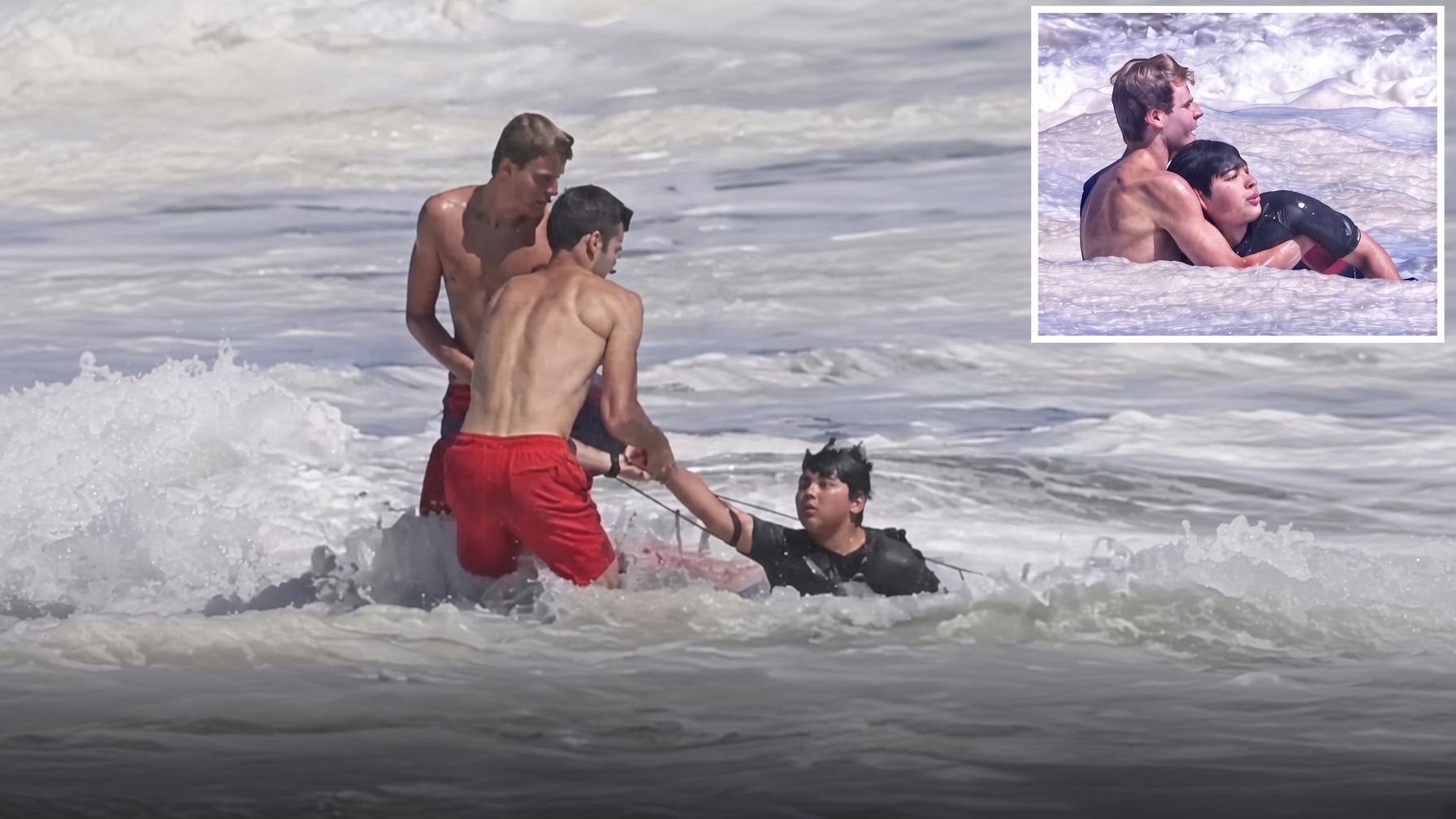
Ryder entered the water carrying a rescue tube, but the surf was so violent that using it normally became extremely difficult.
Heavy waves repeatedly submerged both of them.
Then Nathaniel went limp.
The 10-year-old had lost consciousness.
Ryder could not simply turn around and walk him back toward the beach. Powerful water movement kept forcing them back into the breaking waves.
Instead, he held onto Nathaniel.
Video shows enormous waves crashing over the pair, causing them to disappear beneath the water before emerging again.
Ryder later explained that he knew he could not lose his grip.
Two or three more waves struck them as he continued trying to control the unconscious child.
Bystanders Tried to Help — Ryder Told Them to Get Out
People watching from shore quickly realized the seriousness of what was happening.
Several bystanders began entering the water in an attempt to help.
Ryder faced another problem.
If they were caught in the same conditions, he could suddenly have several victims instead of one.
Even while struggling with Nathaniel, Ryder directed them to return to shore.
California State Parks later highlighted that decision as part of the teenager’s professional response.
Then another trained lifeguard arrived.
Seasonal Lifeguard II Aaron Bohnen responded to the emergency and entered the surf.
After being hit by waves that Bohnen estimated at approximately 6 to 8 feet, the two lifeguards managed to secure Nathaniel and bring him onto dry sand.
There they could finally assess his condition.
Nathaniel Remembers Almost Nothing After the Wave Hit
Nathaniel survived with no serious physical injuries.
But his later account revealed how close the situation had become.
Speaking with the Associated Press, Nathaniel said he remembers the wave knocking him over.
After that, his memory largely disappears.
He had blacked out.
His father, Sumit Rai, later said Nathaniel believed he was going to die.
Sumit was in Dallas when the rescue happened and initially experienced his son’s ordeal through the viral footage.
Watching it was terrifying even though he already knew Nathaniel had survived.
He told ABC News that if he had watched the footage without knowing the ending, he would not have been sure either Nathaniel or Ryder would make it back.
Sumit believed the timing was incredibly close.
“Another two or three seconds,” he told ABC, and he did not believe his son would have survived.
His Father Later Described the Odds as Almost Impossible
As more details emerged, Sumit provided an even clearer picture of the danger.
He estimated Nathaniel had been drowning for roughly 40 seconds during the ordeal and described his son’s chance of surviving without immediate intervention as extraordinarily small.
Nathaniel himself later told CBS that everything happened incredibly quickly.
He remembered being frightened and wondering whether he would make it.
When asked about Ryder, his message was much simpler.
He was thankful that Ryder had saved his life.
Ryder Was Only 16 — And This Was His First Season
The rescue becomes even more remarkable when considering Ryder’s experience.
He was only 16 and working his first season as a California State Parks lifeguard.
But he was not completely unprepared.
Ryder had spent years developing water skills, including through junior lifeguard programs and competitive water polo.
His father, Shane Williams, is also a retired firefighter.
When the emergency happened, years of training suddenly had to become instinct.
There was no time for Ryder to debate whether the waves were too dangerous.
He saw a child in trouble and responded.
California State Parks later said Ryder and Bohnen demonstrated the type of preparation and teamwork its lifeguard program is designed to produce.
Then Ryder Did Something Almost as Surprising
After Nathaniel was safely on shore and his condition had been assessed, Ryder did not leave the beach.
He returned to Tower 2.
And continued his shift.
“This is my job and I love what I do,” Ryder later said while expressing gratitude that Nathaniel had been safely returned to his family.
The rescue may have become international news, but Ryder repeatedly resisted presenting himself as extraordinary.
He pointed instead toward the lifeguards who perform rescues every day.
And the danger that weekend extended far beyond Nathaniel.
California State Parks reported that Santa Cruz District lifeguards performed more than 30 rescues during July 25 and 26 and made more than 5,000 preventative contacts with beachgoers.
Nathaniel’s rescue happened to be the one captured on camera.
The Video Reached the President
The footage spread rapidly across social media.
Millions watched a teenage lifeguard disappear beneath enormous waves while refusing to release the child in his arms.
Eventually, the video reached President Donald Trump.
Trump publicly praised Ryder and announced that he wanted to bring the teenager and his family to the White House, potentially together with Nathaniel, for special recognition.
At first, it was simply an invitation.
Then, on August 17, it actually happened.
Ryder and Nathaniel Reunited at the White House
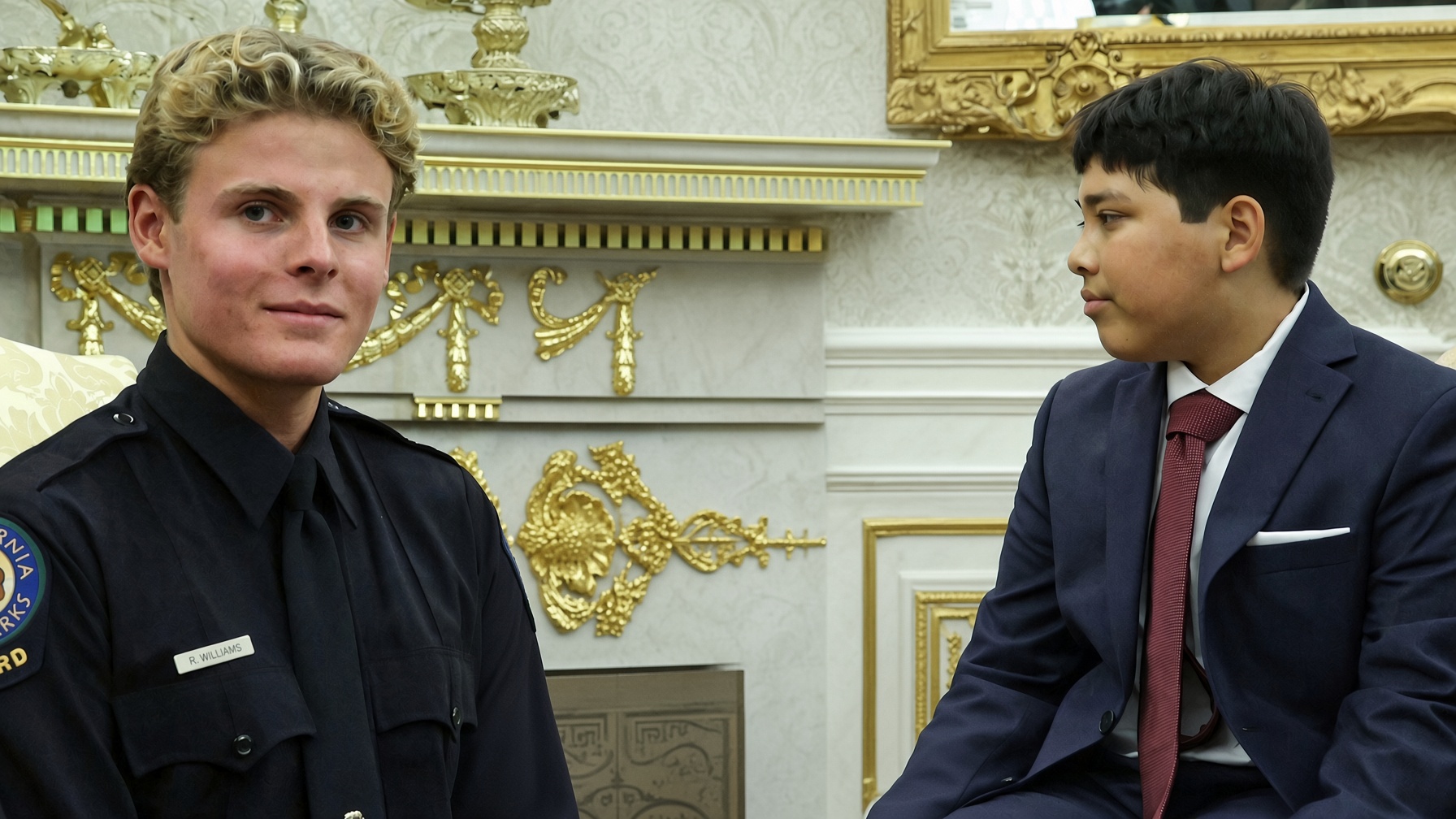
More than three weeks after the rescue, Ryder and Nathaniel were together again.
This time there were no crashing waves.
They were sitting inside the Oval Office.
Ryder’s family attended.
Nathaniel’s family was there.
Aaron Bohnen, the second lifeguard who helped complete the rescue, also joined them.
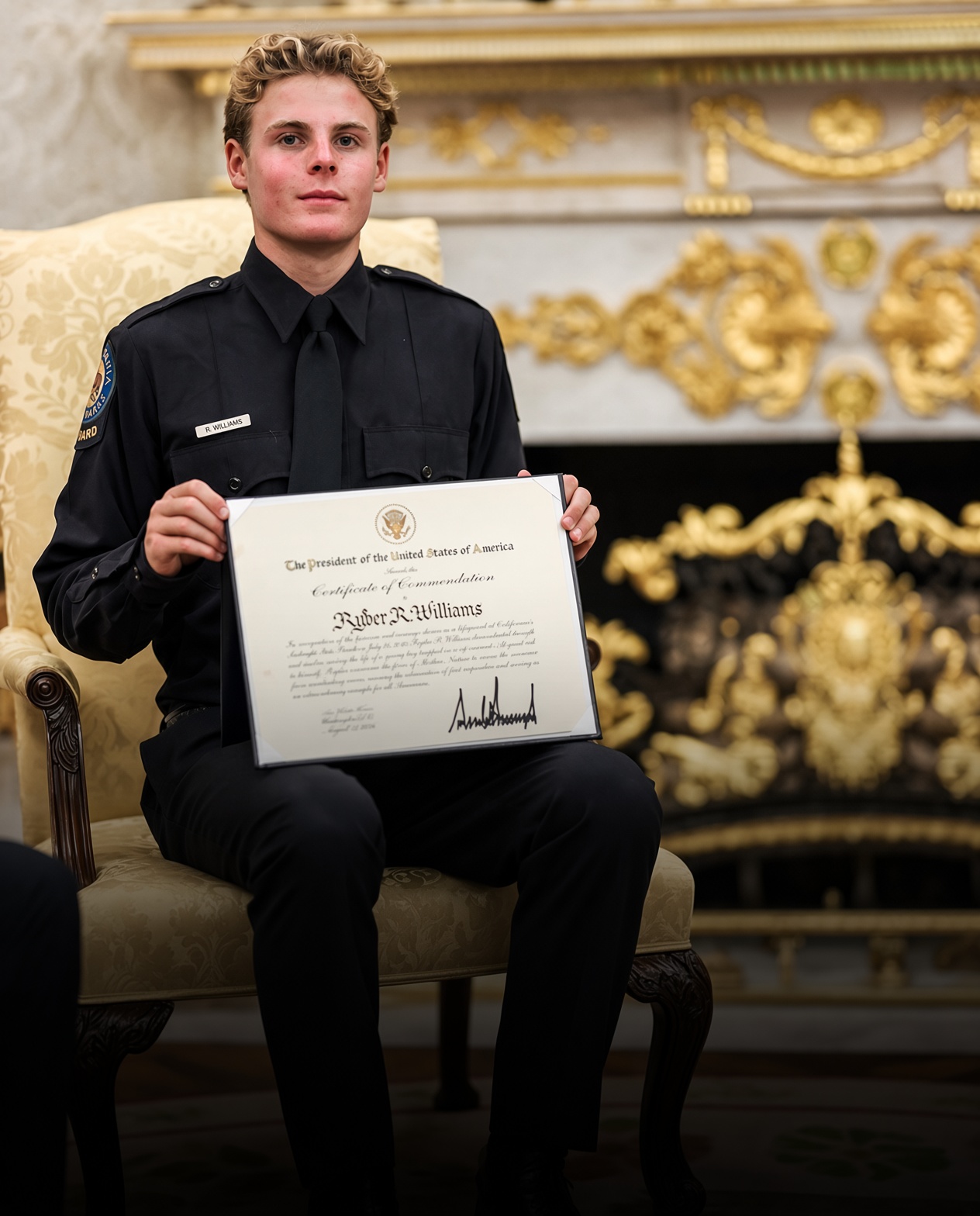
Trump praised Ryder’s courage and called the teenager a “real hero.”
Ryder remained characteristically modest, crediting his training and fellow lifeguards.
Nathaniel’s father again expressed his gratitude to the teenager who had held onto his son when letting go could have meant losing him.
Trump also learned about Ryder’s future ambitions.
The teenager hopes to become a firefighter or paramedic — continuing down a path centered on helping people during emergencies.
The Rescue Created a Connection Between Two Families
Something else happened after July 25.
The Rai and Williams families began communicating.
Sumit Rai connected with Ryder’s father, Shane, and discovered they had more in common than the rescue itself.
Shane is a retired firefighter, while Sumit is involved with a nonprofit focused on cancer screening for firefighters.
The families also discovered other shared interests.
What began as the worst few seconds of Nathaniel’s young life was slowly creating a relationship between two families who otherwise might never have met.
Ryder’s Family Turned Down the Attention for Themselves
As Ryder’s story spread, people reportedly asked whether they could donate money to him.
His family declined to make the moment about personal fundraising.
Instead, Ryder’s mother encouraged anyone who wanted to contribute to support the junior lifeguard program that had helped prepare her son.
It was a fitting response to the way Ryder himself has described what happened.
He does not talk about July 25 as the day he became famous.
He talks about it as the day he did the job he had been trained to do.
A Few Seconds Changed Two Lives
Nathaniel walked onto Seabright State Beach that afternoon expecting a family vacation.
Ryder climbed into his lifeguard tower expecting another day of watching the water.
Neither could have known their lives were about to intersect.
A wave knocked Nathaniel from ankle-deep water.
The ocean pulled him away.
He lost consciousness.
Ryder ran toward him.
Wave after wave crashed over them.
And the 16-year-old refused to let go.
Nathaniel remembers very little of those moments.
Ryder remembers having a job to do.
Three weeks later, they sat together in the White House while the president of the United States told the story of the rescue to the country.
But the most important outcome had already happened long before the cameras reached Washington.
A 10-year-old boy went home to his family.
And a 16-year-old lifeguard returned to his tower and finished his shift.
Main Sources: ABC News, California State Parks, Associated Press, CBS News, PEOPLE