A Little Boy’s Extraordinary Journey Through Crouzon Syndrome
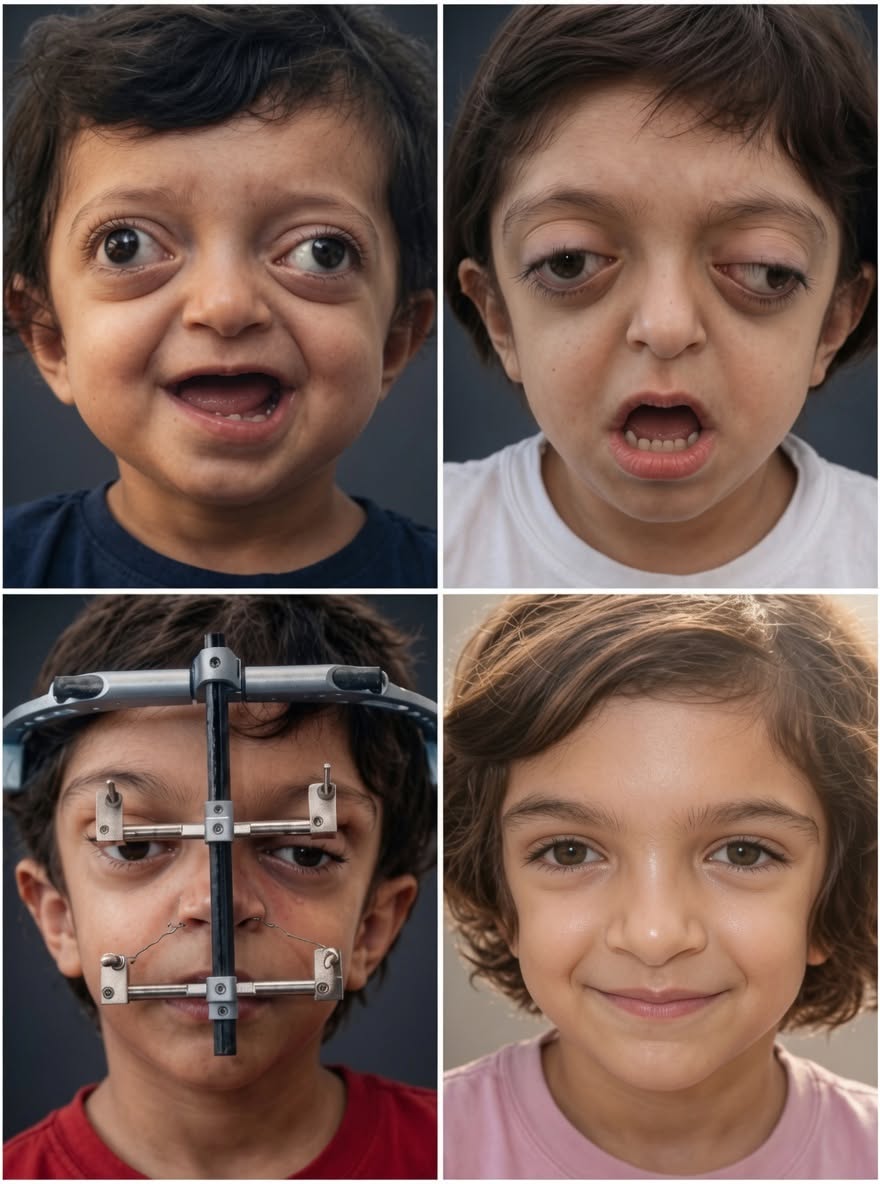
Every child deserves the chance to laugh, play, dream, and grow without worrying about hospitals or surgeries. But for some children, life begins with challenges they never chose.
One of those rare challenges is Crouzon syndrome—a genetic condition that affects the way the bones of the skull and face develop during early childhood.
When a baby is born, the bones of the skull are connected by soft joints called sutures. These flexible seams allow the skull to expand as the brain grows. In children with Crouzon syndrome, some of these sutures close much earlier than they should. As the brain continues to grow, the skull cannot expand normally. Instead, other parts of the skull grow in different directions, changing the shape of the head and face. The eye sockets may remain shallow, the middle of the face may not fully develop, and the upper jaw may grow differently. Some children may also experience breathing difficulties, hearing problems, dental challenges, sleep apnea, or increased pressure inside the skull.
Every child is different. Some experience only mild symptoms. Others require years of specialized medical care.
For doctors, the goal has never been simply to change how a child looks. The goal is to protect what matters most: to make sure the brain has enough room to grow, to help the child breathe more comfortably, to protect vision and hearing, and to improve eating, speaking, sleeping, and everyday life.
That journey often involves an entire team of specialists working together—neurosurgeons, craniofacial surgeons, eye specialists, dentists, orthodontists, speech therapists, hearing specialists, nurses, and psychologists. Every member plays an important role in helping a child grow stronger.
Some children undergo carefully planned reconstructive surgeries over many years. These procedures may help create more space for the growing brain, protect the eyes, improve breathing, or support healthy facial development. The timing of each surgery is carefully planned according to the child’s individual needs. No two journeys are ever the same.
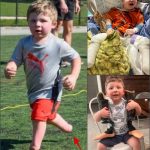
A series of photographs shared online is widely believed to show a young boy with Crouzon syndrome receiving treatment from specialists at the Hellenic Craniofacial Center in Greece. The images appear to show an incredible transformation over several years. However, because the family’s complete medical records have never been publicly released, it is impossible to confirm every procedure, the exact number of surgeries, or specific treatment details.
What we do know is something even more meaningful. Behind every photograph is a child who has shown remarkable strength. Behind every operation is a family making difficult decisions with hope in their hearts. Behind every successful recovery is a team of dedicated healthcare professionals working tirelessly to give a child the best possible future.
But the real story isn’t measured by surgeries alone. It’s measured by the quiet moments: the first comfortable night’s sleep, the first confident smile, the first day back at school, the laughter shared with friends, and the dreams that continue to grow despite every obstacle.
Children living with Crouzon syndrome are far more than a diagnosis. They are sons and daughters, classmates, artists, athletes, readers, and dreamers. Most have typical intelligence, and with appropriate medical care, many grow up to live full, active, and meaningful lives. Their condition does not define their future. Their courage, determination, and the love surrounding them help write that story.
Every scar tells a story of healing. Every hospital visit reflects hope. And every child deserves to be seen not for a medical condition, but for the incredible person they are becoming.
Sometimes the greatest transformations are not simply seen on the outside—they are found in the strength of a child, the love of a family, and the dedication of those who never stop believing that brighter days are possible.
Source: Shared to raise awareness of Crouzon syndrome, celebrate advances in craniofacial medicine, and honor the resilience of children, families, and healthcare teams. Adapted from public discussions of cases treated at centers such as the Hellenic Craniofacial Center in Greece.