A Rare Beginning, a Remarkable Journey: Vincent Taul and BAM Syndrome
When Madeline Taul’s 20-week ultrasound showed something unusual in her baby’s facial development, doctors could not yet give a complete diagnosis. They noted concerns about nasal structures and prepared for a complex delivery. A team of specialists filled the operating room for her cesarean section. The moment that eased the fear was simple and powerful: Vincent cried.
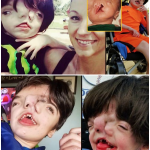
Vincent Taul was later diagnosed with Bosma arhinia microphthalmia syndrome, often called BAM or BAMS. The condition is exceptionally rare. Medical literature describes fewer than 100 reported cases worldwide. Its defining features include absence or severe underdevelopment of the external nose (arhinia), eye abnormalities such as microphthalmia or related defects, and, in many cases, delayed or absent puberty linked to hypogonadotropic hypogonadism. Intelligence is typically normal.
The syndrome is most often caused by spontaneous (de novo) mutations in the SMCHD1 gene, which plays a role in early facial and nasal development. Because newborns are obligate nasal breathers, the absence of a nose creates an immediate challenge for breathing and feeding. Vincent received a tracheostomy to provide a secure airway and a gastrostomy tube for nutrition. He spent 32 days in the neonatal intensive care unit at Norton Children’s Hospital in Louisville, Kentucky—the first patient with BAM syndrome treated there.
His care has involved a coordinated team: neonatology, genetics, endocrinology, ophthalmology, pulmonology, cardiology, urology, surgery, oral and maxillofacial specialists, and therapists. He has begun oral feeding with support. Doctors have said he is growing well and meeting developmental milestones. A possible nasal reconstruction may be considered around age five; until then the focus remains on growth, breathing, nutrition, vision, and overall development.
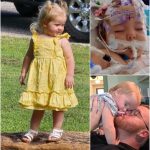
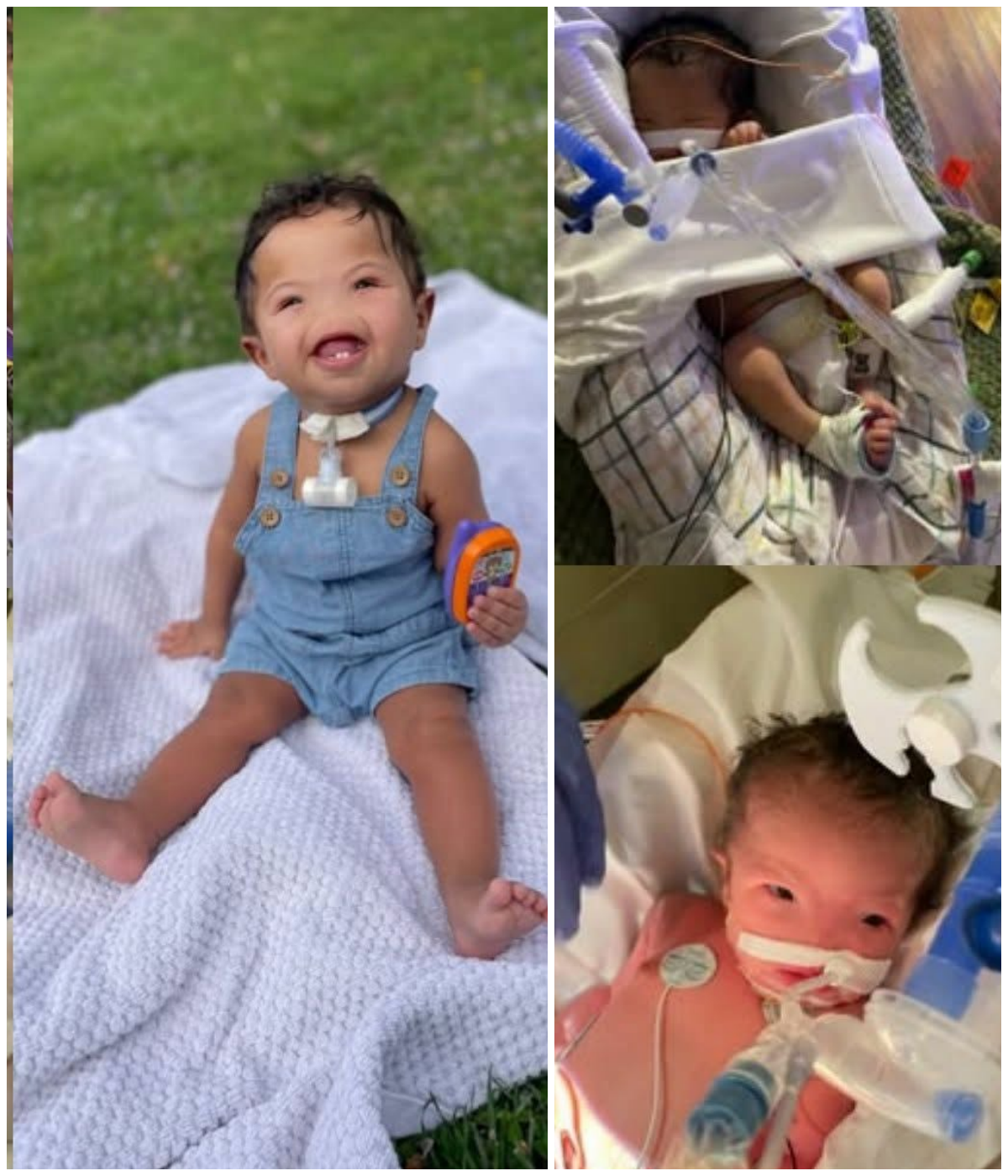
His mother has described the early shock giving way to gratitude. She has shared parts of their daily life publicly to raise awareness and connect with other families facing rare conditions. Those who know Vincent describe a social, smiling toddler who enjoys play, therapy, and time outdoors. The photos that circulate of him—as a newborn surrounded by medical equipment and later sitting on a blanket in the grass, holding a toy, trach visible, face lit by a wide grin—capture both the medical reality and the child’s personality.
BAM syndrome requires lifelong specialized follow-up because of its effects on breathing, eyes, endocrine function, and facial structure. Outcomes vary, but reported cases show that children can live full lives with appropriate support. Vincent’s story is one of early uncertainty met by coordinated pediatric care close to home and a family determined to help him thrive.
Sources
Norton Children’s Hospital patient story on Vincent Taul and BAM syndrome