Two Death Sentences. One Unfinished Appeal. The Wade Wilson Case Enters Another Chapter
Wade Wilson has already received the sentence that can change the entire direction of a criminal case: death.
But the sentence itself did not end the legal battle.
More than two years after his conviction, Wilson’s case remains active in Florida’s appellate courts, and the question of what happens next continues to attract widespread attention.
As of September 19, 2026, the Florida Supreme Court’s public case record lists Wade Steven Wilson v. State of Florida, SC2024-1345 as an open mandatory death-penalty appeal.
The case began with two murders committed on October 7, 2019.
The victims were Kristine Melton, 35, and Diane Ruiz, 43.
Wilson was eventually prosecuted for both killings and convicted of two counts of first-degree murder in June 2024. Two months later, a judge imposed two death sentences.
The crimes received enormous attention because prosecutors described a sequence of events involving two victims on the same day.
According to reporting by People, Wilson met Melton at a Fort Myers bar before going to her home. Prosecutors said she was killed there. Later, Wilson encountered Ruiz, persuaded her to enter his vehicle and subsequently killed her.
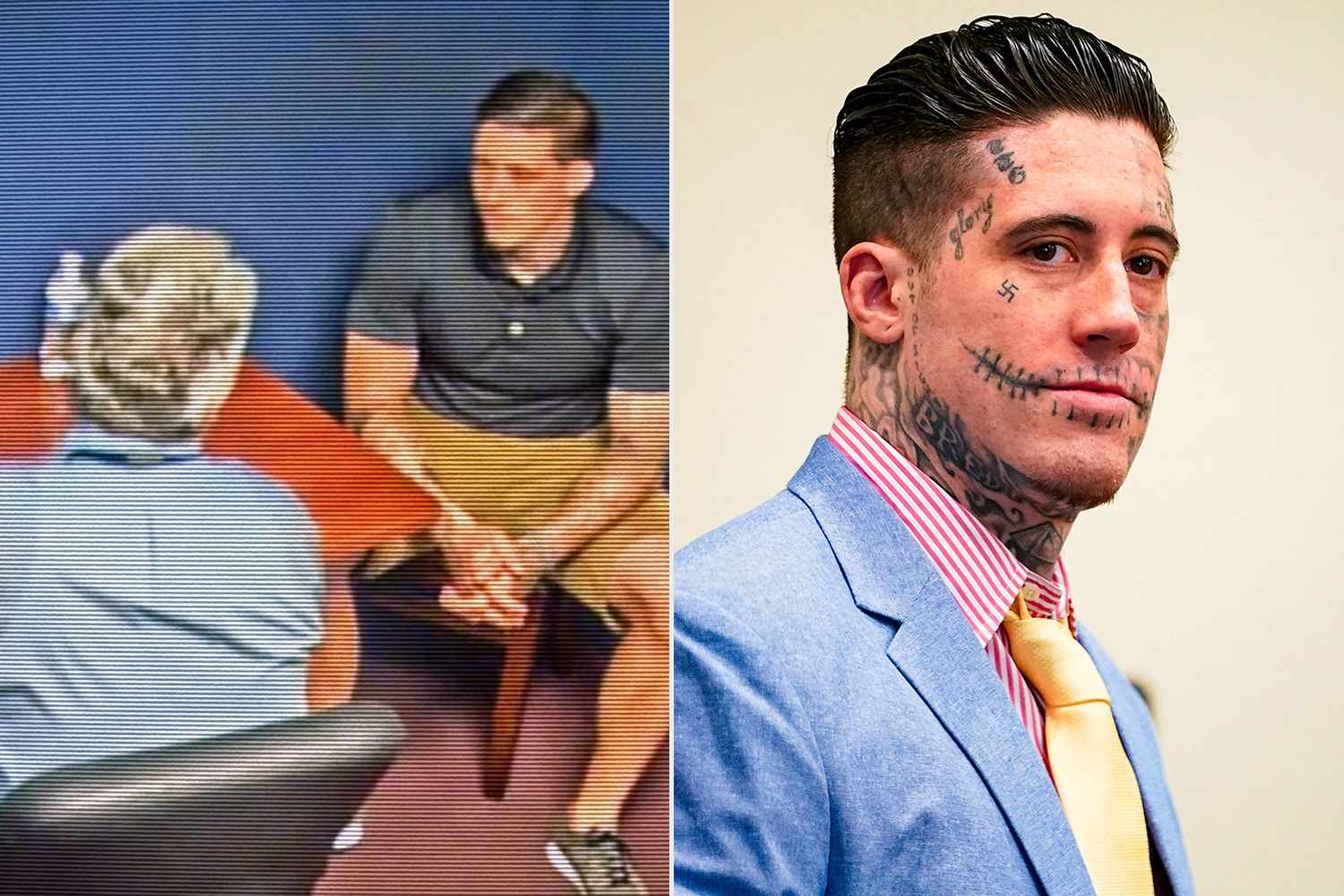
The 2024 proceedings produced some of the most widely circulated courtroom images of the case.
Wilson appeared in court wearing formal clothing, while photographs showed the extensive tattoos covering his face, neck and arms.
Those images quickly spread across social media.
The combination of the tattoos, the unusual courtroom photographs and Wilson’s name created the nickname “Deadpool Killer,” a reference to Marvel’s fictional Wade Wilson.
But the most important developments since then have occurred away from social media.
In 2026, Wilson’s mandatory appeal reached the Florida Supreme Court.
The court’s official archive records oral arguments on February 5, 2026, and states that the direct appeal raised seven issues seeking reversal of the death sentences.
One of those issues centered on Florida’s death-penalty law.
Wilson’s defense challenged the use of a 2023 law that permits a death sentence even when the jury’s recommendation is not unanimous.
His jury recommended death by a vote of 9–3 in the Melton case and 10–2 in the Ruiz case.
Because the murders happened in 2019, before the newer law was enacted, Wilson’s lawyers argued that applying the later law raised an ex post facto constitutional problem.
However, the legal landscape changed before the February hearing.
In December 2025, the Florida Supreme Court issued rulings in other cases that upheld the state’s newer death-penalty framework.
Those rulings weakened the foundation of Wilson’s argument.
When Wilson’s attorney appeared before the court, he acknowledged that the court had recently addressed the same issues.
The resulting hearing lasted only a few minutes.
For a capital case that had generated enormous public attention, the moment was surprisingly quiet.
But the defense did not simply abandon the constitutional argument.
Instead, Wilson’s attorney indicated that the issue could be preserved for potential review by the United States Supreme Court.
That distinction is important.
A legal argument can be rejected at one level while still being preserved for possible review at another.
It does not mean that a higher court will automatically accept the case.
It means the issue remains part of the legal strategy.
As of September 2026, the Florida Supreme Court case remains listed as open.
There is also no verified execution date identified in the publicly available court material reviewed for this update.
That fact directly contradicts some social-media posts that have circulated suggesting Wilson’s execution has already been scheduled.
Those claims should not be treated as confirmed unless they are supported by an official death warrant or court/government announcement.
The renewed interest in Wilson has also been driven by entertainment media.
People reported that a Paramount+ documentary, Handsome Devil: Charming Killer, was released in January 2026. Netflix later featured the case in Worst Ex Ever.
That exposure has introduced Wilson’s story to people who may not have followed the original trial.
At the same time, the case has become an example of how dramatically social-media narratives can differ from legal reality.
Online, users often focus on his appearance.
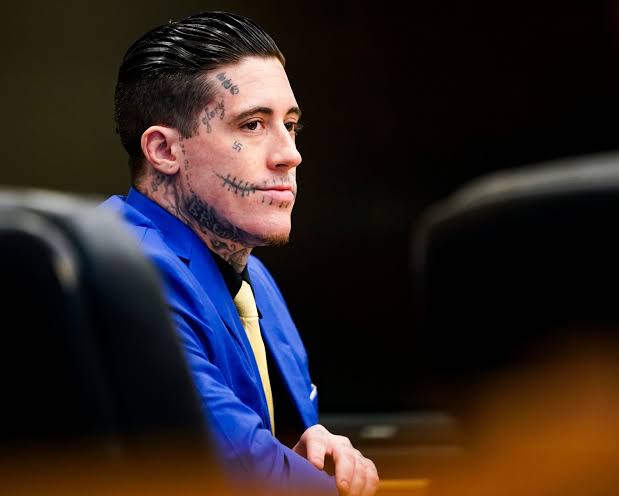
They discuss the tattoos.
They analyze courtroom expressions.
They share photographs.
They speculate about what might happen next.
The courts, however, are focused on a different set of questions.
Was the law properly applied?
Were constitutional rights protected?
Were procedural requirements followed?
Can the sentence stand under existing Florida and federal precedent?
Those questions take time.
And death-penalty appeals are designed to provide multiple layers of review before an execution can occur.
Wilson’s current status therefore contains several separate facts that should not be confused.
He has been convicted.
He has received two death sentences.
His direct appeal is active.
The Florida Supreme Court heard oral arguments in February 2026.
The defense’s key legal challenge encountered precedent that had already addressed the same issue.
And the public Florida Supreme Court record continues to identify the case as open.
What happens next is less certain.
The Florida Supreme Court must resolve the pending appeal.
Depending on that outcome, additional state and federal proceedings could follow.
The defense has already indicated an intention to preserve constitutional arguments for potential U.S. Supreme Court review.
But no future outcome should be presented as guaranteed.
For the families of Melton and Ruiz, the legal process represents another stage in a case that began seven years ago.
For Wilson, it represents the continuing challenge to two death sentences.
And for the public, it means that the story behind one of America’s most viral true-crime cases remains unfinished.
The most important update is therefore not an unverified rumor about an execution date.
It is the fact that the legal case remains open.
Until the courts issue another major decision, Wade Wilson remains on Florida’s death row with two death sentences in place and an unresolved appellate process ahead.
The photographs may have made him famous.
But the next chapter will be written in court documents.