One Case, Two Women, Years of Appeals — The Wade Wilson Story Is Still Unfinished

The Wade Wilson case began with two murders in Florida.
It later became a death-penalty case.
Then it became a courtroom spectacle.
Then a true-crime phenomenon.
And now, years after the deaths of Kristine Melton and Diane Ruiz, the legal story remains unfinished.
Wilson was convicted of killing both women in October 2019 and was sentenced to death in 2024.
But the death sentences did not end the case.
Instead, they began another phase: appellate litigation.
On February 5, 2026, Wilson’s direct appeal reached the Florida Supreme Court. The court’s official oral-argument record confirms that the case, SC2024-1345, concerns seven issues raised in an effort to reverse his death sentences.
For Wilson, the stakes could hardly be higher.
For prosecutors and the victims’ families, the proceedings represent another stage in a case that has already lasted years.
And for the public, the case has become a source of endless questions.
Could the convictions survive every level of appeal?
Could the death sentences be changed?
Could the constitutional arguments raised by the defense succeed?
Could the case eventually reach the U.S. Supreme Court?
And perhaps the most widely repeated question of all:
When, if ever, will an execution date be set?
At present, those questions do not all have answers.
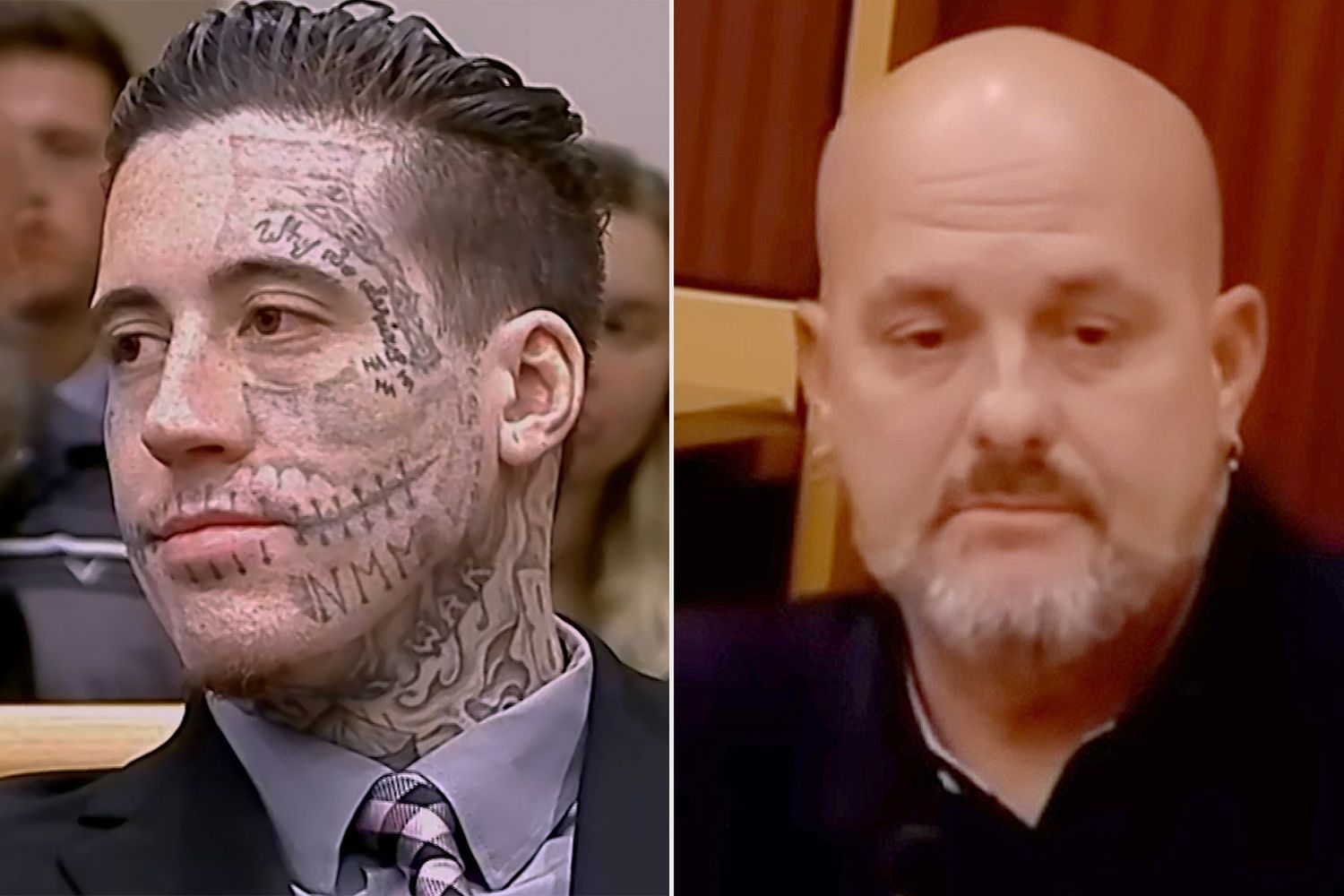
The Florida Supreme Court has heard the arguments, but the hearing itself did not resolve the appeal.
The court must issue its ruling.
That ruling could become one of the most consequential moments in the case.
The defense has challenged aspects of Florida’s death-penalty system, including the legal framework governing the jury recommendations in Wilson’s sentencing proceedings.
The defense’s position is that applying the newer sentencing framework to murders committed in 2019 raises constitutional concerns.
The state has defended the legality of the sentences.
The Supreme Court will ultimately decide which legal interpretation controls Wilson’s case.
But while that legal battle continues, another investigation has become an important part of the public conversation.
In 2026, newly obtained Palm Beach County Sheriff’s Office internal-affairs records revealed that a detective mishandled an earlier investigation involving Wilson, according to CBS12.
The alleged victim, Kelly Matthews, reported that Wilson had assaulted and sexually battered her in February 2019.
The investigation included physical evidence and a sexual-assault kit.
According to the internal-affairs findings, forensic testing later produced a DNA match connecting Wilson to Matthews.
But the detective had already classified the investigation as inactive.
Internal-affairs investigators concluded that he failed to reopen the case or notify supervisors about the DNA result, CBS12 reported.
The detective was later suspended and required to undergo additional training.
The story has become even more widely known following Netflix’s Worst Ex Ever, which featured Matthews and her account of her relationship with Wilson. PEOPLE reported that Matthews has continued her life and works as a dog groomer.
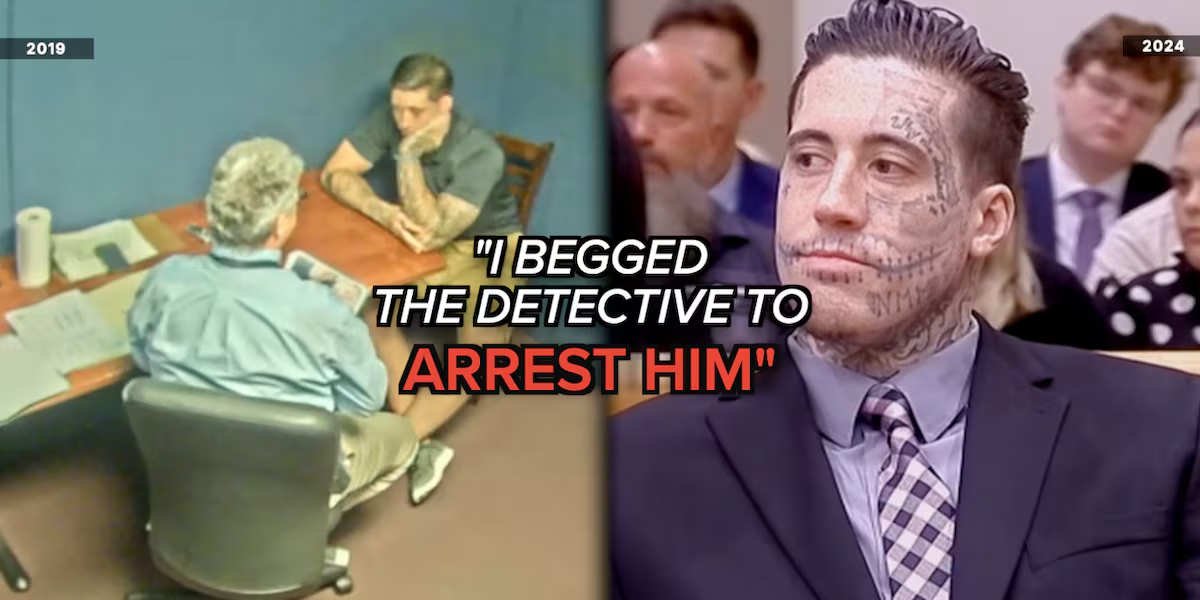
Her story has raised an emotionally difficult hypothetical:
What might have happened if the earlier investigation had been handled differently?
Could an arrest have occurred?
Could Wilson have remained in custody?
Could the later murders have been prevented?
Nobody can answer those questions with certainty.
They are counterfactuals, not established facts.
But they explain why the earlier investigation has attracted renewed attention.
It also illustrates how a criminal case can have consequences far beyond the courtroom.
There is the question of criminal responsibility.
There is the question of police procedure.
There is the question of sentencing.
And there is the question of how the justice system responds when new information appears years later.
Wilson’s current legal situation must therefore be separated from the online narrative.
He remains under two death sentences.
His direct appeal has been argued before the Florida Supreme Court.
The court’s decision remains an important pending development.
And there is no verified basis in the sources reviewed to state that Wilson has received a new execution date simply because Florida has carried out other executions.
Florida law requires an execution warrant before a death sentence can be carried out.
That is particularly important because Florida has remained active in carrying out executions in 2026.
The Death Penalty Information Center lists numerous Florida executions this year, including the September 10 execution of Daniel Conahan.
But each death-penalty case follows its own legal timeline.
One prisoner being executed does not establish what will happen to another.
So what should observers watch?
First, the Florida Supreme Court’s opinion.
Second, any subsequent state or federal filings.
Third, any official order concerning Wilson’s sentence.
And finally, if the case reaches that stage, any formal death warrant.
Those documents will matter far more than social-media rumors.
The Wilson case has already produced enough twists without adding unsupported claims.
The documented story is dramatic on its own.
Two women were murdered.
A suspect was arrested and eventually convicted.
Two death sentences followed.
The defense appealed.
The Florida Supreme Court heard arguments.
Meanwhile, an earlier investigation involving Wilson came under renewed scrutiny after internal-affairs records were released.
And now the public waits for the next legal development.
Perhaps the most important point is that the case is not over simply because the jury verdicts were delivered years ago.
Death-penalty cases often involve lengthy appellate processes.
Every legal issue can matter.
Every court ruling can change the next step.
Every new filing can create another question.
For now, however, the central unresolved issue remains the same:
Will Florida’s highest court uphold Wade Wilson’s two death sentences, or will the legal challenges force another chapter in a case that has already captured national attention?
Until the court rules, that question remains open.
And that uncertainty is precisely why the Wade Wilson case continues to generate intense public interest years after the crimes that began it.