Science and Hope: Dominique’s Extraordinary Surgery and a Remarkable Medical Rescue
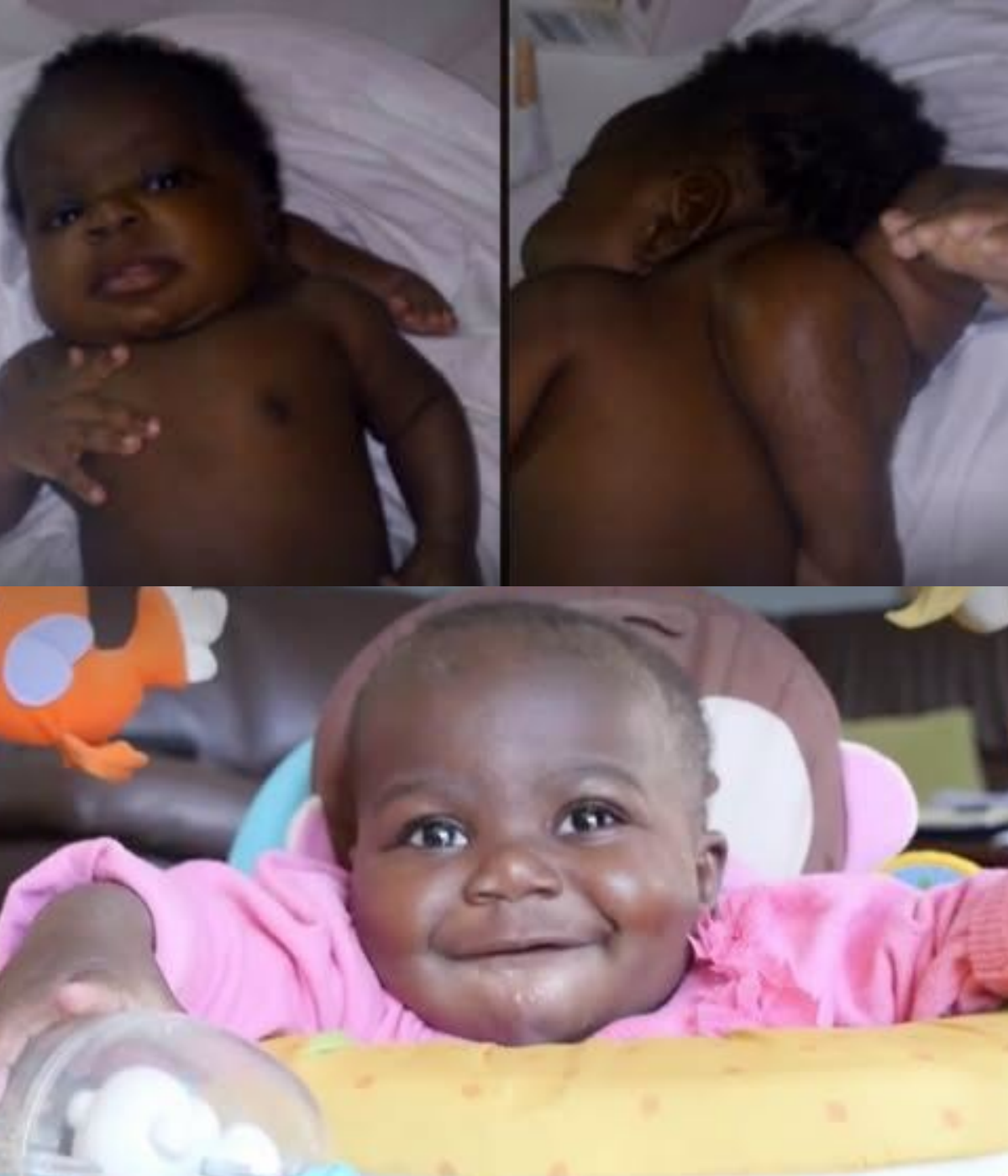
In 2017, the story of a baby girl from Côte d’Ivoire captured international attention after she underwent an extraordinarily complex operation in the United States. Known publicly as Dominique, the 10-month-old was born with four legs and two spinal columns as a result of an exceptionally rare condition involving a partially developed parasitic twin.
Her journey brought together an international humanitarian organization, a Chicago host family and a multidisciplinary medical team determined to give the child a chance at a healthier and more independent future.
Born With an Exceptionally Rare Condition
Dominique was born in West Africa with a condition known as a parasitic conjoined twin, in which one twin develops incompletely and remains physically connected to the more fully developed twin. In Dominique’s case, the lower portion of the incompletely developed twin—including a pelvis, legs and feet—was attached to her upper back and neck.
Doctors described the case as a particularly rare form known as a parasitic rachipagus twin, in which the twins are connected at the spine. At the time, physicians said that fewer than 30 such cases had been documented in the medical literature.
The additional structures meant that Dominique had four legs and two spinal columns. Doctors were concerned that leaving the condition untreated could eventually result in severe complications, including spinal instability and paralysis.
A Journey Across Continents for Specialized Care
Because the highly specialized surgery Dominique required was not readily available in her home country, her case was brought to the attention of Children’s Medical Mission West, a charitable organization that helps children with complex medical needs obtain treatment in the United States.
The organization connected Dominique with physicians at Advocate Children’s Hospital in Park Ridge, Illinois. The hospital’s pediatric neurosurgery team assembled specialists from several disciplines to plan an operation that had never previously been performed there.
Dominique also stayed with a volunteer host family in Chicago while preparations for the operation were underway. Nancy Swabb and her family opened their home to the infant, caring for her during the weeks surrounding the procedure.
Planning a Six-Hour Operation
The surgery presented extraordinary challenges. Doctors had to determine how to separate the two bodies while protecting Dominique’s spinal cord, blood vessels, nerves and other vital structures.
To help understand the unusual anatomy, the surgical team created a three-dimensional model of Dominique’s spine and used it to plan the procedure. One major concern was maintaining enough bone to keep her spine stable after the parasitic twin was removed.
On March 8, 2017, Dominique underwent the operation. Five surgeons—including pediatric neurosurgeons, reconstructive surgeons and an orthopedic spine surgeon—performed the procedure, while more than 50 medical professionals participated in her overall care across the operating room, intensive care unit and pediatric unit.
The operation lasted approximately six hours.
During the procedure, the surgeons separated and removed the undeveloped twin’s additional pelvis, legs and feet. They also performed reconstruction designed to preserve the stability of Dominique’s spine.
A Successful Outcome
The operation was considered a success. In the days following surgery, Dominique began recovering with her Chicago host family. Reports said she was sitting up, playing and showing signs of a strong recovery.
Doctors described her prognosis as excellent and expected her to be capable of living a fully functional life.
The medical team had been particularly concerned about paralysis, spinal destabilization and possible effects on shared bodily functions. Successfully navigating these risks represented a remarkable achievement given the rarity and complexity of the condition.
Returning Home
After spending roughly two months in the United States, Dominique was reunited with her biological parents in Côte d’Ivoire in April 2017.
Reports from the time described an emotional reunion, with her parents expressing gratitude to the doctors, the charitable organization and the Americans who had helped their daughter.
The story therefore became more than an extraordinary surgical case. It also demonstrated how international cooperation can connect children with specialized medical expertise that may otherwise be beyond their reach.
A Remarkable Example of Medicine and Compassion
Dominique’s case illustrates the extraordinary complexity of pediatric medicine. Treating a rare congenital condition required not only highly specialized surgery, but also careful anatomical planning, multidisciplinary cooperation, humanitarian assistance and the support of a temporary host family.
It is also important to describe the case accurately. Contemporary reports state that more than 50 clinicians were involved in Dominique’s overall care, rather than suggesting that 50 surgeons performed the operation. The actual operation itself involved five surgeons.
Dominique’s story ultimately became a powerful example of what can happen when medical expertise and human compassion come together. A child born with an extraordinarily rare condition traveled thousands of miles for treatment, underwent a high-risk operation and was eventually able to return home to her family.
Her journey remains a remarkable reminder that, even in some of the most challenging medical circumstances, science, teamwork and compassion can create possibilities that once seemed almost unimaginable.
Sources
- — Hospital account of Dominique’s condition, surgery and multidisciplinary care.