Courage and Dignity: Amare Stover, Neurofibromatosis, and a Mother Who Refused to Hide
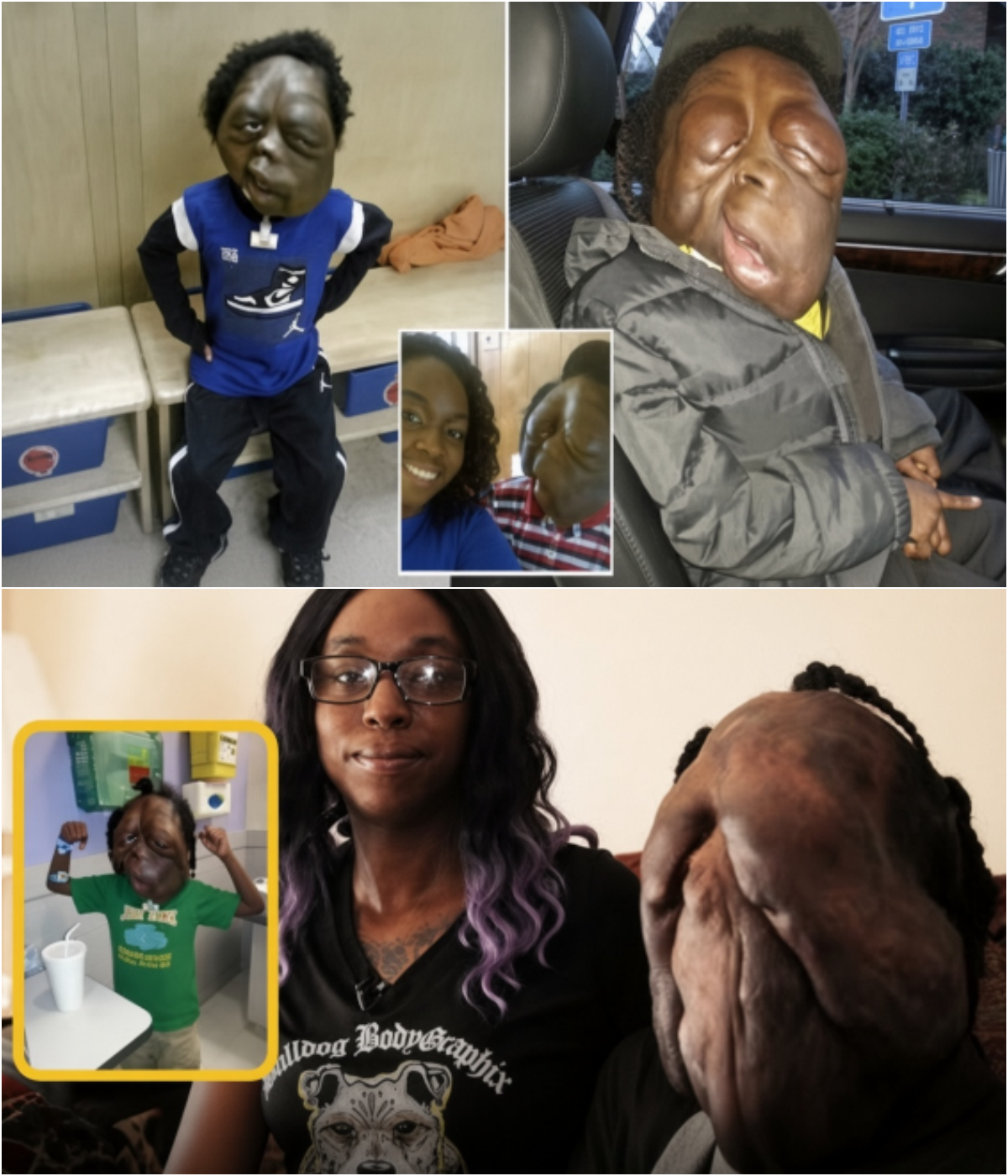
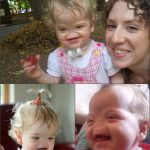
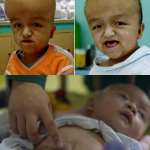
Amare Stover was born in Decatur, Alabama, with neurofibromatosis type 1 (NF1), a genetic condition that causes tumors to grow along nerves and under the skin. In most people NF1 is milder. In Amare it took one of its most aggressive forms: large plexiform neurofibromas that thickened and twisted his face and head, pressed on his airways, and wrapped around the left eye socket. He was diagnosed in infancy after swelling and glaucoma. A neurologist began trying to relieve pressure on that eye almost immediately. The tumors kept growing.
By early childhood he was blind in the left eye and had only limited vision in the right. The masses also threatened his breathing; reports from his family describe a tracheostomy so he could keep an open airway. He has learning difficulties, as many children with NF1 do. He has been treated with chemotherapy at times to slow the tumors, then taken off it to see how they behaved — and watched them enlarge again. Surgery on plexiform tumors of the face is high-risk because the growths are woven through nerves and major vessels. Appointments meant regular trips from Decatur to specialists in Birmingham. His mother, Kandice Stover, became his full-time carer.
The medical burden was only half the story. Children at a park called him a “monster.” He stopped going back. Strangers stared. Kandice has said she had to tell her son, again and again, that he was not a monster — that he had simply been through a great deal. She also said she knew during pregnancy that there was a roughly even chance he would inherit the condition. She chose to keep him visible: family videos, a GoFundMe for travel and treatment, and a 2021–2022 Born Different / Truly segment in which Amare, then about 13, played football with cousins in the park. He likes food, dancing, and football. He cannot play the game the way other boys do. His mother has always described him as a normal child with hard limits, not as a diagnosis walking around.
NF1 is not rare in the statistical sense — about one in 2,500 births — but severe craniofacial plexiform disease of this scale is. There is no cure. MEK inhibitors and other targeted drugs have changed care for some patients in recent years; they do not erase a face already reshaped by years of growth. Fundraising pages and viral clips have followed the family for a decade. That attention has brought help and also cruelty, copycat accounts, and rumors. What can be said from the published record is simpler: a boy in Alabama has lived his whole life under tumors that stole an eye, narrowed a throat, and invited bullying — and a mother who decided the answer was not to hide him.
Sources: Daily Mail (2017); WHNT Decatur report on the family’s medical travel and fundraising (2015); Truly / Born Different profile and related interviews with Kandice Stover (2021–2022); contemporaneous summaries of NF1 and plexiform neurofibroma care. Later social-media claims about outcomes or fundraising should be treated separately from these documented accounts.