A Medical Milestone and a Second Chance: Baby Karam, Born With Eight Limbs, Operated On in India
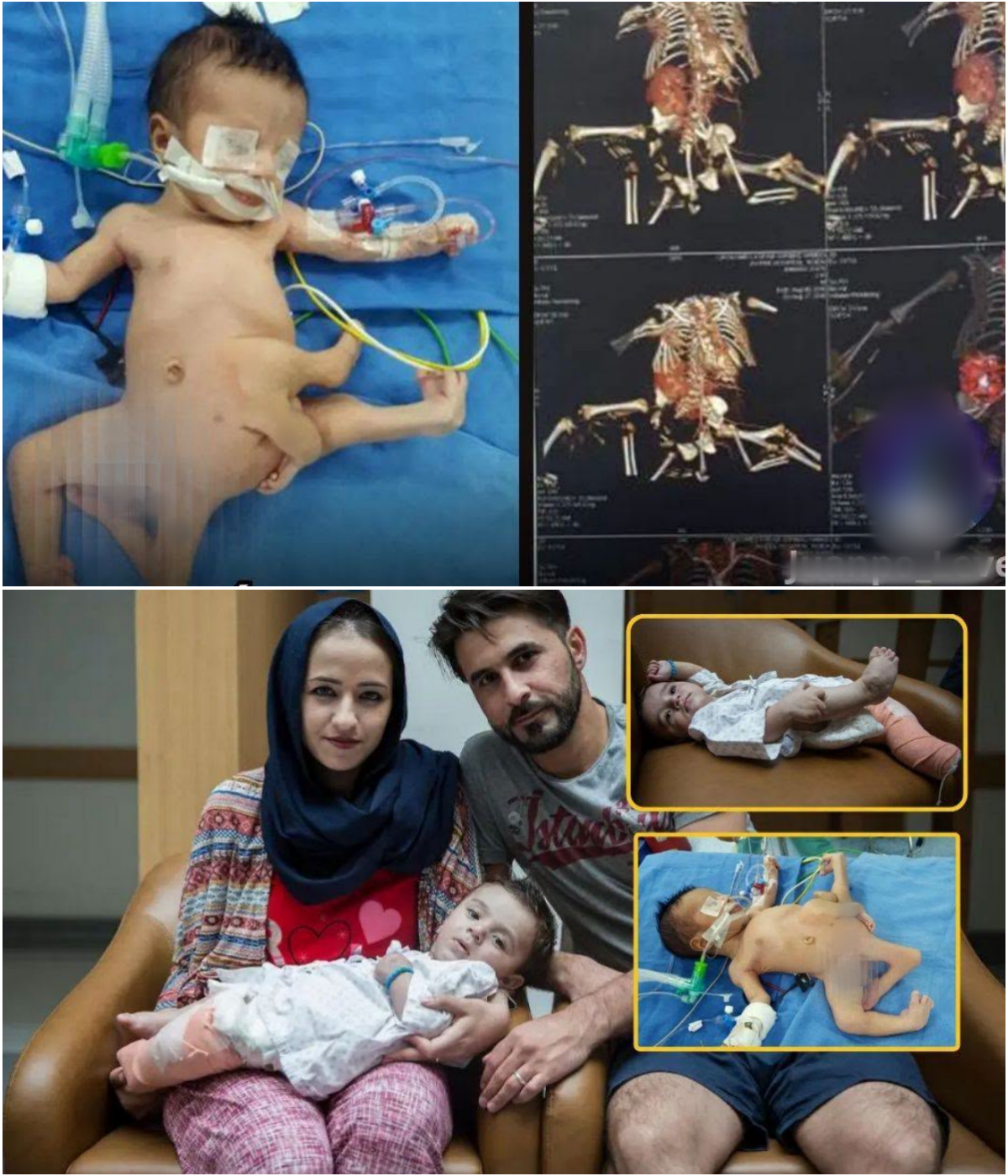
Karam was born in Iraq with one of the rarest body plans medicine ever sees: eight limbs. Doctors called the condition polymelia. In his case it was the leftover anatomy of a twin that never fully formed and was partly absorbed in the womb. Two extra limbs grew from his abdomen. One of his own legs was short; another was split so that it looked like two legs. He also had clubfoot, a crooked spine and pelvis, a single kidney, an extra loop of small intestine, three testes, and a serious heart defect known as congenitally corrected transposition of the great arteries. Only a handful of comparable cases have ever been recorded.
His father, Sarmad (also reported as Sarwed) Ahmed, an emergency-room doctor in Iraq, could not find a team at home able to take the case. He brought Karam to Jaypee Hospital in Noida, near New Delhi, when the infant was two weeks old and already critically ill.
The Indian team — paediatric cardiology, orthopaedics, paediatrics, and plastic and reconstructive surgery — refused a single marathon operation. They staged the work.
In the first stage they corrected the clubfeet and, using microsurgery, separated veins that ran from the extra abdominal limbs into the liver before removing those two limbs and dealing with the extra intestine. Karam went home to Iraq between stages while the family stayed in contact by phone and email. In a later admission doctors found he was turning blue and performed cardiac surgery, including a pulmonary artery band, so that his left ventricle could support the whole circulation and prepare him for a possible future “double switch.” The third major operation, lasting about seven to eight hours, removed the remaining extra limbs. Muscle from the discarded limbs was transferred onto his underdeveloped left leg. A pelvic osteotomy straightened his back.
When the last extra limbs came off, Karam had two arms and two legs. He was not finished with medicine — more procedures would be needed as he grew — but he was no longer carrying a second, unfinished body. Surgeons described him as a happy, courageous baby. The family flew back to Iraq after the April 2017 press conference that announced the result.
Polymelia and parasitic twinning sit at the extreme edge of embryonic development. They demand imaging that maps every shared vessel, a team that can move from heart to bone to skin in the same week, and parents willing to cross borders more than once. Karam’s case did not invent that medicine. It showed, in public, that it can work.
Sources: The Hindu, The Indian Express / IANS, Times of India, Medical Dialogues, Daily Sabah / AFP, and Jaypee Hospital statements from April 2017 by Dr. Gaurav Rathore, Dr. Ashish Rai, Dr. Rajesh Sharma and colleagues.