Faith and Perseverance: The Story of Baby Marwa, Whose Parents Fought to Keep Her Alive
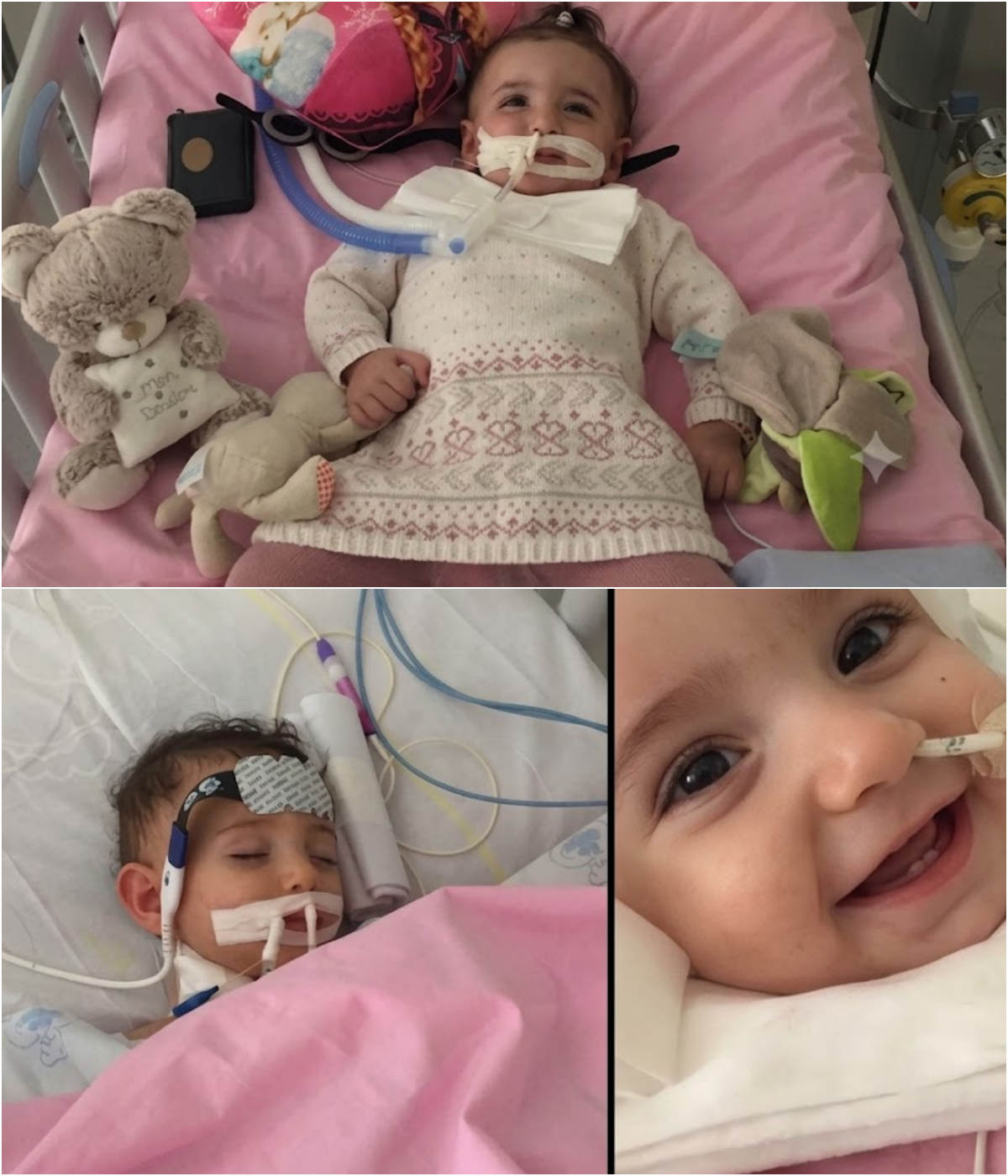
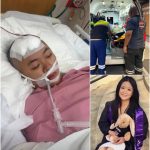
In September 2016, one-year-old Marwa Bouchenafa was admitted to hospital in France after a sudden, violent illness. What began as a high fever quickly became cardiac shock. Doctors at La Timone Hospital in Marseille diagnosed rhombencephalomyelitis caused by an aggressive enterovirus. The infection left massive neurological damage: paralysis of the limbs and face, and dependence on mechanical ventilation and artificial feeding. She was placed in a medically induced coma.
After weeks without what they considered a meaningful recovery, the medical team concluded that continuing treatment amounted to unreasonable obstinacy. They proposed withdrawing life support. They believed Marwa would never breathe, eat, or walk independently again, and that her level of consciousness was at best uncertain.
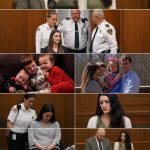
Her parents refused. Mohamed Bouchenafa, a driver originally from Algeria, and his wife launched a public campaign under the name “Jamais sans Marwa” (“Never Without Marwa”). A petition gathered well over 100,000 signatures. They took the hospital to the administrative court in Marseille, arguing that their daughter needed more time. A judge ordered an independent medical assessment and suspended any withdrawal of care. Months later, France’s highest administrative court, the Conseil d’État, upheld that line: given some observed signs of awareness and the uncertainty of how a very young brain might still evolve, stopping treatment was premature.
Ten days after the first court order to continue care, Marwa opened her eyes. Her father filmed her following his voice and offering a small smile. “When I speak to her, she hears my voice, she reacts, sometimes even smiles,” he told local reporters. “Her treatment continues, but we see progress every day and that gives us a lot of hope.” The clip circulated worldwide and became a symbol, for many families, of how quickly a “terminal” pediatric prognosis can be overtaken by events.
The smile was not a full recovery. Marwa remained ventilator-dependent and severely disabled. Later reports described a child who could track with her eyes and move some parts of her body, but who still needed a tracheostomy and a medically equipped room when her parents prepared to take her home. Doctors and parents continued to disagree about how much consciousness lay behind those responses. The case did not rewrite the science of devastating brainstem injury. It did force French courts to say that irreversible dependence on machines is not, by itself, enough to justify ending a child’s life while doubt remains.
Marwa’s story is therefore two things at once: a reminder that infants can surprise even experienced intensive-care teams, and a legal landmark on the limits of “unreasonable obstinacy” when the patient is a baby who cannot speak for herself.
Sources: Daily Mail, The Sun, The Mirror, Nice-Matin, Le Figaro, Franceinfo, Alliance VITA summary of the Conseil d’État ruling (8 March 2017), and contemporaneous reporting on the “Jamais sans Marwa” campaign and La Timone Hospital proceedings (2016–2017).