THE VIRAL “DEADPOOL KILLER” CASE ISN’T OVER: What Wade Wilson’s Latest Legal Status Really Means

Few modern criminal cases have produced such a striking combination of courtroom images, social-media attention and true-crime coverage as the case of Wade Wilson.
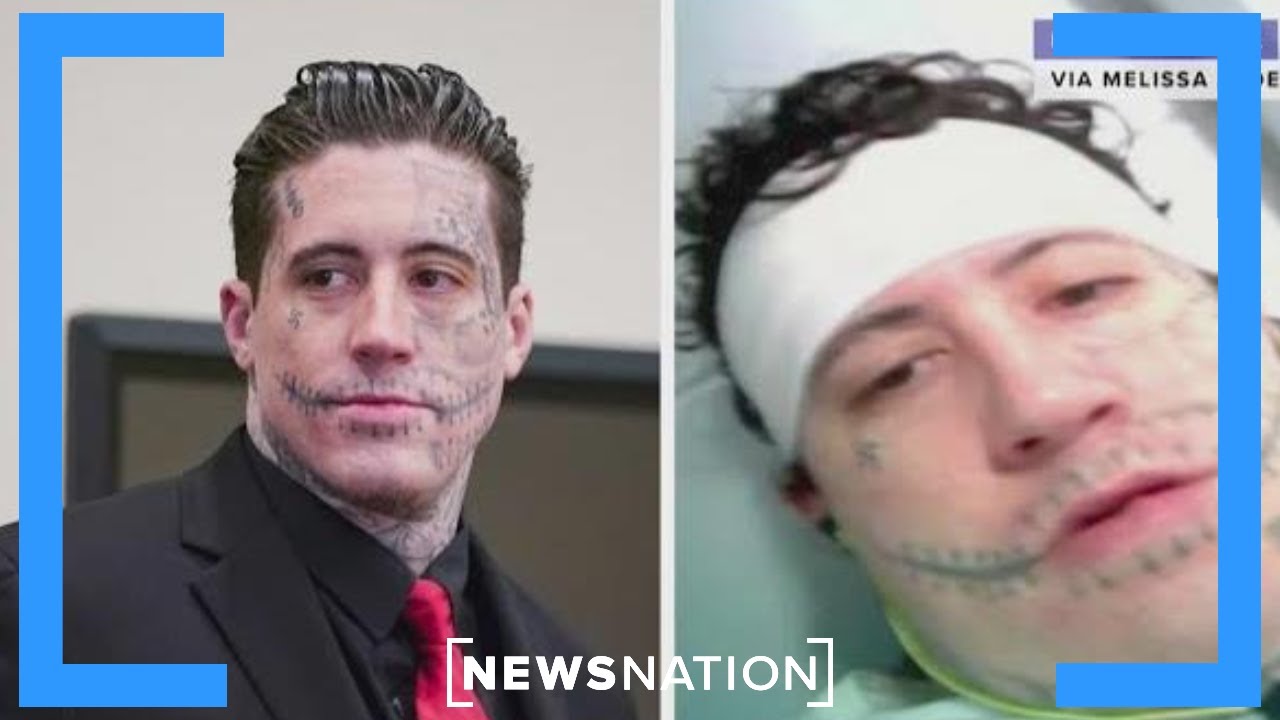
His heavily tattooed face became instantly recognizable online.
His name was linked to Marvel’s fictional character.
His courtroom appearances were turned into viral clips.
And his two death sentences made the case even more prominent.
Yet beneath the internet phenomenon is a legal process that is still continuing.
As of September 19, 2026, the official Florida Supreme Court record still lists Wilson’s case as open. The case is identified as Wade Steven Wilson v. State of Florida, SC2024-1345, a mandatory death-penalty appeal originating from Lee County.
That single detail is critical.
Because despite repeated online claims about an imminent execution, the publicly available court record reviewed for this update does not show a confirmed execution date.
Wilson’s legal history began with two murders in Cape Coral on October 7, 2019.
The victims were Kristine Melton and Diane Ruiz.
Melton was 35 years old.
Ruiz was 43.
Wilson was ultimately convicted of first-degree murder in both cases in June 2024. In August 2024, a judge imposed two death sentences.
The case became especially notorious because prosecutors presented evidence describing two killings occurring within hours of each other.
According to People, Wilson met Melton at a bar before going to her home, where prosecutors said he killed her. Later, he encountered Ruiz while she was walking to work and persuaded her to enter his vehicle before killing her.
The case quickly attracted public fascination.
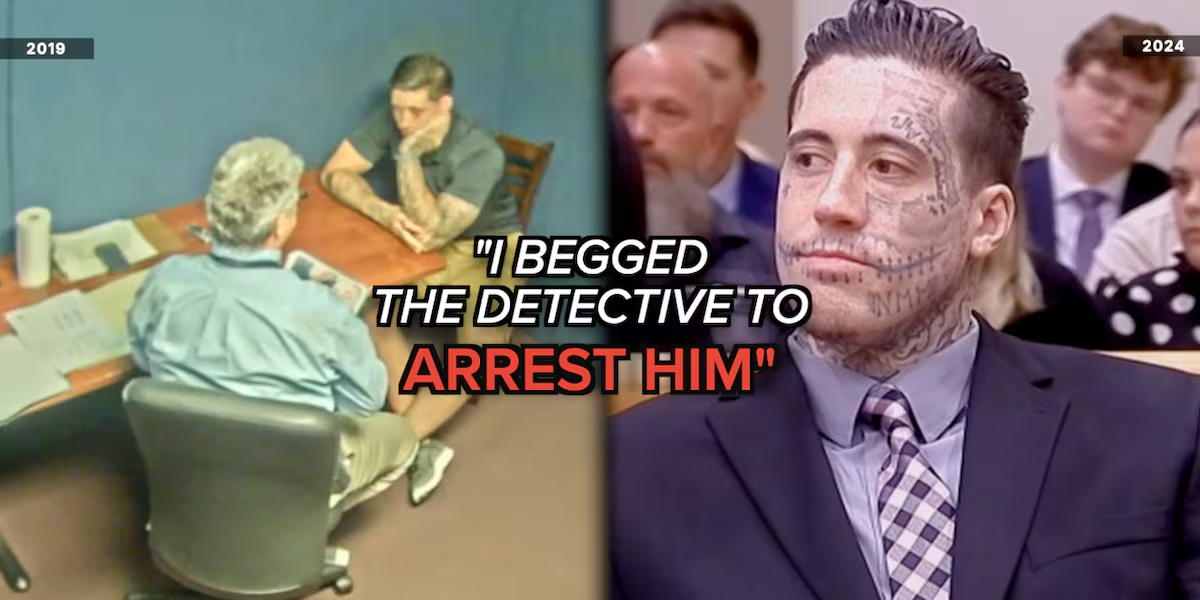
But it was not until photographs and courtroom footage spread online that Wilson became a viral figure.
His facial tattoos were repeatedly featured in social-media posts, while his name created another unusual connection.
The fictional Marvel character Deadpool is also named Wade Wilson.
As a result, internet users began referring to the real-life defendant as the “Deadpool Killer.”
The nickname stuck.
Yet by 2026, the legal issues surrounding Wilson had become considerably more technical.
His mandatory appeal reached the Florida Supreme Court.
On February 5, 2026, the court heard oral arguments.
The court’s official archive says the direct appeal raised seven issues in an effort to reverse the death sentences.
The most prominent issue involved Florida’s death-penalty law.
Wilson’s attorneys challenged the application of the state’s 2023 capital-sentencing law to murders committed in 2019.
Under that newer framework, a death recommendation does not necessarily require unanimous agreement from all 12 jurors.
Wilson’s jury voted 9–3 for death in one case and 10–2 in the other.
The defense argued that applying the newer law to earlier crimes raised constitutional concerns.
But by the time Wilson’s case reached oral argument, the Florida Supreme Court had already ruled on closely related issues.
Two December 2025 decisions upheld the newer death-penalty framework in other cases, significantly affecting the arguments Wilson’s lawyers had planned to make.
That produced one of the strangest moments in the case.
Wilson’s attorney appeared before the state’s highest court but quickly acknowledged that recent precedent had already addressed the arguments in his brief.
Rather than spend the hearing repeating arguments that had effectively been resolved by the court’s prior decisions, he preserved the issues for potential federal review.
The state’s attorney did not present a lengthy counterargument either.
The hearing concluded after only a few minutes.
For viewers familiar with dramatic courtroom television, the moment may have seemed anticlimactic.
Legally, however, it mattered.
The hearing demonstrated that the defense was adapting its strategy to the changing legal landscape.
Wilson’s attorney has said the constitutional questions could ultimately be presented to the U.S. Supreme Court.
That possibility should not be confused with an actual U.S. Supreme Court case.
The U.S. Supreme Court has not, based on the sources reviewed here, been identified as having accepted Wilson’s case.
Instead, the issue has been preserved as a potential avenue of further review.
Meanwhile, the Florida Supreme Court’s own case system continues to show Wilson’s appeal as open.
This is why claims that “Wade Wilson’s execution is imminent” require caution.
There is a fundamental difference between:
death sentence
and
execution date.
Wilson has the first.
There is no publicly verified date establishing the second in the court materials reviewed for this update.
That distinction is particularly important because Florida has continued to carry out executions in 2026, meaning the existence of an active death row does not itself tell the public when any particular prisoner will be executed.
An execution requires additional legal and executive steps.
Wilson’s case remains within the appellate process.
The public’s interest, meanwhile, has continued to grow.
In January 2026, Paramount+ released Handsome Devil: Charming Killer, according to People. Netflix subsequently featured Wilson’s story in the second season of Worst Ex Ever.
Those productions have helped introduce the case to a much wider audience.
But renewed media attention also creates a risk: old information can be repackaged as breaking news.
A photograph from the 2024 trial can appear beside a headline suggesting something happened in 2026.
A social-media account can claim an execution date without citing a death warrant.
A video can be reposted months later and described as “new.”
For anyone following the case, the court record remains the more reliable reference point.
And right now, that record says the appeal is still open.
The facts that can be stated confidently are these:
Wade Wilson was convicted of two first-degree murders.
He was sentenced to death twice in 2024.
His mandatory appeal is before the Florida Supreme Court.
The court heard oral arguments on February 5, 2026.
The appeal raised seven issues.
A major challenge involving Florida’s death-penalty law was weakened by earlier Florida Supreme Court decisions.
His attorney indicated that constitutional arguments could be preserved for possible federal review.
And the Florida Supreme Court docket remains open.
What cannot responsibly be stated as fact is that Wilson has a confirmed execution date when the official record reviewed here does not establish one.
The case therefore remains in a legally unresolved stage.
For the families of the two women killed in 2019, the proceedings continue years after their deaths.
For Wilson, the two death sentences remain in place while appellate review continues.
For the millions of people who discovered the case through social media, documentaries and streaming programs, another update may arrive at any moment—but the next truly significant development will be a legal one.
The internet made Wade Wilson famous.
The courts will determine what happens next.
And as of September 19, 2026, that final chapter has not yet arrived.