Together They Live: Ibrahima Ndiaye and the Extraordinary Survival of Marieme and Ndeye
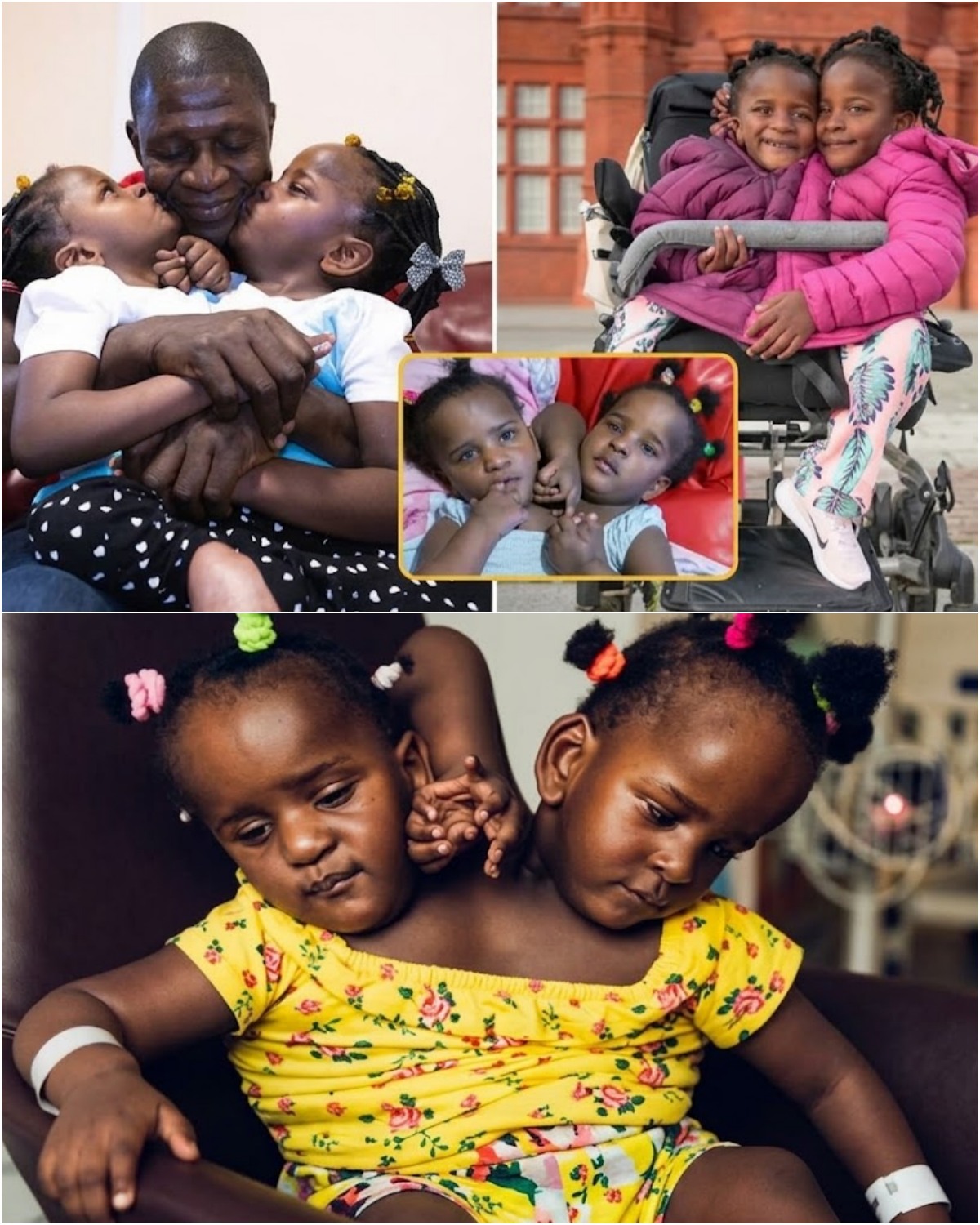
When Marieme and Ndeye Ndiaye were born in Dakar in May 2016, doctors told their father they might last only a few days. Their parents had expected one child. Instead they received two daughters joined at the abdomen and pelvis, sharing a pair of legs, a pelvis, a liver, a bladder, a digestive system and three kidneys, while each kept her own brain, heart, lungs and spine. Marieme’s heart was weaker than her sister’s. In Senegal, the safest path was thought to be separation. Ibrahima Ndiaye, then a managing director in tourism, refused to accept that the girls would simply die, and he began calling hospitals around the world.
With help from a foundation linked to Senegal’s then First Lady, the family reached Great Ormond Street Hospital in London in early 2017, when the twins were about eight months old. GOSH has separated more conjoined twins than any other centre, and Ibrahima arrived hoping the girls could be divided and later return home to their brothers and sisters. Tests ended that hope. Marieme would not survive the operation; Ndeye might. Ibrahima would not choose. “It was killing one of my children for another,” he said. “They are together, they are equal.” Later scans showed their circulations were so tightly linked that each depended on the other. Separation was no longer an option even in principle. Their mother went back to Senegal to care for the rest of the family. Ibrahima stayed. In 2018 the Home Office moved father and daughters to Cardiff. They later received leave to remain and, according to Welsh records, British citizenship.
What followed was not a miracle of surgery but a long, ordinary struggle: food banks and hostels at first, then a small flat, night-time watches so one sister would not roll onto the other, daily carers from the local health board, and the quiet work of Tŷ Hafan children’s hospice and Noah’s Ark Children’s Hospital for Wales. Ibrahima gave up his career. He has described the work as nothing more than what a parent should do. The girls, whom he calls warriors, began nursery, then mainstream school at Mount Stuart Primary. Teachers saw two children at one desk—Ndeye more outgoing, Marieme quieter—making friends, laughing, struggling with maths, practising standing in a frame. Ibrahima has said that seeing them in school uniform was what he had wanted: a normal life, as far as their bodies would allow. They are widely described as the only growing conjoined twins in Europe. Their condition remains life-limiting; the well-being of one can quickly threaten the other. Yet they have outlived every early forecast.
BBC documentaries followed the ethics debates at GOSH and, years later, a seventh-birthday party in a Cardiff classroom. Ibrahima has tried to turn the story outward through a small foundation, Conjoined Destiny, meant to help other children with complex disabilities. The public image that travels online—sacrificial father, inseparable sisters—is not false, but it is thinner than the life itself: two girls who squabble and hush each other, a tall man with a bad back who can no longer lift them easily, a school that treats them as pupils rather than a spectacle, and a medical team that learned, as one Cardiff paediatrician put it, from a case that had existed mainly in textbooks. Ibrahima did not save one daughter by letting the other go. He kept both, moved countries, and stayed. The girls are still here.
Sources: BBC News (Wales features and Inseparable Sisters coverage, 2019–2024); Great Ormond Street Hospital statements; The Guardian, 4 August 2019; Wales Online and The Mirror profiles; People magazine, February 2023; GOV.WALES St David Awards profile; Tŷ Hafan and JustGiving / Conjoined Destiny pages.